Handmade tile in an island kitchen: what to decide before the first row
Choosing handmade tile for a busy island kitchen: colour, coverage, fitting and upkeep, decided in the right order so the wall stays lovely for years.

Simone Bethel · 8 min read
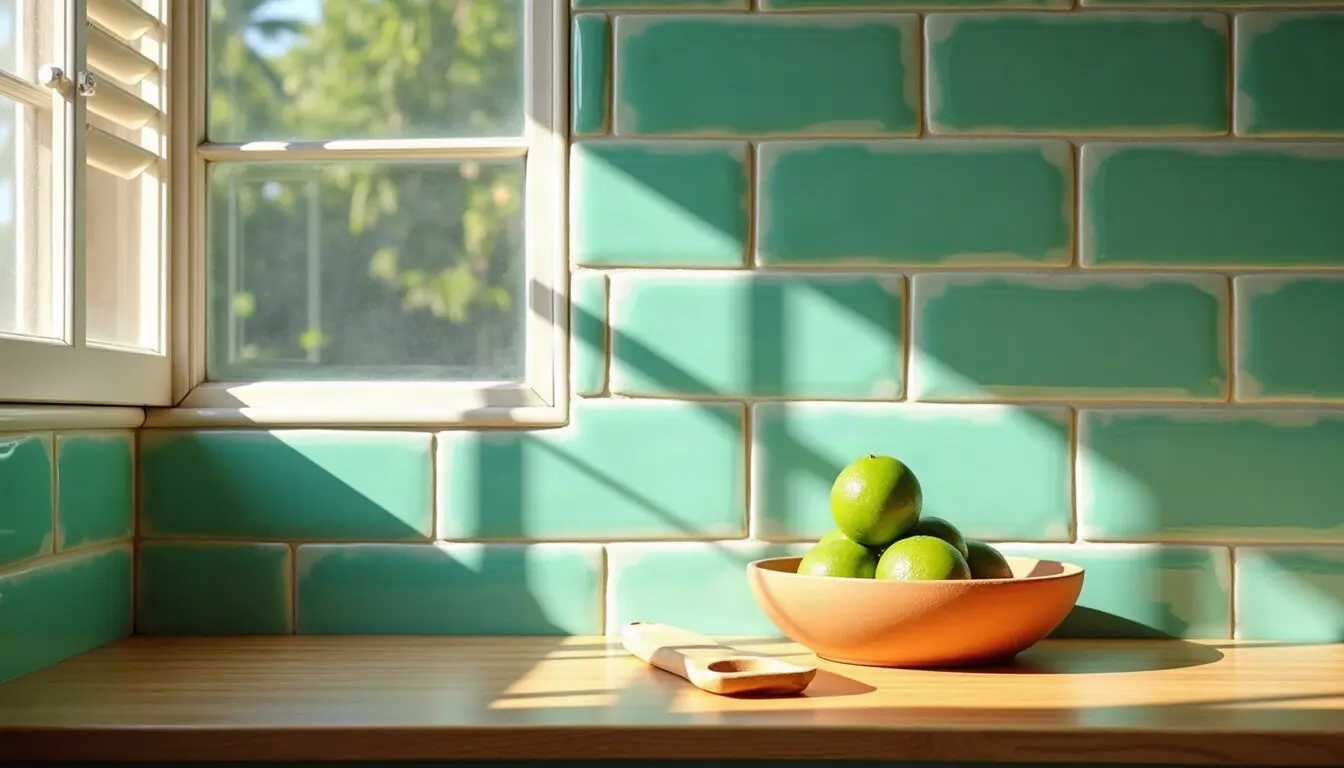
On a Sunday the wall behind my stove takes the worst of it. Steam from a pot of peas and rice, a splash of oil from the fish pan, a grandchild's sticky hand reaching for the windowsill. When we finally redid that wall, I spent longer choosing the tile than I did choosing the cooker, and I would do it the same way again.
Handmade Moroccan tile has become a favourite in island kitchens, and for good reason: it catches the light the way the sea does in the morning. If you're researching a zellige backsplash, start with how your kitchen actually runs. This guide sets out the decisions in the order a busy household meets them, from the look you want to the way you will keep it clean.
Decision 1: Whether handmade tile suits the way you cook
Zellige is made by hand from clay, glazed and fired, and each piece comes out a little different. The surface ripples, the edges are not perfectly straight, and the colour shifts from tile to tile. Some corners have small chips. That is the charm, and it is also the first thing to be honest with yourself about.
If you love a wall that looks perfectly even, a machine-made tile will make you happier. If you like a surface that changes as the light moves across the kitchen through the day, handmade tile is worth the extra thought.
Think about the cooking, too. A family that fries fish twice a week puts a different kind of mess on the wall than a household that mostly bakes. The glazed face of the tile wipes clean well; the joints between the tiles are where grease and steam do their work.
Island logistics
- Damp, salty air settles on every surface by the coast. A glazed tile copes with that far better than bare plaster or painted board.
- Order samples before you commit. A colour seen on a screen in Nassau can look quite different in your own kitchen light.
- Keep the samples. They help later if you need to match a few replacement tiles.
Decision 2: Colour, and how it lives with your light
Island kitchens are full of light: a window over the sink, a back door left open for the breeze, sun bouncing off a pale yard. That light changes how a glazed tile reads more than almost anything else in the room.
Whites and creams
Warm whites and creams keep a small kitchen bright and calm, and they forgive a bit of flour dust. A cooler white can look crisp in the morning and a little grey in the evening, so look at your sample at both times of day.
Greens and blues
These are the colours I see most often in island homes, and it is easy to see why: they sit happily next to the view. Deeper shades hide everyday splashes better than pale ones. Because each tile varies, a wall of blue or green has real depth, almost like looking into shallow water.
Darker and earthy tones
Black, brown and terracotta shades make a strong statement and hide cooking marks well, though they can make a small, shaded kitchen feel closer. They tend to work best on one wall rather than the whole room.
Hold your sample against the counter and cabinet doors, not just the bare wall. The tile has to live with everything around it.
Island logistics
- Strong sun through a window can make a pale glaze look almost white at midday. Check samples in the corner where the tile will actually go.
- If the house has shutters that stay closed in the hot months, look at the colour with them closed as well.
- Choose the whole colour batch at once. Topping up a handmade colour later rarely gives a perfect match.
Advertisement
Decision 3: How much wall to cover
A backsplash can be a neat strip between the counter and the upper cupboards, or it can run all the way to the ceiling. Both are lovely; they just cost and behave differently.
| Option | Upfront cost | Cleaning effort | Visual effect |
|---|---|---|---|
| Strip behind the counter only | Low to moderate | Low | Neat, frames the worktop |
| Full height behind the stove | Moderate | Moderate | A focal point where the cooking happens |
| Floor to ceiling on one wall | Significant | Moderate to high | Strong feature, makes the room feel taller |
In my experience the stove wall is where tile earns its keep. Steam and spatter rise higher than people expect, especially from a big pot that has been going all afternoon. If the budget only stretches to one generous section, put it there.
Remember the awkward bits as you plan: around the window, behind the sink taps, and the edge where the tile stops. A good installer will talk you through how those edges will be finished before work starts.
Island logistics
- Measure twice and order extra. Handmade tile has more pieces that get set aside for chips or shape, and running short on an island means waiting for the next delivery.
- Store the boxes indoors and off the floor until fitting day. Damp garages and sheds are no friend to packaging.
- Ask your fitter how much spare they would keep back for future repairs.
Decision 4: Who fits it, and how
Handmade tile is not the place to learn tiling. The uneven edges and varied thickness need someone who has laid it before and knows how to keep the lines looking relaxed rather than messy. Ask anyone you are thinking of hiring whether they have worked with handmade or zellige tile, and ask to see photos of finished walls.
Joints and grout
Zellige is usually laid with narrow joints so the tiles almost touch, which gives that soft, watery look. The grout colour matters more than people think. A grout close to the tile colour makes the wall read as one surface; a contrasting one draws attention to each piece.
Sealing
The glazed faces do not need much, but the edges and the grout lines can take up moisture and stains. Ask the installer what they recommend for sealing, and how often it should be renewed in a kitchen that sees a lot of steam.
Agree the layout before the first tile goes up. Lay a few rows out on the counter or the floor so you can see how the colours mix, and move pieces around until no patch looks heavier than the rest.
Island logistics
- Good tilers are booked up ahead of the busy months. Fix a date early and have the tile delivered before they arrive.
- Humidity affects how quickly adhesive and grout cure. Your installer will judge this; leave the kitchen alone for as long as they ask.
- If the power tends to drop out in your area, ask how a cut would affect work that is half finished.
Advertisement
Decision 5: How you will keep it looking good
This is the part that decides whether you still love the wall in five years. A tile backsplash in a working family kitchen needs a little regular attention, not a lot.
Wipe the area behind the stove after frying, while the splashes are still fresh. Warm water and a mild washing-up liquid on a soft cloth will do most of the work. Avoid harsh scouring pads and strong cleaners, which can dull a glaze and wear the grout. If you are unsure about a product, ask the supplier or the installer what is safe for that particular tile and sealer.
Keep an eye on the grout lines near the sink, where water sits longest. A small crack caught early is an easy fix; one left through a wet season can let damp in behind the tile.
Island logistics
- Salt and humidity leave a film on kitchen walls near the sea. A quick wipe once a week stops it building up.
- Keep a small tub of matching grout and a few spare tiles in a dry cupboard. Finding an exact match later can take a while.
- Mould likes a warm, damp corner. Good airflow from a window or extractor fan protects the grout as much as any cleaner.
Before the next season
Before you decide anything else, order a handful of samples and live with them for a week: prop them behind the stove, splash them, wipe them, and look at them morning and evening. By the end of that week the right colour is usually obvious, and the rest of the decisions fall into place around it.
A well-chosen tile wall gives a kitchen a little of the sea's light all year round, and that is a pleasant thing to cook beside.
Frequently asked questions
Is handmade tile practical in a kitchen that sees a lot of cooking?
Yes, as long as you expect a little upkeep. The glazed faces wipe clean easily, and most of the care goes into the grout lines and keeping the seal in good order.
Will the colour vary across the wall?
It will, and that is part of the appeal of handmade tile. Mixing tiles from several boxes as they go up spreads the variation evenly so no patch stands out.
Can I fit it myself?
Handmade tile is uneven by nature and is easier to get wrong than standard tile. For most households, an experienced tiler is the safer choice, particularly behind a stove or sink.
Advertisement
Keep reading
From the islands to Denver: hardwood floors for families who live in both
Wood that warps in island damp behaves differently in dry Denver air. The decisions to make before laying a hardwood floor in a second home.

Financial services in the Bahamas: banks, trusts, funds and regulators
How the Bahamian financial sector fits together: domestic and offshore banks, trust companies, funds and insurers, and the five bodies that regulate them.

Repainting a mainland house before a move: the order of jobs from the islands
Leaving a Colorado house for the islands? Here is the order of painting decisions so fresh walls help the move rather than slow it.