Bahamas weather, month by month: seasons, sea and storms
Bahamas weather month by month: air and sea temperatures, the rainy season, winter cold fronts, hurricane season and the best months for beaches and diving.

Marisa CartwrightUpdated · 10 min read
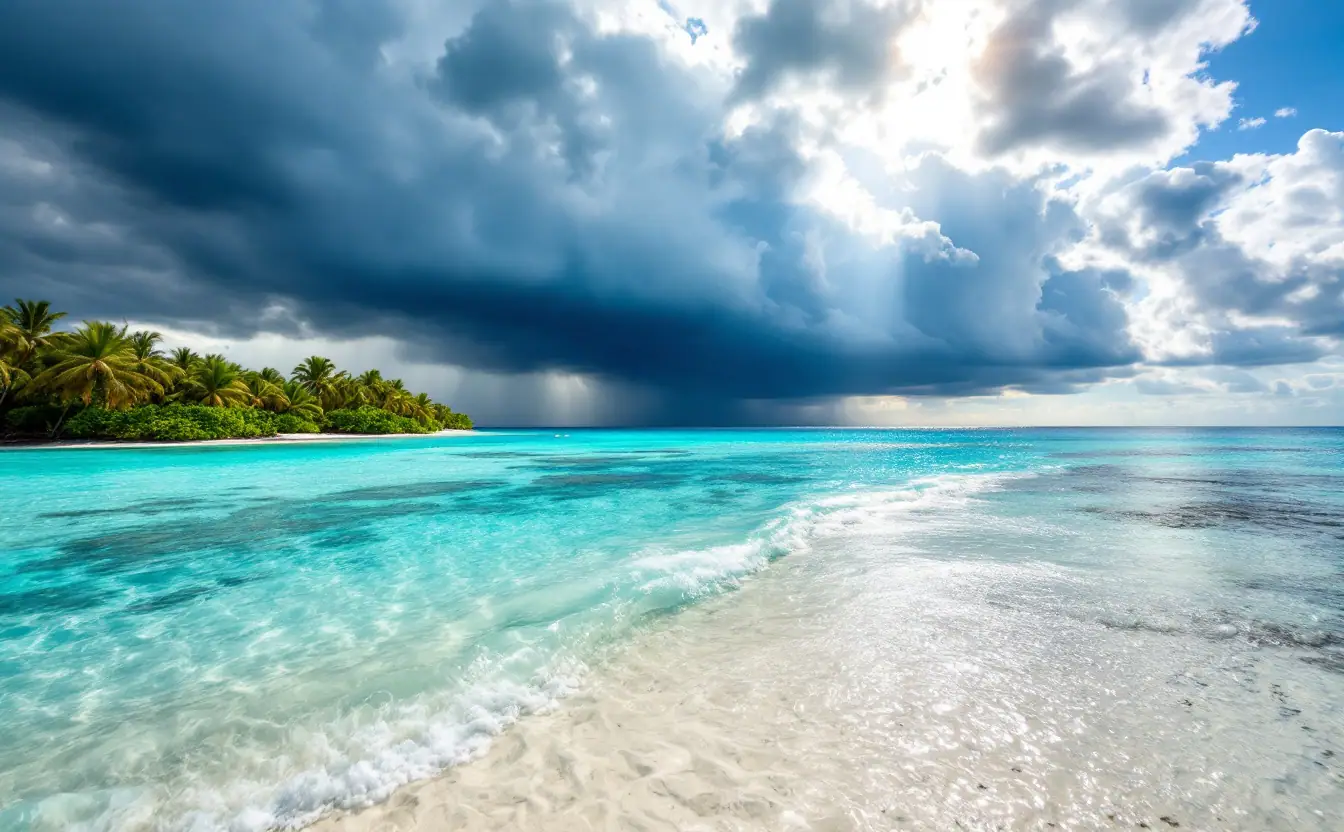
At anchor in the Exuma Cays, the Bahamian year shows in the sky as clearly as on any calendar. Winter brings hard blue days and, every so often, a low bank of cloud in the north-west that means a cold front is coming. Summer brings towering afternoon clouds that tip over into a short, drenching storm and clear by sunset.
The islands sit on the edge of the tropics: the Tropic of Cancer crosses Exuma and northern Long Island, and a little more than half the country lies north of it. Three things shape the weather. The trade wind blows out of the high-pressure zone over the subtropical Atlantic, mostly from the north-east and east in winter and from the east and south-east between about May and September. The Gulf Stream, the warm current running north between Florida and the western islands, takes the edge off the cold air that pushes south from North America each winter. And the sea, never far away, keeps the climate mild, humid and steady.
The result is two seasons rather than four. November to April is drier, sunnier and cooler, interrupted by cold fronts. May to October is hot, humid and wet, with short downpours and the risk of hurricanes. The chain also stretches roughly 500 miles from Grand Bahama and Abaco in the north-west to Inagua in the south-east, and the ends differ: the north is wetter, with chillier winter nights, while the south is drier and milder.
The year at a glance
Air temperatures run from a typical night-time low to a typical afternoon high in Nassau, rounded from the Bahamas Department of Meteorology's 1991–2020 averages. Sea temperatures are typical open-water averages around New Providence and Grand Bahama from NOAA satellite records; shallow bays run cooler after a front and warmer in late summer.
| Month | Typical feel | Sea | Rain | What's on |
|---|---|---|---|---|
| January | Coolest month; 18–26°C (65–79°F) | 24–25°C (75–77°F) | Dry, brief frontal showers | New Year's Day Junkanoo; Majority Rule Day, 10 January |
| February | Mild, breezy; 18–27°C (65–80°F) | About 24°C (75°F), the coolest | Dry | Peak winter visitor season |
| March | Warming, sunny; 19–27°C (66–81°F) | About 24°C (75°F) | Dry | Easter in some years |
| April | Warm, the sunniest month; 21–29°C (70–84°F) | About 25°C (77°F) | Mostly dry | National Family Island Regatta, George Town, Exuma (typically April) |
| May | Hot, more humid; 22–30°C (72–86°F) | 26–27°C (79–80°F), often calm | Rains usually start late in the month | Sea lice possible near shore |
| June | Hot and sticky; 24–32°C (76–89°F) | About 28°C (82°F) | One of the wettest months | Hurricane season opens 1 June |
| July | Very hot; 25–33°C (77–91°F) | About 29°C (84°F) | Short afternoon storms | Independence Day, 10 July |
| August | Hottest, most humid; 25–33°C (77–91°F) | Warmest, 29–30°C (84–86°F) | Wet; showers most days | Emancipation Day (first Monday); Fox Hill Day (second Tuesday) |
| September | Hot, lighter winds; 25–32°C (76–90°F) | About 29°C (84°F) | Wet; showers most days | Peak of hurricane season |
| October | Hot, fresher late; 24–31°C (75–87°F) | About 28°C (83°F) | Wet early, drier late | National Heroes Day (second Monday) |
| November | Warm days, pleasant nights; 21–28°C (70–83°F) | 26–27°C (79–81°F) | Drying out | Hurricane season closes 30 November |
| December | Mild, breezy; 20–27°C (67–80°F) | 25–26°C (77–79°F) | Dry | Boxing Day Junkanoo, 26 December |
The cool, dry season: November to April
This is the season most visitors picture: humidity drops, the trade wind blows steadily, and from February to May Nassau averages more than eight hours of sunshine a day. Afternoons in the mid-twenties Celsius suit walking, cycling and long days on the water.
Evenings catch people out. A breezy January night at 18°C (65°F) feels genuinely cool by the water, and a strong front can push Nassau's overnight temperature into the upper 40s Fahrenheit (around 8–9°C). Few Bahamian homes have heating, so pack a light sweater and long trousers, especially for a Junkanoo parade in the small hours; our guide to Junkanoo's rush, costumes and groups explains what you are waiting for.
The sea is coolest in February and March, around 24°C (75°F): refreshing for a swim, though snorkellers staying in for an hour may want a thin wetsuit top. This is also the main visitor season, and prices follow.
Cold fronts and what they do to the sea
Fronts define the Bahamian winter, arriving from late October until April or early May. Ahead of one, the trade wind falters and swings into the south and south-west, the air turns muggy and cloud builds in the north-west. The front may bring a squall line and heavy rain, or just a few showers. Behind it the wind swings into the north-west and north, temperatures drop, and for a day or two it can blow around 25 knots from the north or north-east before easing back into the east.
On the water, that matters:
- North-facing shores take the brunt. Beaches and reefs open to the north turn rough and cloudy, while the south side of the same island can stay calm.
- Cuts become dangerous. When a northerly swell meets an outgoing tide between cays, steep seas heap up across the opening, a condition Bahamian boaters call a "rage". Small boats should stay inside.
- The Gulf Stream turns ugly. A north wind against the north-flowing current raises short, steep seas between Florida and the western islands, so small-boat crossings wait for settled weather.
- Visibility drops for a few days after a strong blow; our guide to snorkelling Bahamian reefs safely covers reading wind and tide.
The reward: the days behind a front are often the clearest of the year.
The warm, wet season: May to October
Some time in May the wind settles into the east and south-east, humidity climbs and the rains begin, usually late in the month. From June to September Nassau's afternoon highs sit around 32–33°C (89–91°F), nights stay around 24–25°C (75–77°F), and the summer dew point averages in the mid-70s Fahrenheit, which is why the air feels thick.
Most rain arrives as afternoon showers and thunderstorms that last up to an hour and clear away. June and August are typically Nassau's wettest months, and in August and September it rains on more days than not, though rarely all day. Slow-moving tropical waves are the exception and can bring a grey, soaking day or two.
The sea makes up for it, reaching about 29°C (84°F) in July and peaking in August, and winds are usually lightest in late summer, which means glassy mornings for boating and snorkelling. Get outdoor plans done early, watch the clouds after lunch, and leave the water at the first rumble of thunder.
Hurricane season
The Atlantic hurricane season officially runs from 1 June to 30 November. The National Hurricane Center puts its climatological peak around 10 September, and the Bahamas Department of Meteorology notes that the islands feel tropical cyclones mostly from mid-July to October, with August, September and October the most active months.
Travel then is still reasonable – in most seasons, most weeks pass without a storm threatening the islands – but it changes how you book.
- Buy travel insurance when you book. Once a storm is named, insurers generally treat it as a known event and new policies will not cover it. Check it covers cancellation and disruption caused by a hurricane or hurricane warning at your destination.
- Choose flexible fares and rates. Changeable flights and rooms with generous cancellation terms cost more but let you move a trip at short notice. Read each hotel's hurricane policy.
- Leave slack. Flights, ferries and mail boats stop before conditions deteriorate, and airports can close for a day or more. Avoid tight connections and carry extra medicine.
- Follow official sources. The Bahamas Department of Meteorology issues watches and warnings for the islands; act on the instructions of the authorities and your hotel.
For residents, the season is a months-long routine of checks and stocking up, set out in our hurricane-season household calendar.
Sun and heat
The sun here is strong all year and catches out winter visitors who judge it by the breeze. White sand and shallow water reflect light back at you, so you burn faster on a boat or beach than in town.
- Cover up with a long-sleeved rash vest, a wide-brimmed hat and polarised sunglasses, and reapply mineral sunscreen after swimming.
- Seek shade from late morning to mid-afternoon, especially in summer.
- Drink water steadily, more than you think you need, and go easy on rum in the sun.
- Know the signs of heat exhaustion – headache, dizziness, nausea, heavy sweating – and cool down at once. Confusion or hot, dry skin can signal heatstroke, which needs urgent medical help.
Northern and southern islands
The Bahamas runs from roughly the latitude of Palm Beach to a short way north of eastern Cuba, so Nassau's figures are a middle reference, not a rule.
- Grand Bahama, Abaco, Bimini and the Berry Islands take winter fronts at full strength, so nights run cooler than in Nassau and blustery spells last longer. They are also the wettest islands: Abaco receives more than twice Inagua's annual rainfall.
- The central islands, including New Providence, Eleuthera, Andros and the Exumas, sit in between.
- The southern islands, among them Inagua, Mayaguana, Acklins, Crooked Island and Ragged Island, are drier and scrubbier, with salt ponds and cactus where the north has pine forest. Winter days run a few degrees warmer, the open sea off Inagua in February is typically about two degrees Celsius warmer than off Nassau, and many fronts weaken or stall before reaching this far south.
In summer the differences narrow, and hurricanes can strike anywhere, as Irma showed in the southern islands in 2017 and Dorian in Abaco and Grand Bahama in 2019. If you are weighing where to settle, add climate to the list in our guide to moving to the Bahamas.
Best time for…
| If you want… | Go in… | Why |
|---|---|---|
| Beaches | Mid-April to May | Warm sea, mostly dry, fronts over |
| Diving and snorkelling | May to August | Calmest seas, clearest water; plan around afternoon storms |
| Sailing | April to June | Steady breezes without winter fronts |
| Fishing | All year | Wahoo in autumn and winter, mahi-mahi in spring, blue marlin in spring and summer, bonefish year-round |
| Budget travel | Late August to early December | Usually the quietest, best-value stretch; insure and book flexibly |
| Festivals | Late December, April, July and August | Junkanoo, the Regatta, Independence, Emancipation and Fox Hill Day |
The Regatta fills George Town's harbour with traditional Bahamian sloops; our guide to island-hopping the Exumas explains how to get there.
Frequently asked questions
What is the best month to visit the Bahamas?
April and May offer the best balance for most people: dry, sunny weather, a warming sea and the fronts mostly over. December to March is cooler and busier; late summer is hot and humid, with the warmest, calmest water.
Is the sea warm enough to swim in winter?
Yes, for most swimmers. Open water around Nassau is typically about 24°C (75°F) in February, the coolest month, and warmer in the southern islands.
When is the rainy season in the Bahamas?
Roughly late May to October, mostly as short afternoon showers and thunderstorms rather than all-day rain. June and August tend to be the wettest months in Nassau, and November to April is the dry season.
Should I avoid the Bahamas during hurricane season?
Not necessarily, but plan for disruption. Most storms affecting the islands come between August and October, so book flexibly and buy insurance when you book, before any storm is named.
Do I need warm clothes?
From December to March, bring a light sweater and long trousers for evenings, particularly in the northern islands and after a front. The rest of the year, light, breathable clothes and good sun protection are enough.
More Travel & Islands
Island-hopping the Exumas by mail boat, ferry and small plane
A leg-by-leg Exumas route: overnight mail boat from Nassau to the cays, small boats around Staniel Cay, a light-plane hop to George Town and harbour ferries.
Choosing your first Out Island: Eleuthera, Andros, Long Island or Abaco
Eleuthera, Andros, Long Island or Abaco? A side-by-side guide to getting there, getting around and which Out Island suits a first visit to the Bahamas.