Bahamas mail boat schedules: how to find, book and ride a sailing
How Bahamas mail boats work and how to find a sailing: Potter's Cay Dock, the dockmaster's office, tickets, cabin or deck, cargo, delays and what to pack.

Julian Pinder · 8 min read
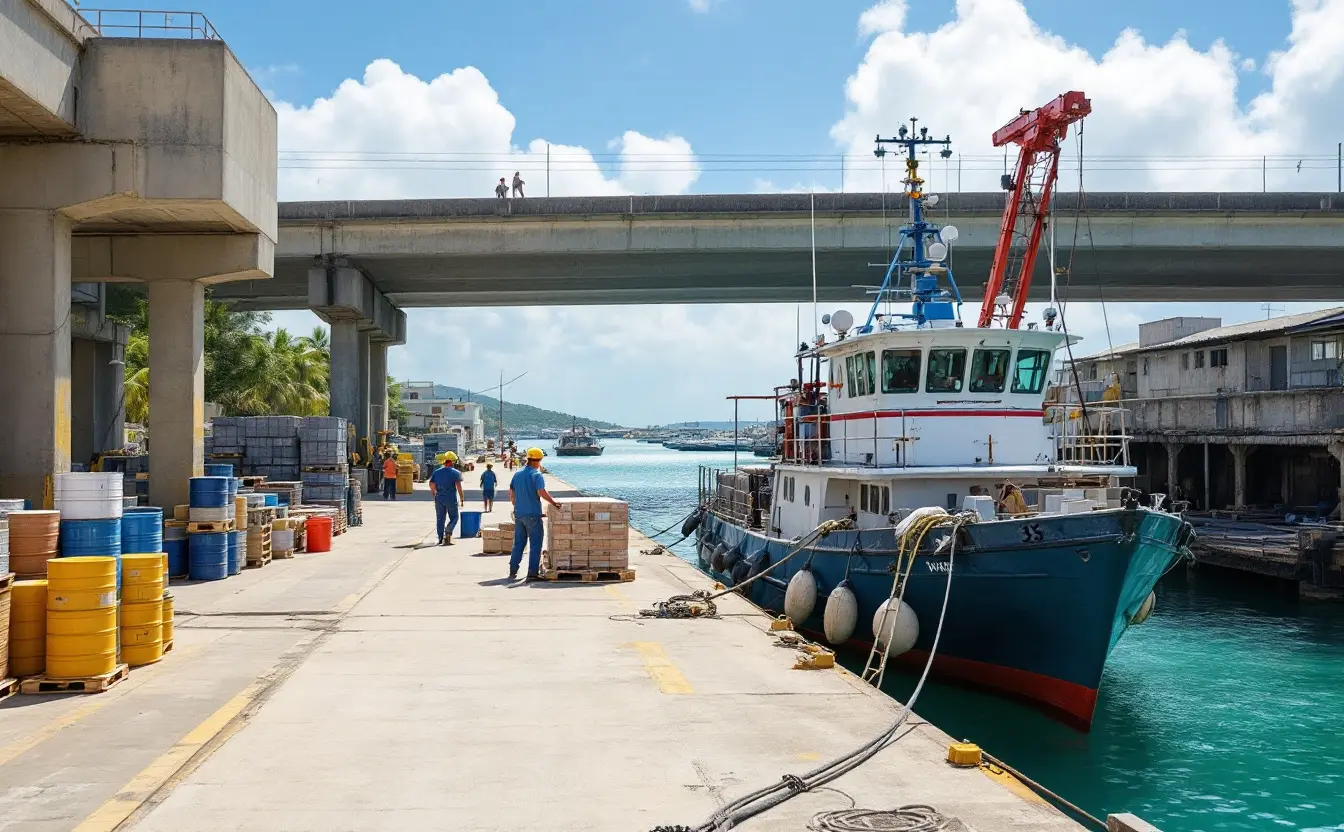
Ask at Potter's Cay when a mail boat leaves and you will get an answer that is honest and slightly unfinished. "Monday afternoon" really means Monday afternoon, once the cement is aboard, the fuel drums are lashed down and the last pickup truck has backed up to the quay with a fridge for somebody's aunt. The schedule exists. It simply bends around the work the boat is there to do.
That is the first thing to understand about the mail boats, and the rest follows from it. They are working freight vessels that also carry passengers, not ferries that also carry freight. For generations they were the main link between Nassau and the Family Islands, and for some small communities with no regular air service they still are. This guide explains how the system works, how to find and book a sailing, what the choices are on board, and how to live with the delays. It describes current practice rather than promising times: those come from the dock, week by week.
How the system works
The mail boats are privately owned vessels, each serving its own route under an arrangement with the government, which pays the operators a subsidy to keep the service, and the mail, running. Freight and passenger rates are set by the government rather than by each boat, which keeps the fare within reach of the islanders who rely on it to get to hospital appointments in Nassau, to visit family or to bring in stock for a shop.
Almost everything else a settlement needs comes the same way: groceries, bottled water, building materials, fuel, furniture, vehicles, the occasional crate of live chickens. Routes reach from the northern islands to the far south-east, and the longest runs, to islands such as Inagua, take well over a day.
Potter's Cay Dock
Every mail boat sails from Potter's Cay, the long strip of dock beneath the Paradise Island bridges, east of downtown Nassau. The landward end is lined with stands selling fish, conch and produce, and it is busy and good-natured from morning on. Walk further out and the dock becomes a freight yard: forklifts, pallets, stacks of plywood, boats rafted up two deep.
Each boat or company keeps a small office on or beside the quay, often in a converted container or a shed. That is where tickets are sold, freight is booked and luggage is checked. The Bahamas Ferries terminal, for the faster passenger service to some islands, is at the western end of the same dock, and it is easy to confuse the two if you are told only "Potter's Cay".
Wear closed shoes, keep to the edges and watch the forklifts. Nobody on a busy loading day has time to look out for a visitor reading a phone.
Shore bag
- CheapTickets flight searchCompare flights to Nassau and the Family IslandsContinue to CheapTickets
- CheapOair flight searchA second place to compare flights to Nassau and the Family IslandsContinue to CheapOair
Finding and booking a sailing, step by step
- Start with the dockmaster's office at Potter's Cay. It keeps the weekly list of which boat serves which islands and on which days. You can call or visit; the number is listed with the government's Port Department. Note the boat's name, not just the day.
- Find the boat's own office. Ask for it by name on the dock. The clerk or the captain can tell you the expected departure, whether passenger space remains and which settlements the boat calls at that week, since calls change with the cargo.
- Buy your ticket in person, a day or two ahead. Cash is the norm. Ask whether a cabin berth is available if you want one; there are only a few on most boats.
- Follow the boat's updates if it posts them. Some operators share departure news on social media pages. It helps, but confirm by phone.
- Reconfirm the day before and the morning of departure. Then reconfirm again if the weather changes.
- Arrive early with photo identification, your ticket and everything you need for the trip, and expect to wait.
- Ask about the return before you go. Boats run out and back on a weekly cycle, so the next sailing home may be several days away. Many travellers take the boat one way and fly the other.
Cabin, saloon or deck
Where you spend the passage makes more difference than anything else on board. Boats vary, so ask what yours has when you buy the ticket.
| Space | What it is like | What to bring |
|---|---|---|
| Cabin berth | A few small cabins with bunks, often shared; basic but private-ish and flat | A sheet or sleeping bag liner and a small pillow |
| Saloon | An indoor passenger area with benches or seats; sheltered, sometimes air-conditioned, sometimes noisy | A light blanket and earplugs |
| Open deck | A spot among the cargo; fresh air, spray and stars | A mat, a waterproof layer and something to tie your bag to |
Cabin berths go first, especially at Christmas, Easter and regatta time, when islanders living in Nassau head home in numbers. On an overnight passage a berth is worth asking for early.
Food is a gamble. Some boats have a cook and sell simple plates; others offer nothing. Bring enough food and water for the whole trip plus a delay, and treat anything you can buy aboard as a bonus.
Advertisement
Living with the cargo
Departure follows the loading, and loading takes as long as it takes. A boat advertised for the afternoon may slip into the evening; one advertised for Monday may go on Tuesday if a shipment is late. The same is true at the other end. At each stop the crane swings out the deliveries for that settlement, and the boat stays until the work is done.
That rhythm is also the best part of the journey. The dock fills when a mail boat comes in: people collect parcels, check on orders, meet relatives and catch up on news. If you travel to a small settlement, you arrive in the middle of its week rather than on the edge of it.
You can send freight the same way. Take it to the boat's office before loading, label it with the recipient's name, settlement and phone number, and ask whether freight is paid at the Nassau end or on collection. The recipient picks it up from the dock when the boat arrives.
Weather, delays and hurricane season
Captains generally wait out bad weather, and passengers should be grateful for it. In winter, cold fronts bring strong north winds at intervals from late October to April, and a boat may sit in harbour for a day or two until the sea settles. During hurricane season, from 1 June to 30 November, sailings stop when a storm threatens and boats move to shelter; after a storm they return to work as soon as conditions and the docks allow, often loaded with rebuilding supplies.
Build slack into any trip that includes a mail boat. Do not plan to arrive the day before an international flight, and keep an eye on the forecasts from the Bahamas Department of Meteorology. Our month-by-month weather guide explains when fronts and storms are most likely.
Advertisement
What to pack
- Cash in small notes, for the ticket, food and the island at the far end.
- Photo identification, kept somewhere dry.
- Water and food for the trip and a spare half day.
- A sleeping bag liner or light blanket, a small pillow and earplugs.
- A waterproof jacket and a warm layer; nights at sea in winter are cool.
- Closed shoes with grip for wet decks and the dock.
- A head torch, toilet paper and hand gel.
- Any seasickness remedy you use, taken as your pharmacist or doctor advises. If you are prone to it, ask their advice before the trip.
Our packing list planner builds a fuller list for the rest of your stay. Three small things make a mail boat passage easier, and we chose them from makers' specifications and published reviews rather than from our own use: a roll-top dry bag for the phone and papers when the spray comes over, a slim power bank because sockets aboard are scarce, and a rechargeable head torch for finding your bunk or the gangway after dark.
Mail boat manners
- Ask before photographing people, and before you photograph cargo that is clearly someone's private delivery.
- Stay well clear of the crane, the hatch and the lines when the crew is working.
- The captain's word is final on where you sit, when you board and whether the boat sails.
- Take your rubbish with you, and leave the space as you found it.
If you are deciding between the slow boat and the quicker options for a particular island, our guide to getting from Nassau to Eleuthera and Harbour Island compares the ferry, the mail boat and the flight, and our Exumas island-hopping route shows a mail boat leg in the middle of a longer trip.
Frequently asked questions
Where can I find the Bahamas mail boat schedule?
The dockmaster's office at Potter's Cay Dock in Nassau keeps the weekly list of sailings, and each boat's office on the dock can confirm its own departure. Published lists online are often out of date, so treat them as a starting point and confirm by phone or in person.
Can tourists travel on the mail boats?
Yes. Most mail boats carry passengers alongside the cargo, and visitors are welcome if they accept simple conditions and a loose timetable. Buy your ticket in person at the boat's office.
How much does a mail boat ticket cost?
Fares are set by the government and are modest compared with flying, which is why islanders rely on them. They vary by route and change from time to time, so ask at the boat's office and bring cash.
Do mail boats have cabins?
Some do, usually a few small shared cabins with bunks, and they are booked first. Otherwise you travel in the passenger saloon or on deck, so bring bedding for an overnight passage.
Can I take a car or a bicycle on a mail boat?
Many boats carry vehicles and bicycles as freight. Arrange it with the boat's office in advance, and expect the vehicle to be loaded by crane or ramp on the crew's timetable, not yours.
Advertisement
Keep reading
Snorkelling in the Exumas: the best spots, boat trips and what to bring
Snorkelling in the Exumas: Thunderball Grotto, the reefs of the Exuma Cays Land and Sea Park, boat trips or shore, tides, currents and the gear to bring.
A winter trip to the Bahamas: flights, stays and choosing your islands
Planning a winter trip to the Bahamas: when fares and rooms peak, flying into Nassau or straight to an Out Island, where to stay and how to link the islands.
Nassau to Eleuthera and Harbour Island: fast ferry, mail boat or flight
Nassau to Eleuthera and Harbour Island by fast ferry, mail boat or short flight: which of the three airports suits where, and how the water taxi works.