Snorkelling in the Exumas: the best spots, boat trips and what to bring
Snorkelling in the Exumas: Thunderball Grotto, the reefs of the Exuma Cays Land and Sea Park, boat trips or shore, tides, currents and the gear to bring.

Marisa Cartwright · 9 min read
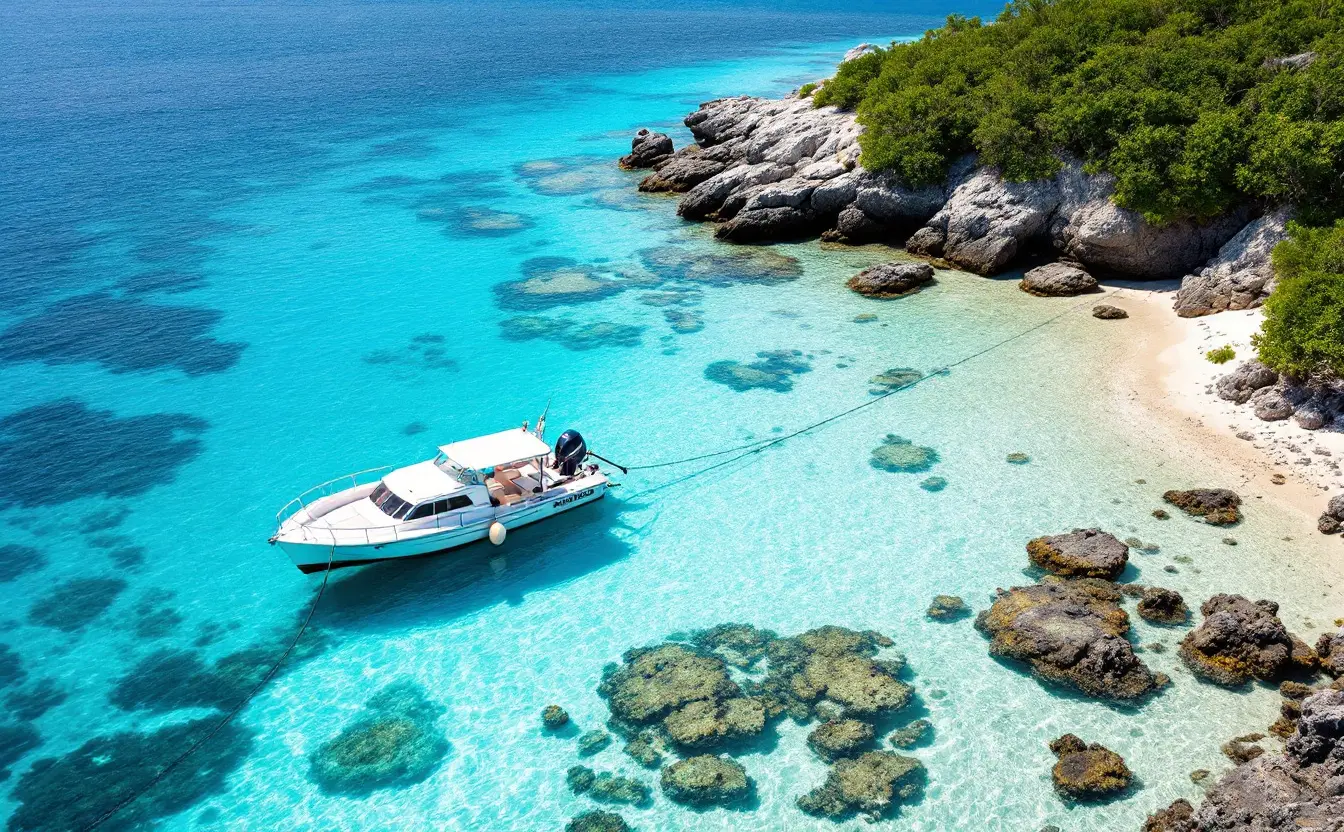
From a mooring in the Exuma Cays you can watch the boat's shadow on the sand three or four metres down, sharp enough to count the fenders. That clarity is what people come for. The Exumas sit on the edge of the shallow Great Bahama Bank, and on a calm day the water over their coral heads is as clear as anywhere in the country.
It is also a long chain, with more good snorkelling than one trip can use and a lot of moving water between the cays. This guide picks out the well-known spots, compares boat trips with swimming from the beach, explains the tides and currents that decide when to go, and lists the gear worth carrying. If you are still working out how to get around, our guide to island-hopping the Exumas covers mail boats, small planes and harbour ferries.
How the chain shapes the snorkelling
The Exumas run south-east from the waters off Nassau down to Great and Little Exuma. To the east lies Exuma Sound, deep and ocean-blue. To the west is the bank, a vast shallow sea of sand, seagrass and coral heads. The gaps between the cays, known as cuts, connect the two.
That layout explains almost everything a snorkeller needs to know. Coral heads and sea gardens dot the bank side in water shallow enough to float over. Every rising and falling tide pushes a whole bank's worth of water through the cuts, so currents there can run fast. And the best spots are spread along the chain, which is why most snorkelling here starts from a boat.
The spots worth knowing
These are well-known starting points, not a complete list. Conditions change by the day, so ask a local captain or your lodging before you go.
| Spot | Where | How you get there | Best conditions |
|---|---|---|---|
| Thunderball Grotto | A small cay just west of Staniel Cay | Dinghy or small boat from Staniel Cay, or a tour | Low slack water |
| Sea Aquarium | Off O'Brien's Cay, inside the Exuma Cays Land and Sea Park | Boat or dinghy from the Cambridge Cay moorings | Calm sea, slack tide |
| Rocky Dundas | The southern part of the park | Boat, ideally with a guide | Slack water, very calm days |
| Plane wreck | Shallow water off Norman's Cay, north of the park | Boat | Calm, settled weather |
| Stocking Island | Across Elizabeth Harbour from George Town | Water taxi or ferry, then from the beach | Light winds in the harbour |
Thunderball Grotto
The grotto is a hollow limestone cay with a domed cavern inside, lit by shafts of sun falling through holes in the roof. It took its name from the 1965 James Bond film shot there, and on a good day the water inside is full of sergeant majors, yellowtail snappers and angelfish.
Timing is everything. The official Bahamas tourism guide to the grotto advises going in at low or slack tide, when you can swim through the openings at the surface; at high tide the entrances sit underwater. Between those times the current runs hard through the gaps in the rock. Boats and dinghies come and go all day from Staniel Cay, so look up before you surface near the entrances, and keep your hands off the rock inside, which is sharp.
The Exuma Cays Land and Sea Park
Established in 1958, it was the first land and sea park anywhere, and it covers more than 112,000 acres of cays, reef and open water. The Bahamas National Trust runs it from its headquarters on Warderick Wells, and the reefs show what decades of protection can do: fish are plentiful and often unbothered by swimmers.
The Sea Aquarium, off O'Brien's Cay near the Cambridge Cay mooring field, is one of the best-known spots in the park, with coral heads and schooling fish in shallow water. Rocky Dundas, further south, has caves reached by ducking under a ledge; it suits confident swimmers at slack water, ideally with a guide who knows the way in.
The park's own rules are short and strict. It is a no-take zone: no fishing, conching, shelling or lobstering, and nothing living or dead may be removed. The park sums it up as "take only photos, leave only bubbles". Anchoring is not allowed on coral reefs or in the mooring fields, boats must keep to idle speed in mooring fields and anchorages, and there is nowhere to leave rubbish, so take everything home with you. Boaters can call Exuma Park on VHF channel 09, with channel 16 kept for emergencies. Fees and the full rules are on the Bahamas National Trust's park page.
North and south of the park
Off Norman's Cay, north of the park, the wreck of a cargo plane lies in shallow water, a relic of the cay's smuggling era. It is a popular stop on boat tours; look, but keep clear of the torn metal. At the southern end of the chain, Stocking Island faces George Town across Elizabeth Harbour, and its sheltered harbour side has coral heads within swimming distance of the beach.
Boat trip or shore?
For most people in the Exumas, the answer is a boat. Shore snorkelling is possible, but the best reefs lie off small cays without roads or easy beach access.
- A day trip from Nassau. Fast tour boats run down to the northern and central cays, usually combining several stops in one long day. They are the easiest option if you are based in Nassau, though time in the water at each stop can be short and the run across open water can be bumpy. Operators bundle these as guided snorkel days from Nassau; check what gear is included, how long you spend at each stop and the plan if the weather turns.
- A local captain from Staniel Cay or George Town. Hiring a captain for the day lets you time the grotto for the slack and choose sheltered spots on a windy day. Your lodging can usually suggest someone.
- Your own boat. Renting is only for experienced boat handlers who have had a proper local briefing. The banks are shallow and the sandbars move.
- From the beach. Stocking Island and a few beaches near the settlements give you reef within reach of the sand. Our guide to snorkelling from shore in the Bahamas explains how to pick an entry and read the water before you go in.
Advertisement
Tides, currents and boats
Bahamian tides turn roughly every six hours, and the slack between them can be brief, especially in a busy cut. Tide tables give a guide, but slack at a particular spot often runs later than the printed time. Local captains know these rhythms, and when one tells you to wait, wait.
Never snorkel in a cut while the tide is running unless you are on a guided drift with a boat following you. When the wind blows against the tide, the cuts can turn rough and steep within minutes, even on an otherwise pleasant day. The safe water is on the bank side, away from the gaps.
The season matters too. From late autumn to spring, cold fronts bring a few days of strong northerly wind at a time, which can cloud the water and close the more exposed spots. Late spring and summer usually bring calmer seas, with afternoon storms to watch for, and hurricane season runs from June to November.
Boat traffic is the hazard people overlook. Around Staniel Cay and Big Major Cay, tour boats, dinghies and charter yachts move constantly. Tow a bright float with a dive flag when you swim away from your boat, look up every minute or so, and stay out of channels. Our guide to snorkelling Bahamian reefs safely has the full checklist.
What to bring
Services in the cays are thin and spares are scarce, so bring what you need.
- A mask that fits. Tour boats carry gear, but the fit is a lottery. Your own mask and a dry-top snorkel make every stop more comfortable.
- Short fins. They pack flat and give you enough push for a light current.
- Anti-fog gel. A misted lens wastes precious minutes at a timed stop like the grotto.
- A snorkel vest for anyone nervous in deep water, as a buoyancy aid to rest on, not a life jacket.
- Sun cover. A long-sleeved rash guard, a hat for the boat and a mineral sunscreen for the bits it leaves bare.
- A dry bag and phone protection. A waterproof phone pouch on a lanyard lets you take pictures from the dinghy without risking the phone.
- Water, snacks and cash. Card machines and cash machines are few and far between in the cays.
For fitting a mask and choosing between snorkel types, see our guide to snorkel gear for a Bahamas trip.
A trip built around boats and remote cays is a good reason to check your insurance before you fly. The nearest clinic may be a boat ride or a flight away, so look for travel cover that includes boat days and snorkelling, and read what it says about medical evacuation.
Frequently asked questions
When is the best time to snorkel Thunderball Grotto?
Go at low slack tide, when the current eases and you can swim through the openings at the surface. At high tide the entrances are underwater, and between tides the current through the gaps can be strong. Ask at Staniel Cay for the local time of slack, since it can differ from the tide tables.
Can you snorkel in the Exumas without a boat?
A little. Stocking Island, across the harbour from George Town, and some beaches near the settlements have coral within swimming distance. The best-known spots, including the grotto and the park's reefs, need a boat, a tour or a local captain.
Can I take shells from the Exuma Cays Land and Sea Park?
No. The park is a no-take zone, and nothing living or dead may be removed, including empty shells. There are fines for breaking the rules, and wardens patrol the park.
Is snorkelling in the Exumas good for beginners?
Yes, if you choose the right spots and conditions. Shallow coral heads on the bank side and sheltered harbour reefs suit beginners on calm days. Leave cuts, caves and anywhere with a running current to confident swimmers with a guide.
Should I bring my own snorkel mask to the Exumas?
It is well worth it. Tours supply gear, but a mask that already fits your face stops leaks and fogging at every stop, and on the smaller cays you may not find anything to rent at all.
Advertisement
Keep reading
A winter trip to the Bahamas: flights, stays and choosing your islands
Planning a winter trip to the Bahamas: when fares and rooms peak, flying into Nassau or straight to an Out Island, where to stay and how to link the islands.
Nassau to Eleuthera and Harbour Island: fast ferry, mail boat or flight
Nassau to Eleuthera and Harbour Island by fast ferry, mail boat or short flight: which of the three airports suits where, and how the water taxi works.
Renting a car in the Bahamas: driving on the left, licences and golf carts
How car hire works in the Bahamas: driving on the left, using your home licence, island roads and fuel, insurance at the counter, and golf carts on the cays.