Tipping in the Bahamas: service charges, VAT and who to tip
How tipping works in the Bahamas: the 15% service charge many bills already include, 10% VAT, and what to give taxi drivers, porters, housekeepers and guides.

Devon Saunders · 9 min read
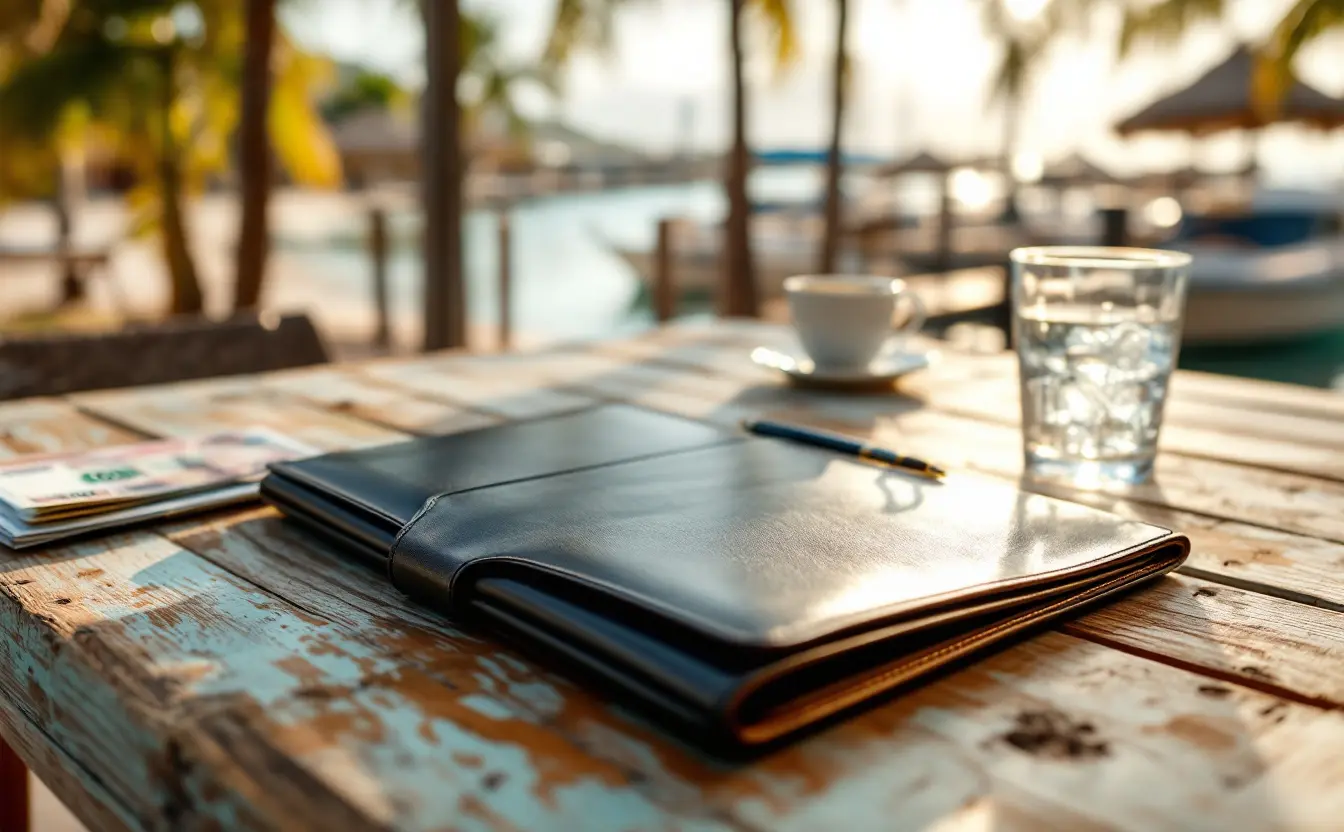
The bill arrives at the end of a long lunch on the harbour, and below the subtotal there are two more lines. One is value added tax. The other, quite often, is a gratuity of 15 per cent. Visitors who miss that second line and add their usual tip on top end up paying the service charge twice. Visitors who see it and stop there are doing exactly what most Bahamians would do.
Tipping in the Bahamas is customary, and for many people working in tourism it is a large part of their pay. But it works a little differently from the United States, mainly because so many bills already include it. This guide explains how to read a Bahamian bill, how VAT fits in, and what is usual for taxi drivers, porters, housekeepers, guides and boat crews. The amounts below are customs, not rules, and taxes change, so treat them as a starting point.
The short version
The Ministry of Tourism's own guidance is simple: tip according to the quality of service. Bellhops and porters usually receive $1 per bag, and most other service workers, waiters and taxi drivers included, receive 15 per cent. Everything else in this piece is detail around those two numbers.
Restaurants: read the bill before you tip
Many Bahamian restaurants add a service charge to the bill automatically, and 15 per cent is the usual figure. It may be labelled "gratuity", "service charge" or simply "service", and it sits below the food and drink subtotal, near the VAT line. Not every restaurant adds one, and some leave tipping entirely to you, so check each bill rather than assuming.
If a service charge is on the bill, that is the tip. You do not need to add more. If the service was exceptional, a few extra dollars in cash handed to your server is a kind gesture, but it is a choice, not an expectation.
If no service charge appears, 15 per cent of the food and drink total is the standard guide, a little more for a long evening or a server who went out of their way.
Watch the card machine. A payment terminal may offer a tip screen even when the gratuity is already on the bill. Enter zero, or only the extra amount you mean to give.
The same applies at casual places. At the Fish Fry, some stalls add a service charge and some do not; our guide to eating your way through Arawak Cay has more on paying there.
Where the service charge goes
The automatic 15 per cent is not a restaurant quirk. In the hotel industry, a 15 per cent gratuity on hotel services has been written into union contracts, and for many housekeepers, waiters and bartenders it makes up a large share of take-home pay. That is why it is charged automatically rather than left to chance, and why workers' representatives have pushed back when hotels have tried to remove it.
For a visitor, the practical point is that the service charge is already part of the staff's income. Adding a second tip is generous but not needed. Cash handed directly to one person is different: it goes to that person, which is why it is the usual way to reward standout service. Tourism money spreads through the economy in this way, wage by wage, and our piece on how tourism shapes the Bahamian economy follows the visitor dollar further.
VAT on the bill
Value added tax in the Bahamas is charged at a standard rate of 10 per cent on most goods and services, restaurant meals and hotel rooms included. Our guide to starting a small business in Nassau covers how the rate has moved since VAT arrived in 2015.
Three points are worth knowing at the table:
- VAT and the gratuity are separate lines. When VAT was introduced, the government said it would not be charged on top of gratuities as long as the full amount goes to the employee. A bill that shows VAT on the food and drink, plus a service charge, is the normal pattern. If you see VAT added to the service charge as well and want to know why, it is reasonable to ask.
- Menus differ. Some show prices including VAT, others add it at the end. Read the small print at the foot of the menu if the final figure matters to you.
- Groceries are now different from restaurants. Since 1 April 2026, unprepared food sold in grocery stores has carried no VAT, the second step of a cut that halved the rate in 2025. Restaurant meals, takeaways and prepared food still carry the standard 10 per cent. Visitors who self-cater will see the difference on their receipts.
Separately, the Ministry of Tourism notes that visitors buying goods to take home from shops in the Global Blue scheme can have the VAT taken off at the time of purchase. That applies to goods exported in your luggage, not to meals or services.
A worked example
The figures below are an example only, rounded to keep the arithmetic easy. A real bill may lay out its lines differently.
Dinner for two at a waterfront restaurant in Nassau:
| Line on the bill | Amount |
|---|---|
| Food and drink | $80.00 |
| VAT at 10 per cent of food and drink | $8.00 |
| Service charge at 15 per cent of food and drink | $12.00 |
| Total | $100.00 |
In this example, the server's tip is already included. If the service was memorable, leaving an extra $5 in cash is generous.
Now suppose the bill had no service charge. The total would be $88, and a 15 per cent tip on the $80 of food and drink would add $12, bringing you back to $100.
Finally, suppose you missed the service charge line on the first bill and added 15 per cent of the $100 total. You would hand over $115, and the staff would have received $27 on an $80 meal, which is about a third. That is the double tip, and it is easy to do after a long lunch in the sun. Our bill and tip calculator does these sums for any total, with or without a service charge.
Taxis
Taxi drivers are usually tipped about 15 per cent of the fare, a figure the Nassau and Paradise Island tourism board also gives. Fares are set by the government, with fixed rates between common points such as the airport and the main hotel areas, and extra charges for additional passengers and bags. Confirm the fare with the driver before you set off, then add the tip on top when you arrive. For a short hop, rounding up to the next few dollars is fine.
On the Family Islands, taxi drivers often double as guides, pointing out the settlements and the best beach for the day's wind. A longer ride with a running commentary deserves a tip that reflects it.
Hotels: porters, housekeeping and resort charges
- Porters and bellhops. About $1 per bag, more if they carry heavy cases up stairs or a long way.
- Housekeeping. There is no official figure. Leaving a few dollars each day, rather than one sum at the end, makes sure the person who cleaned your room on Tuesday is the person who receives it.
- Resort charges. Some large resorts add a compulsory daily gratuity, per guest or per room, alongside a resort fee. Read what it covers before you add anything extra, because it may already include housekeeping and pool staff.
- Concierge and front desk. A tip is not expected for directions, but a concierge who secures a hard-to-get table or sorts out a lost bag has earned one.
All-inclusive resorts
All-inclusive resorts take different approaches. Some build gratuities into the price and ask guests not to tip at all. Others include gratuities but are relaxed about guests giving cash to staff who go beyond the routine. Read the resort's own policy before you arrive, and if it allows tips, a few dollars for a bartender who remembers your order or a server who looks after your table all week is welcome.
Guides, boat crews and fishing guides
There is no fixed rate for guides. A sensible starting point is the same 15 per cent of the trip price, adjusted for how hard the crew worked and whether a gratuity was already built into what you paid. Check the booking terms first, especially if you bought the trip through a cruise line or a booking site.
- Snorkel and boat trips. Tip at the end of the trip, in cash, at the dock. If there is a captain and a mate, ask whether tips are shared or hand each their own.
- Fishing guides. Bonefishing and deep-sea guides work long days in hard sun. The custom is to tip at the dock when you step off the boat, each day if you fish with the same guide for several days.
- Walking and food tours. Hand the tip to the guide at the end, in cash if you can.
Other everyday tips
- Bars. Check for a service charge on a tab. If there is none, a dollar or two a round, or about 15 per cent on a tab, is usual.
- Packing boys. At many food stores, packers bag your groceries and carry them to the car. They work for tips, so a couple of dollars, more for a full trolley, is the usual thanks.
- Spas and salons. Check the bill, since some add their own service charge.
Cash, cards and currency
The Bahamian dollar is pegged one to one with the US dollar, and both are accepted everywhere, so tip in whichever you have. Small notes are the most useful thing in your wallet. Cash goes straight to the person you are thanking, while a tip added on a card may be pooled or paid later. If you plan to tip guides and crews on the Family Islands, bring cash with you, because cash machines can be scarce outside the main settlements.
Frequently asked questions
Is a service charge included in Bahamas restaurant bills?
Often, yes. Many restaurants add a gratuity of 15 per cent automatically, listed separately from the food, drink and VAT. If it is on the bill, there is no need to tip again, though extra cash for exceptional service is always welcome.
How much should I tip a taxi driver in Nassau?
About 15 per cent of the fare is customary. Confirm the fare before you set off, since there are extra charges for additional passengers and bags, then add the tip at the end.
Do I tip at an all-inclusive resort in the Bahamas?
It depends on the resort. Some include gratuities and ask guests not to tip, while others are happy for guests to tip staff directly. Read the resort's policy before you arrive.
Is VAT charged on the tip?
When VAT was introduced, the government said it would not be charged on gratuities as long as the full amount goes to the staff. Normally, VAT at 10 per cent appears on the food and drink, with the service charge as a separate line. If the bill looks different, ask the restaurant to explain it.
Keep reading
How tourism shapes the Bahamian economy: cruise, resorts and Out Islands
How visitor spending flows through the Bahamian economy: cruise versus stopover visitors, Nassau versus the Out Islands, and the risks of relying on tourism.

Starting a small business in Nassau: licences, VAT and first steps
How to open a small business in Nassau step by step: choosing a structure, reserving a name, the business licence, National Insurance, VAT and banking.
Reef-safe sunscreen for the Bahamas: labels, ingredients and how much
Reef-safe sunscreen for a Bahamas trip: what the label does and does not promise, which filters people avoid, how much to pack and when to reapply.