How tourism shapes the Bahamian economy: cruise, resorts and Out Islands
How visitor spending flows through the Bahamian economy: cruise versus stopover visitors, Nassau versus the Out Islands, and the risks of relying on tourism.

Devon Saunders · 9 min read
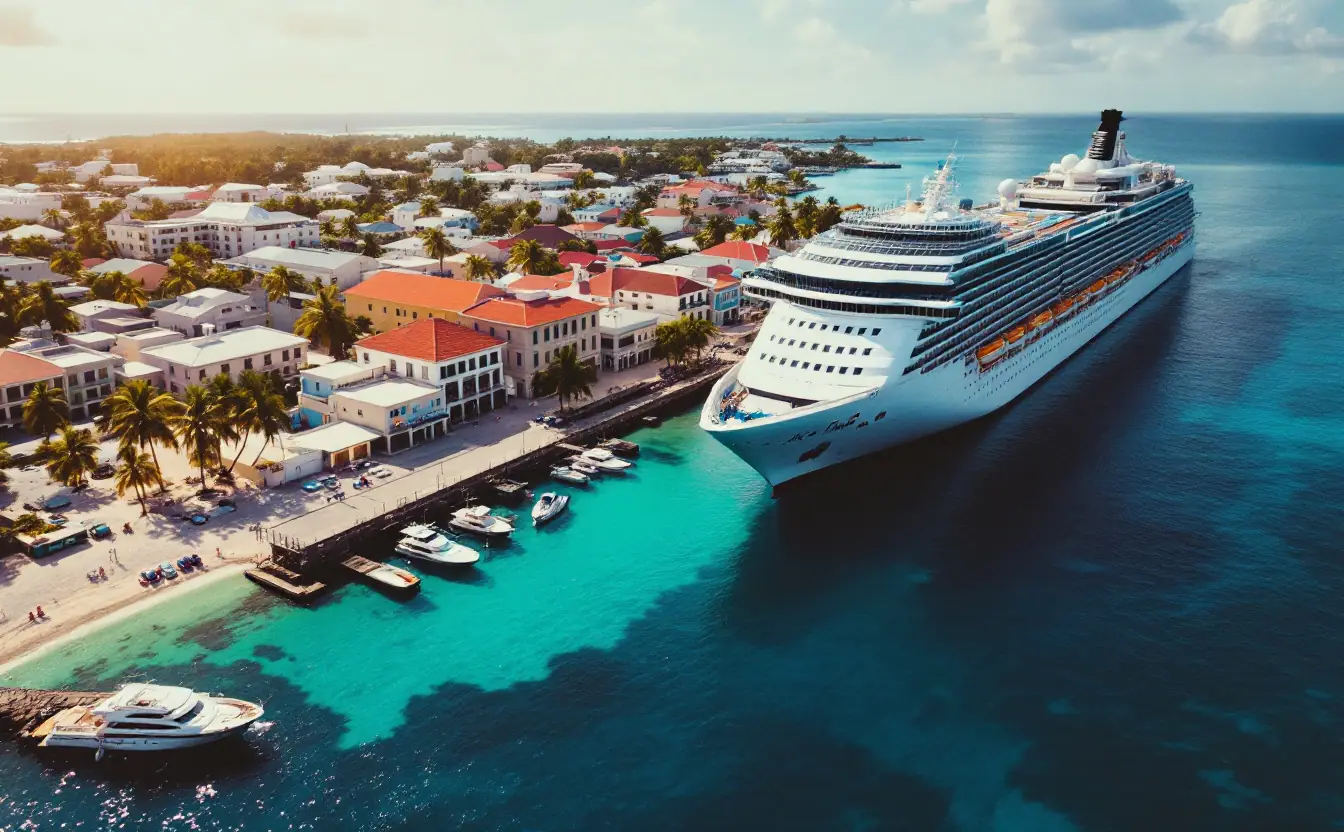
Stand near Rawson Square on a winter morning and you can count the economy in hulls. Several cruise ships may be tied up at the wharf at once, each carrying thousands of passengers who will spend a few hours ashore before sailing on. A short flight away, a small family-run inn on an Out Island might have a dozen guests staying for a week. The first scene produces the headline numbers. The second, guest for guest, leaves far more money in the country.
The gap between those two scenes explains most of what tourism does for the Bahamian economy, and most of what it cannot do. This is a general explainer rather than investment advice; the Ministry of Tourism and the Central Bank of The Bahamas publish the detailed figures.
The headline numbers and what they hide
The Ministry of Tourism reported a record of about 12.5 million foreign visitor arrivals in 2025, more than 70 per cent above the 2019 level. Roughly six in every seven came by sea, overwhelmingly on cruise ships. Fewer than two million arrived by air.
Two kinds of visitor sit inside that total, and they behave very differently:
- A stopover visitor spends at least one night in the country, in a hotel, rental home, guest house or on a private boat.
- A cruise passenger sleeps on the ship and comes ashore for the day, sometimes at more than one Bahamian stop on the same voyage.
Stopover visitors are a minority of arrivals but account for the great majority of visitor spending. They pay for rooms, meals, rental cars, domestic flights, guides and boat charters, night after night. A cruise passenger's spending is squeezed into a few hours near the pier, and most of the holiday budget went to the cruise line before the ship arrived. An industry-commissioned study put total cruise-related spending in the Bahamas – by passengers, crew and the lines themselves – at roughly $655 million for the 2023/24 cruise year. That is real money, but spread across millions of passengers it is a modest sum per head.
How a visitor dollar moves through the economy
Follow a dollar spent by a guest at a resort on Cable Beach.
First round. The dollar pays for a room, a meal or a tour. Value added tax, charged at 10 per cent on most of it, goes to the Treasury. VAT replaced the old hotel room tax when it was introduced in 2015, and it has become the government's largest single source of revenue, so visitor spending feeds the public finances directly. Departure taxes and per-passenger fees add to the take.
Second round. Part of the dollar becomes wages for housekeepers, cooks, drivers, musicians, straw vendors and accountants. Those households spend in food stores, pay rent and school fees, and hire plumbers and mechanics. Hotels buy fish, produce and services from local suppliers, and those suppliers pay their own staff.
Leakage. At every stage, part of the dollar leaves. The Bahamas imports most of its food, fuel, building materials and consumer goods, so a share of each purchase ends up with a foreign supplier. Resorts with overseas owners send profits abroad, and international hotel brands collect management fees. The more of a visitor's spending that stays with local businesses selling local goods, the bigger the effect at home.
The currency link. The Bahamian dollar is pegged one-to-one to the US dollar. Keeping that peg credible depends on foreign exchange reserves, and tourism is the country's biggest earner of foreign currency. When visitors arrive in strength, reserves build. When tourism stops, as it did when borders closed in 2020, imports carry on while earnings dry up, and reserves come under pressure. That is why visitor numbers matter to the Central Bank as well as to hotel managers.
Cruise and stopover: two different businesses
Most of the growth since the pandemic has come from cruise. The Nassau cruise port has been rebuilt and enlarged, and cruise lines have developed private island destinations in the Berry Islands, on Eleuthera and elsewhere. Those islands are efficient for the lines, bring per-passenger revenue and some jobs, and give remote communities a new source of work. But because the line runs the beach, the bar and the excursions, it also captures most of what passengers spend there.
Stopover growth is slower and harder. It depends on airline seats from North America and on hotel rooms, and rooms come in large, lumpy additions when a resort opens or expands. A strong stopover year usually reflects good airlift and full hotels; a weak one often traces back to fewer flights or higher fares.
| Item | Cruise passenger | Stopover visitor, New Providence and Paradise Island | Stopover visitor, Out Islands |
|---|---|---|---|
| Typical stay | Hours ashore; sleeps on the ship | Several nights in a resort or hotel | Several nights to weeks in small hotels, rentals or on boats |
| Where the money goes | Shops, tours, taxis and food near the port | Rooms, restaurants, casinos, excursions, transport | Lodges, guides, fuel, groceries, domestic flights |
| Who captures most of it | Cruise lines, port operators, downtown merchants, government fees | Large resorts, their staff and suppliers | Smaller businesses, many of them Bahamian-owned |
| Jobs supported per visitor | Low | High | High, often on islands with few alternatives |
| Main vulnerabilities | Itinerary changes, private-island competition | Airlift, US demand, room supply | Flight and boat links, hurricanes, high operating costs |
Nassau versus the Out Islands
New Providence and Paradise Island, with the main international airport, the largest resorts and the cruise port, take the lion's share of visitors. Yet the Ministry of Tourism reported that nearly 30 per cent of stopover visitors in 2025 went on to the Out Islands, and that figure deserves more attention than the cruise totals.
On a small island, a visitor's dollar is a much bigger share of the local economy. A fishing lodge or a cluster of cottages can be the largest private employer for miles. Guests hire bonefishing guides, buy fuel at the dock, eat at the one restaurant in the settlement and fill the seats on the domestic flight that residents also rely on. Much of that money goes straight to Bahamian owners and workers. If you have not yet travelled beyond Nassau, our first-timer's guide to the Out Islands shows how different each island's visitor economy is.
The trade-off is cost and fragility. Everything an Out Island business uses arrives by mail boat or plane, so margins are thin, and a single storm or a cancelled air route can wipe out a season. The recovery on Abaco and Grand Bahama after Hurricane Dorian took years, not months.
Even in Nassau, the money that sticks is often the money spent away from the big properties. An evening at the Fish Fry at Arawak Cay, where Bahamian-owned stalls cook local seafood, keeps far more of each dollar on the island than a resort buffet stocked from Florida.
The risks of leaning on one industry
Hurricanes
The Atlantic hurricane season runs from June to November. Hurricane Dorian in 2019 caused damage and losses estimated by the Inter-American Development Bank at $3.4 billion, more than a quarter of the country's annual output, with most of the damage on Abaco. Even storms that miss the islands can depress bookings, and insurance costs for hotels and homes tend to climb after a bad season. The one consolation is that the riskiest months, roughly August to October, already fall in the quieter part of the tourism year.
Concentration
The United States supplies the large majority of stopover visitors, which makes sense given the short flights from Florida and the East Coast. It also means an American slowdown, higher US airfares or a change in travel advice feeds straight into Bahamian hotel occupancy. Canada and Europe matter, but they are much smaller. The cruise side is concentrated too: a handful of companies decide which ports their ships visit and how much time passengers spend ashore.
Shocks the islands cannot control
The pandemic showed the extreme case. With borders shut for months in 2020 and visitors scarce for the rest of the year, the economy shrank by double digits and government borrowing rose sharply. Fuel prices, global interest rates and the cost of imported food all travel through tourism to household budgets.
Competition
The Bahamas sits on the northern edge of the Caribbean and competes with the whole region for the same North American traveller. Our piece on where the Bahamas fits in the Caribbean looks at those regional ties in more detail.
What would make tourism work harder
The ideas that come up most often are not new, but they explain where the extra value lies:
- Buy local. Every hotel meal made with Bahamian fish, farm produce or locally made goods keeps more of the visitor dollar at home.
- Spread the visitors. Better air and sea links to the Family Islands move spending to the places where it counts most.
- Raise cruise spending ashore. A livelier downtown, cultural attractions and Bahamian-run excursions give passengers reasons to spend in town rather than on the ship.
- Build resilience. Stronger building standards, better insurance and healthy reserves shorten the recovery after a storm.
- Grow the second pillar. Financial services and other sectors cannot replace tourism, but they cushion the economy when visitors stay away.
Frequently asked questions
What is the difference between a stopover visitor and a cruise passenger?
A stopover visitor stays at least one night on land or on a private boat, while a cruise passenger sleeps on the ship and visits for the day. Stopover visitors are far fewer in number, but they stay longer and account for most visitor spending. That is why the two figures are reported separately.
How much of the Bahamian economy depends on tourism?
Estimates vary with how they are measured, but official statements typically put tourism's total contribution, direct and indirect, at around half of economic output or more. It is also the largest source of jobs and of foreign currency. Few other countries depend on a single industry to the same degree.
Why do cruise arrivals grow faster than hotel stays?
Cruise capacity can be added quickly by sending bigger ships or more frequent calls, and private islands give the lines extra places to stop. Stopover growth depends on new hotel rooms and airline seats, which take years to plan and build.
Why does tourism matter to the Bahamian dollar?
The Bahamian dollar is pegged one-to-one to the US dollar, and the peg relies on foreign exchange reserves. Tourism is the main source of those dollars, so a strong visitor season supports the reserves and a collapse in visitors puts them under strain.
Does hurricane season stop tourism?
No. Most of the season passes without a direct hit, and visitors keep coming, especially in June and July. Travellers in the peak months should buy travel insurance and keep plans flexible, and businesses plan their cash and maintenance around the quieter autumn months.
Keep reading

Starting a small business in Nassau: licences, VAT and first steps
How to open a small business in Nassau step by step: choosing a structure, reserving a name, the business licence, National Insurance, VAT and banking.
Island-hopping the Exumas by mail boat, ferry and small plane
A leg-by-leg Exumas route: overnight mail boat from Nassau to the cays, small boats around Staniel Cay, a light-plane hop to George Town and harbour ferries.
Is the Bahamas in the Caribbean? Geography, CARICOM and regional ties
The Bahamas sits in the Atlantic, not the Caribbean Sea, yet it belongs to CARICOM and shares the region's history. Here is how geography and politics fit.