Junkanoo explained: the rush, the costumes and the groups on Bay Street
What Junkanoo is, where it came from and how the Boxing Day and New Year's parades work, from goatskin drums and crêpe-paper costumes to the big groups.
Julian Pinder · 8 min read
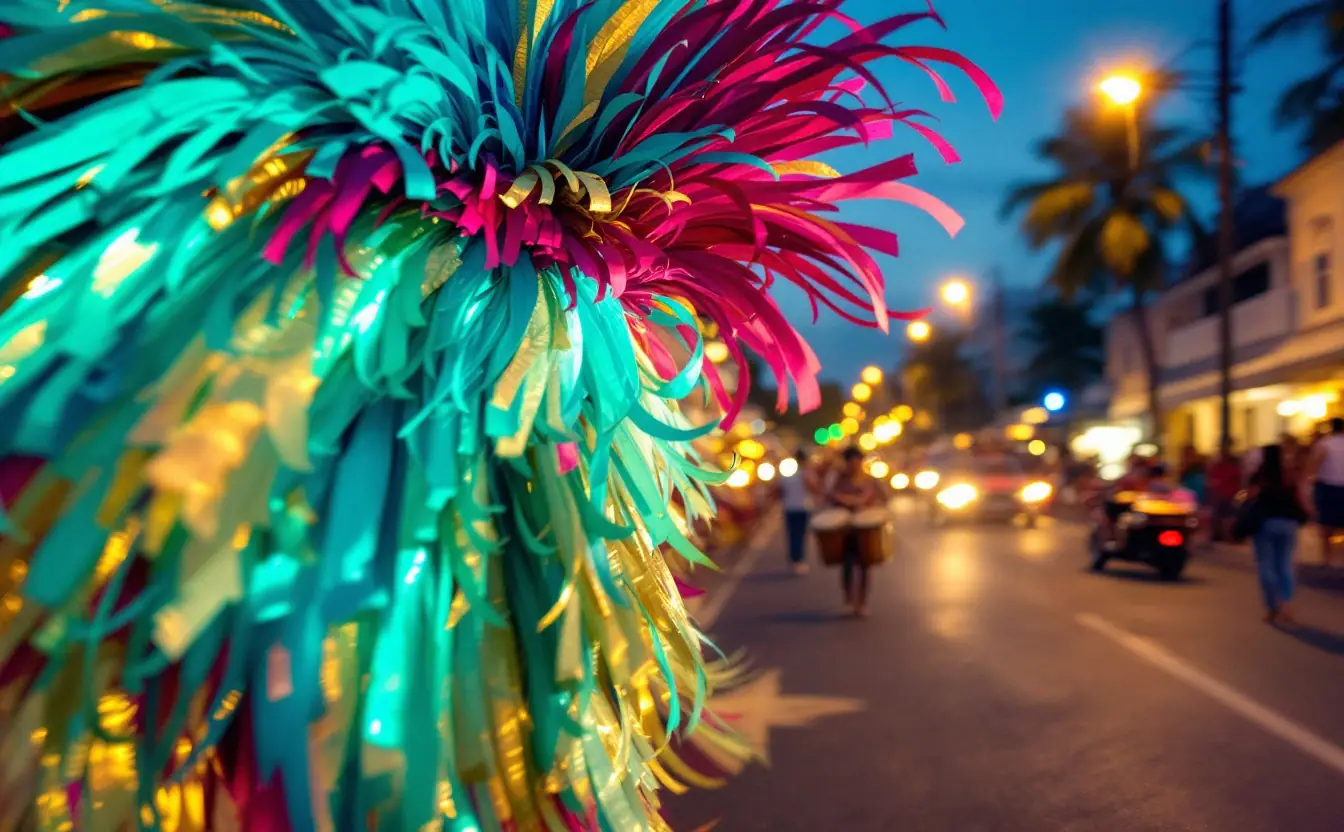
Around two in the morning on Boxing Day, Bay Street goes quiet for a moment. The bleachers are full, flasks of coffee are doing the rounds, and down near the start of the route drummers are warming goatskin drums over a flame. Then the cowbells start, a wall of brass comes in over the top, and a banner as wide as the street lurches into the lights. For the next six hours or more, Nassau belongs to Junkanoo.
This guide explains what you're watching: where the festival came from, how a group is organised, what the judges look for and how to get a good view. It's written for first-timers, though plenty of Bahamians who grew up with the parade will recognise the arguments.
What Junkanoo is
Junkanoo is a street parade and competition of music, dance and costume. The two big parades in Nassau take place in the small hours of Boxing Day (26 December) and New Year's Day. Organised groups, the largest running to hundreds of members, "rush" a loop of downtown streets built around Bay Street and Shirley Street. Along the way they pass judges who score their music, costumes and choreography. Grand Bahama and several Family Islands hold smaller parades, and Junkanoo turns up through the year at Independence celebrations, summer festivals, weddings and political rallies.
"Rushing" is the movement itself: a bouncing, forward-driving step in time with the drums, somewhere between a march and a dance. Nobody walks in Junkanoo. You rush.
Where it came from
Nobody agrees on the name. One theory traces it to John Canoe, or John Conny, a West African chief and trader on the Gold Coast in the early 1700s who became a folk hero. Another points to the French gens inconnus, "unknown people", because the revellers wore masks. Related traditions exist elsewhere in the old British Caribbean, including Jonkonnu in Jamaica and John Canoe in Belize, which suggests a shared root in the Christmas celebrations of enslaved Africans.
What is clear is that the festival grew out of the short Christmas holiday that planters allowed the people they enslaved. For a day or two, music, masks and dancing filled the streets.
A short timeline
- 1820s: Written accounts describe Christmas masquerading by enslaved people in the Bahamas.
- 1830s: Slavery is abolished across the British Empire in 1834. Africans freed from intercepted slave ships, some of whom founded villages such as Adelaide on New Providence, bring their own traditions with them.
- Late 1800s: Revellers organise along neighbourhood and African ethnic lines. Costumes are made from rags, sponge and strips of torn paper, masks from wire mesh, and cowbells sometimes double as weapons in street rivalries.
- 1920s–1930s: Businesses and the authorities offer cash prizes, turning a street celebration into a judged parade. The main event moves away from Christmas Day, settling on Boxing Day, with New Year's morning as the second parade.
- 1942–1947: In June 1942 Bahamian labourers on a wartime airfield project riot over unequal pay, in what became known as the Burma Road riot. The colonial government bans street parades in response, Junkanoo included.
- 1948: Junkanoo returns to Bay Street under a new Citizens Masquerade Committee.
- 1958: A group of teenagers founds the Valley Boys.
- 1965: Groups from the East Street and West Street areas join forces as the Saxons.
- 1973: The Bahamas becomes independent, and Junkanoo grows into a symbol of national identity.
- 1990: The Roots group is formed.
- 1993: Members who broke away from the Saxons found One Family.
How a Junkanoo group is organised
A major group is closer to a small army than a dance troupe, and it comes down Bay Street in a recognisable order. Knowing the sections helps you see what the judges are watching.
| Section | What it does | What to watch for |
|---|---|---|
| Banner | A huge pasted and painted panel carried at the front, announcing the group's theme | Fine detail in the paper work, and how the carriers handle the wind |
| Lead costumes | Giant single pieces, each carried by one dancer, often the main characters of the theme | How the wearer moves under the weight |
| Off-the-shoulder pieces | Large costumes worn on the shoulders, coming in waves behind the leads | Matching colour, finish and spacing |
| Choreographed dancers | Rehearsed lines performing set routines | Precision and timing with the music |
| Free dancers | Individual performers improvising inside the theme | Energy and personality |
| Music section | Goatskin drums, cowbells, whistles and brass | Tightness, variety, and whether the crowd starts moving |
The costumes
Junkanoo costumes are built in "shacks", workshops in yards and warehouses across Nassau's neighbourhoods. Volunteers spend months in them, and each group's theme is a closely guarded secret until parade night. Frames are made of cardboard and wire or light metal rods, then covered with thousands of strips of fringed crêpe paper, pasted on one row at a time so each layer overlaps the last. The modern groups add glitter, rhinestones, foil and feathers, and the best pieces are lit from inside.
The rule that each costume must be carried by one person is what makes the lead pieces so impressive. A single dancer may carry something far taller and wider than themselves, and keep rushing with it for hours. Old photographs show costumes of shredded paper and sponge. The materials have changed, but the paper-and-paste technique is recognisably the same craft.
The music
Junkanoo is percussion first. The goatskin drum, often called a goombay drum, is a skin stretched over a barrel or frame. It's heated over a fire, a candle or a gas burner to tighten the skin and lift the pitch, which is why you see small flames along the route. Cowbells play interlocking patterns that hold the rhythm together, whistles cut through on top, and the brass section of trumpets, trombones and sousaphones carries the melody. Many groups play arrangements of well-known songs, from hymns to pop hits, reworked into the Junkanoo beat.
The sound is enormous. If you're sitting close to the route with small children, bring ear protection for them.
The groups
Groups compete in categories by size. The best-known Category A groups, the ones whose names you'll hear argued over in bars and barbershops, include the Saxons Superstars, the Valley Boys, the Roots and One Family, with groups such as the Music Makers and Prodigal Sons also part of the scene. Each has its own neighbourhood roots, colours, loyal following and long memory of results it considers unfair.
Below them come smaller organised groups and the "scrap" groups: informal bands who throw their costumes together quickly and bring a raw, unpolished energy that many older fans consider the true spirit of the thing.
Judges posted along the route score the groups. Prizes are awarded overall and for elements such as music, banner, lead costume, off-the-shoulder pieces and free dancing. The results come out later the same day, and the debate about them lasts much longer.
How to watch it well
- Buy bleacher seats in advance. Seating along Bay Street and around Rawson Square is ticketed, and the best sections sell early. Sales points and prices change from year to year, so check the official Junkanoo and Bahamas tourism channels before you travel.
- Arrive before midnight. Roads close, parking vanishes and the crowds thicken well before the first group appears.
- Dress for a cool night. December nights are pleasant but can feel chilly by 4 a.m. Our Bahamas weather guide has typical winter temperatures.
- Bring a cushion, snacks, water and cash. Bleacher planks are hard, and vendors work the route all night.
- Stay for sunrise. The last groups often come through after dawn, and early daylight on the costumes is the best light of the night for photographs.
- See the streets by day. The parade loops through the oldest part of the city. Our walking route through Old Nassau covers Bay Street, Parliament Square and the neighbourhoods "Over the Hill" where Junkanoo grew up.
If you can't get seats, there are standing spots on side streets and near the ends of the route. They're crowded, and you'll need patience and a sense of humour.
Taking part
Junkanoo has never been only a spectator event. Some groups welcome newcomers, visitors included, who are willing to go to rehearsals, help in the shack and pay towards a costume. If you want to rush, make contact well before December, and accept that the group's rules and leaders have the final word. For more on Bahamian traditions, browse our Culture & History section.
Frequently asked questions
What time does the Junkanoo parade start?
The main Nassau parades usually start in the small hours, often around 1 or 2 a.m. on Boxing Day and New Year's Day, and run until after sunrise. Exact start times can vary from year to year, so check the official schedule closer to the date.
Do I need tickets to watch Junkanoo?
You don't need a ticket to stand along the edges of the route, but bleacher seating on Bay Street and around Rawson Square is ticketed. Seats sell out for popular sections, so book early through official outlets and confirm prices with them.
Is Junkanoo the same as Carnival?
No. Both mix costume, music and street dancing, but Junkanoo has its own history, rooted in the Christmas holiday of enslaved Africans. It also has its own sound of goatskin drums, cowbells and brass, and its own paper-and-cardboard costume craft. Carnival traditions elsewhere in the Caribbean grew out of the pre-Lenten season or harvest festivals and have different musical styles.
Can children go to Junkanoo?
Yes, many Bahamian families bring children, and schools take part in their own Junior Junkanoo parades. Keep in mind that the parade runs through the night, the crowds are dense and the music is very loud. Ear protection and a plan for sleep make a big difference.
Keep reading
Walking Old Nassau: forts, the Queen's Staircase and Bay Street's layers
A self-guided walk through Old Nassau, from the Queen's Staircase and Fort Fincastle down Bay Street to Fort Charlotte, with history and practical tips.

Island-hopping the Exumas by mail boat, ferry and small plane
A leg-by-leg Exumas route: overnight mail boat from Nassau to the cays, small boats around Staniel Cay, a light-plane hop to George Town and harbour ferries.
How tourism shapes the Bahamian economy: cruise, resorts and Out Islands
How visitor spending flows through the Bahamian economy: cruise versus stopover visitors, Nassau versus the Out Islands, and the risks of relying on tourism.