Hurricane season on a small island: a household calendar, May to November
A month-by-month hurricane season plan for Bahamian households, from May roof checks to November restocking, with checklists for watches and warnings.

Hannah Lowe · 9 min read
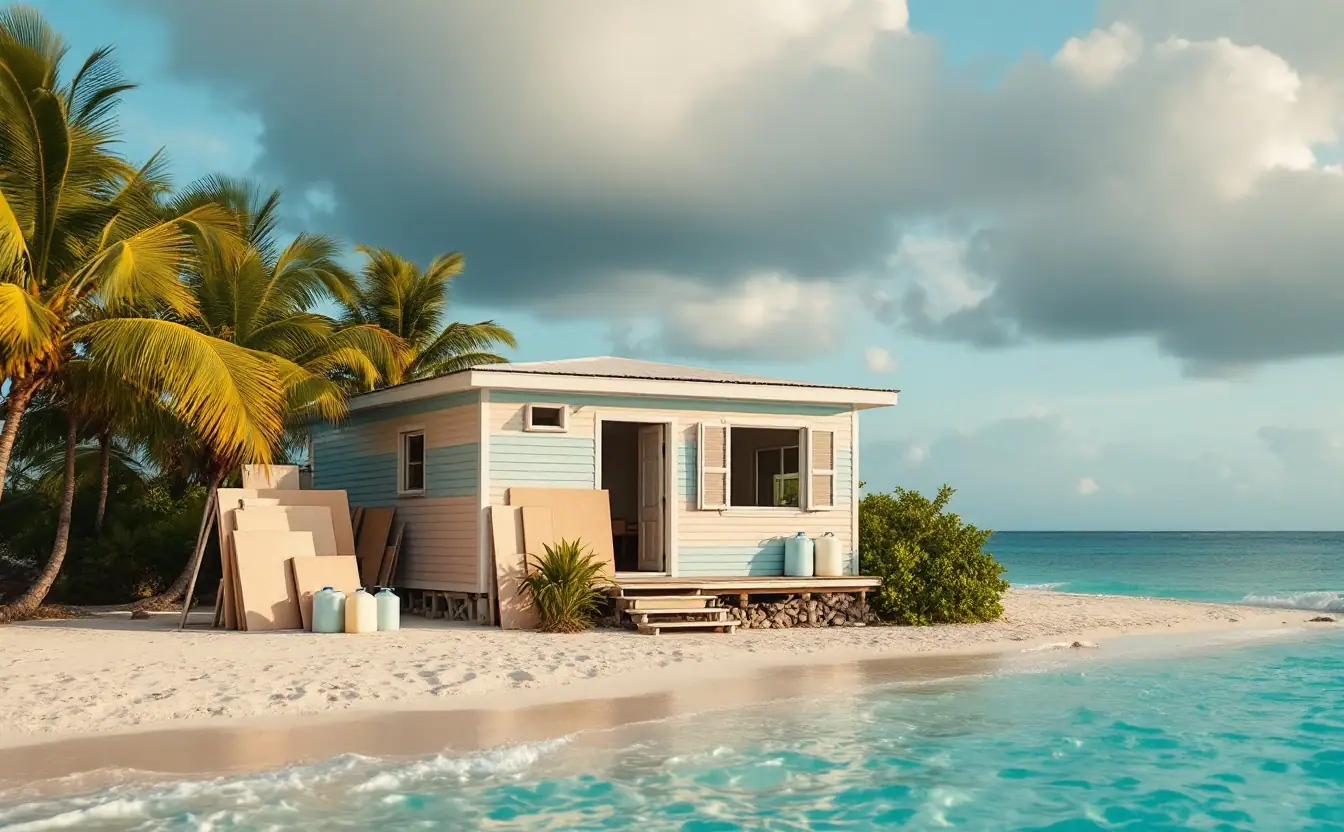
In most Bahamian homes, hurricane season does not begin with the weather. It begins with a ladder: someone checking that the shutter tracks over the windows are free of wasp nests, counting the plywood panels stored under the house, and finding out which of last year's batteries still work. The first weeks of the season are often calm, and that is exactly when the useful work gets done.
The Atlantic hurricane season runs officially from 1 June to 30 November. According to the US National Hurricane Center, its climatological peak falls around 10 September, with most activity between mid-August and mid-October – but storms can and do form outside those dates. For the Bahamas, two local agencies matter most. The Bahamas Department of Meteorology issues the official forecasts, watches and warnings for the islands, working alongside the National Hurricane Center in Miami. The National Emergency Management Agency, NEMA, coordinates national preparedness and response – including shelters, evacuations and the official instructions you will hear on the radio once a storm threatens.
What follows is a household calendar. The idea is simple: spread the jobs and the spending across the months, so that when a warning is issued you are fastening shutters rather than queuing at the hardware store.
May: the run-up
May is for the house itself. The rainy season is getting under way – our month-by-month weather guide explains how the wet months build – and every job is easier before the ground turns soft.
Checklist
- Roof. Look for lifted shingles, loose sheets, cracked fascia boards and rusted fixings. Get repairs booked now; roofers are in short supply once a storm is on the map.
- Trees. Trim limbs that overhang the roof or touch power lines. Take down coconuts and heavy fruit before high winds turn them into missiles.
- Shutters. Test every one. Oil hinges and tracks, find the bolts and wing nuts, and label each plywood panel with the window it fits.
- Drains and gutters. Clear them, and tip out anything holding standing water while you are at it – mosquitoes breed fast once the rains arrive.
- Insurance. Read your policy properly. Hurricane deductibles are often a percentage of the sum insured rather than a flat amount, flood and surge cover may be separate, and most insurers will not increase cover once a storm is threatening. Update valuations now.
- Documents. Scan passports, birth certificates, title deeds and insurance papers. Keep copies online and the originals in a waterproof pouch you can grab.
From 15 May the National Hurricane Center begins publishing its routine Tropical Weather Outlook, a map of disturbances it is watching. It is worth glancing at from now on.
June: the season opens
Early-season storms are usually weaker and often form close to home, in the Gulf of Mexico or the western Caribbean. They can still bring days of heavy rain and flooding, so treat June as the month to build your kit, gradually.
The household kit
- Water. The standard planning figure is a gallon (about four litres) per person per day for drinking and basic hygiene. Three days is a minimum. On a small island, where water supply can depend on electric pumps and desalination plants, plan for considerably more.
- Food. Tinned fish and meat, tinned peas and beans, crackers, peanut butter, oats, long-life milk – and a manual tin opener.
- Light and information. A battery or wind-up radio, torches, spare batteries and charged power banks.
- Medicine. A first-aid kit, a two-week supply of prescription medicines and copies of the prescriptions themselves.
- Cash. Small notes. Card machines and cash machines stop working when the power and phone lines go down.
- Cooking. A full propane tank for a gas stove or grill, and matches in a sealed bag.
- Repairs. Tarpaulins, plastic sheeting, rope, duct tape, nails and basic tools.
- Hygiene. Unscented household bleach for treating water, rubbish bags, wipes.
- Pets. Food, water, a carrier and any medication.
Add a few items to each grocery shop rather than buying everything in one trip. It spreads the cost, and you avoid the empty shelves that follow every warning.
July: plans and people
July is for the plan, not the purchases.
- Decide where you will shelter. At home, with relatives on higher ground, or in a public shelter. Write it down and make sure everyone in the house knows it.
- Know your ground. If you live on low-lying coastal land, find out whether you are at risk from storm surge. Surge, not wind, has caused some of the worst damage in the islands. If you are told to evacuate, go.
- Know your shelters. NEMA publishes the list of official shelters as a storm approaches – usually schools and churches. Find your nearest one now and check how you would reach it.
- Agree a contact. Pick one person off the island whom everyone in the family will update. Local phone networks are often overloaded or down after a storm, and a single point of contact saves a great deal of worry.
- Check on neighbours. Find out who on your road is elderly, unwell or alone, and agree who will look in on them.
- Service the generator. Run it for a few minutes every month. Store fuel in approved containers away from the house. Have a licensed electrician fit a proper transfer switch – never feed power back through a wall socket.
- Boats. Owners should confirm a hurricane hole, mooring or haul-out arrangement now; space goes quickly.
August: things speed up
Activity rises as tropical waves roll off the coast of Africa and the long-track storms of the season begin to form.
- Record your home. Walk through every room with your phone, filming contents, serial numbers and the condition of walls and roof. Store the footage online. It makes insurance claims far simpler.
- Pack a grab bag. Documents, medicines, chargers, a torch, cash, a change of clothes and copies of important phone numbers on paper.
- Top up the kit. Replace anything you have borrowed from it since June.
- Make insurance changes now. Once a storm is named and heading your way, it is usually too late.
- Families with children. As the school year starts, find out how your school will communicate closures, and keep a few days of activities that need no electricity.
September: the peak
September is the heart of the season. Irma tore through the southern Bahamas in September 2017, leaving Ragged Island badly damaged, and Dorian struck Abaco and then stalled over Grand Bahama in early September 2019. This is the month to know exactly what a watch and a warning mean.
The Bahamas Department of Meteorology uses the standard definitions: a hurricane watch means hurricane conditions are possible in the named islands within 48 hours; a hurricane warning means they are expected within 36 hours.
The countdown
About five days out, when a system appears on the forecast track
- Check the kit against your list and buy what is missing.
- Fill the car's tank and any approved fuel cans.
- Draw cash and refill prescriptions.
When a hurricane watch is issued
- Bring in or tie down anything that can fly: chairs, plant pots, grills, bins.
- Fill clean containers with drinking water, and fill a bath or barrels for flushing and washing.
- Freeze bottles of water and turn the fridge and freezer to their coldest settings.
- Charge every phone, power bank and battery.
- Secure or move boats.
When a hurricane warning is issued
- Finish fitting shutters on every window and door.
- If you are in a surge zone or are told to evacuate, leave early – roads and causeways flood first.
- Put documents and medicines in the grab bag and keep it by the door.
- Make your final check on neighbours.
During the storm
- Stay inside, in an interior room away from windows.
- If the eye passes over, do not go out. The calm is temporary and the wind returns from the opposite direction.
After the storm
- Wait for the official all-clear before travelling.
- Keep away from downed lines and floodwater.
- Run generators outside only, well away from doors and windows – carbon monoxide kills.
- A closed fridge keeps food safe for about four hours without power; a full, closed freezer for about 48. When in doubt, throw it out.
- Treat or boil drinking water until the authorities say the supply is safe.
- Photograph damage before you clear it, then contact your insurer.
October: not over yet
Late-season storms often form in the western Caribbean and can curve north towards the islands. Joaquin battered the central and southern Bahamas in early October 2015, and Matthew passed close to New Providence in October 2016.
- Restock whatever you used in September.
- Leave shutter hardware where you can reach it in minutes.
- Keep the generator fuel fresh and the grab bag packed.
November: the tail and the tidy-up
Late storms are less common but do happen – Nicole crossed Abaco and Grand Bahama in early November 2022. Keep watching the outlook until the season closes on 30 November. Then:
- Rotate your stores. Eat or donate tinned food before it expires and note what needs replacing.
- Look after the generator. Use up or stabilise stored fuel, then run and service the machine.
- Pack the shutters away properly. Keep fixings in labelled bags with each panel.
- Write down what worked. A short note of what you ran out of, what failed and what you wish you had bought is the best possible start to next May.
For more on the practical side of life here, browse our island living section.
Frequently asked questions
When is hurricane season in the Bahamas?
The official Atlantic hurricane season runs from 1 June to 30 November. Activity usually peaks between mid-August and mid-October, though storms occasionally form before or after the official dates.
What is the difference between a hurricane watch and a hurricane warning?
A watch means hurricane conditions are possible in the named islands within 48 hours. A warning means they are expected within 36 hours, and preparations should be finished. Both are issued for the Bahamas by the Department of Meteorology.
How much water should a household store?
Plan on at least a gallon (about four litres) per person per day for drinking and basic hygiene. Three days is the usual minimum, but on a small island, where water supply can rely on electric pumps and desalination, storing a week or more is sensible. Keep separate water for flushing and cleaning.
Where can I find official information during a storm?
The Bahamas Department of Meteorology issues forecasts, watches and warnings for the islands. NEMA gives instructions on shelters, evacuations and the national response, and these are carried on local radio and television. The National Hurricane Center's website is useful for regional track forecasts.
Should I leave the island before a hurricane?
That depends on the storm, your home and your health. If you live in a surge-prone area, rely on electrically powered medical equipment or are told to evacuate, leaving early is safer. Flights and ferries fill quickly and stop before conditions deteriorate, so decide early rather than late.
Keep reading
Moving to the Bahamas: residency options, housing and real costs
A practical decision guide to moving to the Bahamas: residence and work permits in general terms, renting versus buying, utilities, schools and grocery costs.

Island-hopping the Exumas by mail boat, ferry and small plane
A leg-by-leg Exumas route: overnight mail boat from Nassau to the cays, small boats around Staniel Cay, a light-plane hop to George Town and harbour ferries.

How tourism shapes the Bahamian economy: cruise, resorts and Out Islands
How visitor spending flows through the Bahamian economy: cruise versus stopover visitors, Nassau versus the Out Islands, and the risks of relying on tourism.