Hurricane kit list for a Bahamian home: water, food, light and power
A hurricane kit list for Bahamian homes: how much water to store, food that needs no fridge, light, radio, documents, first aid and power that is safe to run.

Hannah Lowe · 10 min read
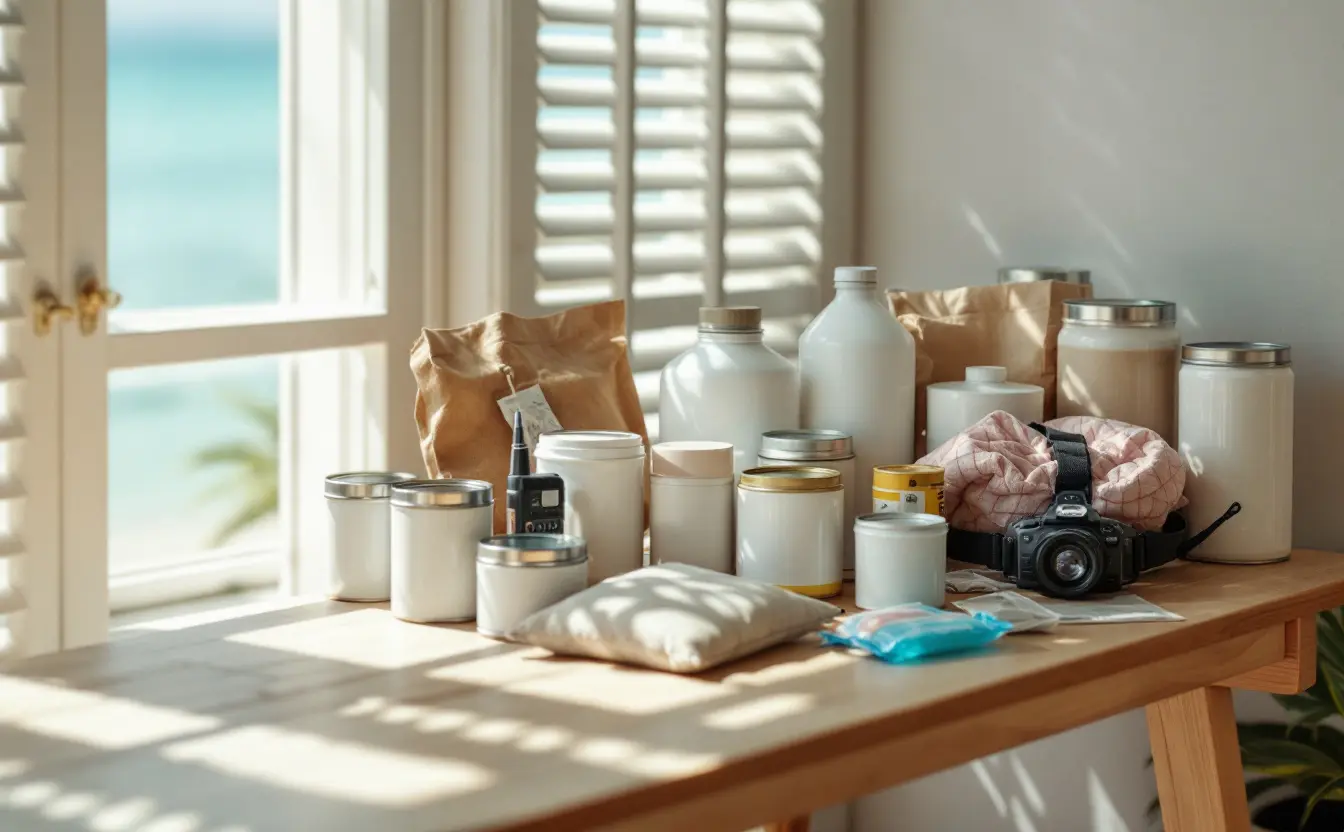
Every Bahamian household I know has a hurricane cupboard, even if it is only one shelf. Ours on Abaco was under the stairs: water in big jugs on the floor, tins in a cardboard box, and the radio on top where you could find it in the dark. When I moved to Nassau I brought the habit with me, and at the end of every season I still empty that shelf, eat whatever is close to its date and write down what needs replacing.
This is the buying list for that shelf. Our hurricane season household calendar sets out when to do each job; here the focus is on what to buy, how much, and how to use it safely. With six weeks of the season left, it works as a late-season top-up and as next May's shopping list. Visitors will find what late storms mean for a trip in our guide to the Bahamas in October.
Start with the numbers
Our hurricane supply planner takes the number of adults, children and pets and the days you want to cover, and gives you the water, the 7-gallon containers, the meals, the lights and the days of prescription medicine to keep. The sections below explain each line.
Water: the first thing to buy
Two official sources set the baseline. The US government's Ready.gov water guidance says to store at least one gallon of water per person per day for several days, for drinking and sanitation, and adds that in very hot weather water needs can double, and that children, nursing mothers and sick people may need more. NEMA's preparedness checklist asks for a three-day supply at one gallon per person per day.
Treat three days as the floor, not the goal. Mains water on New Providence comes mostly from reverse-osmosis plants, and on many islands the supply depends on electric pumps. After a serious storm, power and water can take far longer than three days to return, so many households plan for a week.
Here is the arithmetic at one gallon per person per day:
| Household | Days | Water for drinking and basic hygiene | 7-gallon containers |
|---|---|---|---|
| 2 adults | 7 | 14 gallons (about 53 litres) | 2 |
| 2 adults, 2 children | 7 | 28 gallons (about 106 litres) | 4 |
| 2 adults, 2 children | 14 | 56 gallons (about 212 litres) | 8 |
That covers drinking, cooking and a basic wash. Flushing toilets and cleaning take far more, so when a watch is issued, fill the bath and any clean barrels or buckets and keep that water apart from your drinking supply.
What to keep it in. Sealed, commercially bottled water is the simplest choice; store it in its original packaging somewhere cool and dark. If you fill your own containers, use food-grade ones, clean and sanitise them first, and replace the water every six months, as Ready.gov advises. A full 7-gallon jug weighs nearly 60 pounds (about 26 kilograms), so store it where it will be used; stackable bricks slide into a cupboard and are easier to carry.
If you are not sure the water is safe. The EPA's emergency disinfection guidance says to bring clear water to a rolling boil for at least one minute. If you cannot boil it, add 8 drops of regular, unscented 6 per cent household bleach per gallon (6 drops if the bottle says 8.25 per cent), stir, and let it stand for 30 minutes; it should smell faintly of chlorine. Never use scented or colour-safe bleach, or bleach with added cleaners. Keep one bottle of plain bleach in the kit for this alone.
Food that needs no fridge
Ready.gov asks for at least a several-day supply of non-perishable food; NEMA asks for three days and a non-electric can opener. Match your food to the days of water you are storing. The planner counts three meals per person per day, which is a useful shopping target.
Buy food your household already eats. A practical Bahamian list:
- Tinned corned beef, Vienna sausages, tuna, sardines and chicken.
- Tinned pigeon peas, beans, vegetables and fruit.
- Crackers, peanut butter, oats, dry cereal and granola.
- Long-life milk, juice boxes, dried fruit and nuts.
- Infant formula and baby food if you need them, and food for any special diets.
- A few treats. A bad night is easier with something sweet.
Keep a manual can opener in the kit even if most tins have ring pulls. Skip very salty foods that make you thirsty, write the month of purchase on each tin, and throw out any can that is swollen, dented or corroded. A full propane tank means hot food once the wind drops; grills belong outdoors only.
Kept closed, a fridge holds food safely for about four hours without power, and a full freezer for about 48. Frozen bottles of water help both, and become drinking water as they thaw. NEMA's list also includes coolers for food and ice.
The water container, the cooler and the one small tool that do most of the work in this part of the kit:
Shore bag
- Water container with a tap, about 5 gallonsStores drinking water and pours without liftingBrowse on Amazon
- Soft-sided cooler bagLunch and cold drinks for a boat or beach dayBrowse on Amazon
- Manual can openerTinned food is no use without oneBrowse on Amazon
Light without candles
Plan on one light for every person in the house, and never fewer than two. LED lanterns light a room for hours. A headlamp leaves both hands free for bolting a shutter in the dark. Keep a small torch by each bed.
Avoid candles. In a dark house full of moved furniture and tired people, an open flame is a fire waiting to happen. Buy lights that share one battery size and keep the spares sealed in a bag.
A radio that works without the network
Mobile networks and home internet often fail during and after a storm, so a battery or wind-up radio is the one item I would never go without. Make sure it has an AM band. ZNS, the national broadcaster, dates back to the 1930s, when it was set up largely to carry hurricane warnings to every island, and its AM signal on 1540 reaches a long way. US lists mention NOAA Weather Radio, but that network serves American listeners; for Bahamian bulletins from the Department of Meteorology and NEMA, the ordinary AM and FM bands matter more. Write key numbers on paper too: NEMA, the police, your insurer and one contact off the island.
Documents and cash
Put the papers you would need to rebuild your life in one waterproof pouch: passports, birth certificates, National Insurance cards, driving licences, insurance policies, your title deed or lease, vehicle papers, prescriptions and pet vaccination records. Scan them as well, and keep the scans online and on a small USB stick inside the pouch.
NEMA's checklist also lists photo ID and cash: banks may close, and card machines and cash machines stop working without power. Keep enough small notes for a few days of essentials.
First aid and medicines
A large first aid kit should cover the cuts, scrapes, sprains and stings that come with clearing up: plasters and dressings in several sizes, gauze, tape, antiseptic wipes, gloves, scissors and tweezers, plus any pain or allergy medicine you already use.
Prescriptions need more planning. NEMA's checklist has called for a four-week supply of prescription medicines and extra copies of the prescriptions; ask your doctor or pharmacist how to build that up safely. If a medicine needs refrigeration, Ready.gov advises asking your medical provider how long it stays safe at higher temperatures. If anyone relies on powered medical equipment, decide early where you will go during a long outage. Add spare glasses and mosquito repellent, which NEMA also lists.
Power: phones, fans and the generator
When a watch is issued, charge every phone, lantern and power bank. A slim power bank keeps a phone going through a day or two of careful use.
For longer outages, many households now keep a portable power station: a large rechargeable battery with ordinary sockets and USB ports. Depending on its capacity, it can run lights, a fan, a modem and phones, and the larger ones a small fridge for a while. It burns no fuel, so it makes no fumes and can be used indoors, and it can be recharged from compatible solar panels after the storm. If you are weighing one up, an EcoFlow portable power station is one option we link to; compare its capacity in watt-hours with what you actually want to run.
A fuel generator does more but carries a serious risk. Generators must only ever run outdoors. Ready.gov says to keep them at least 20 feet (about 6 metres) from windows, doors and attached garages, and the CDC adds vents to that list. Never run one inside the house, in a garage or carport, or on an enclosed porch, even with the doors open. Generators produce carbon monoxide, a colourless, odourless gas that can kill within minutes. Fit battery-powered carbon monoxide alarms near every sleeping area. If anyone feels dizzy, sick, weak or headachy while a generator is running, get everyone into fresh air at once and call for help.
Have a licensed electrician fit a transfer switch, and never plug a generator into a wall socket, which can feed power back into the lines. Store fuel in approved containers away from the house.
The radio, lights, first aid kit and paperwork side of the kit:
Shore bag
- Hand-crank and solar emergency radioRadio news and a phone top-up when the power is outBrowse on Amazon
- Battery LED lanternSafe light for a dark house, no candlesBrowse on Amazon
- Rechargeable headlampBoth hands free for shutters and generators at nightBrowse on Amazon
- Large first aid kitCuts and scrapes when clinics are closed after a stormBrowse on Amazon
- Fire-resistant document bagPassports, deeds and insurance papers in one bag you can grabBrowse on Amazon
- Slim 10,000 mAh power bankA day of maps and photos away from a socketBrowse on Amazon
Every product above was chosen by reading manufacturers' specifications and published reviews; none of it has been tested by us, so check the details against your household's needs.
The whole kit at a glance
| Part of the kit | What to have | How much |
|---|---|---|
| Drinking water | Bottled water or food-grade containers | At least a gallon per person per day; a week if you can |
| Washing and flushing water | Bath, barrels or buckets | Filled when a watch is issued |
| Food | Tins, crackers, peanut butter, long-life milk | Three meals per person per day, same days as the water |
| Light | LED lanterns, headlamps, torches | One per person, never fewer than two |
| Radio | Battery or wind-up, with AM | One, with spare batteries |
| Documents | Waterproof pouch, scans | Originals plus digital copies |
| Cash | Small notes | A few days of essentials |
| First aid | Large kit | One per household |
| Prescriptions | Medicines and copies of prescriptions | NEMA has called for four weeks |
| Power | Power banks, a power station or a generator | Charged or fuelled before the storm |
Mid-October is a good time to fill gaps, a few items with each grocery shop. When the season closes on 30 November, rotate the food into your normal cooking and replace self-filled water by its six-month mark.
Frequently asked questions
How much water do I need for a hurricane in the Bahamas?
At least one gallon (about 3.8 litres) per person per day, which is the figure used by both Ready.gov and NEMA. NEMA asks for at least three days; on a small island, a week is a safer target. Store separate water for flushing and cleaning.
How many days should a hurricane kit last?
Three days is the minimum in NEMA's checklist, but after a major storm power and water can take much longer to return. Many Bahamian households plan for a week of water and food and keep a longer supply of prescription medicines.
Can I run a generator on my porch or in the garage?
No. Generators must run outdoors, at least 20 feet (about 6 metres) from windows, doors, vents and attached garages, because their exhaust contains carbon monoxide. Fit battery-powered carbon monoxide alarms near bedrooms, and never run a generator in a garage or carport, even with the doors open.
Do I need a portable power station or a generator?
It depends on what you need to run. A power station is quiet, makes no fumes and can sit indoors, which suits lights, fans, phones and a modem. A generator can run more, but only outdoors and with careful fuel storage.
Keep reading
Moving to the Bahamas: residency options, housing and real costs
A practical decision guide to moving to the Bahamas: residence and work permits in general terms, renting versus buying, utilities, schools and grocery costs.
Hurricane season on a small island: a household calendar, May to November
A month-by-month hurricane season plan for Bahamian households, from May roof checks to November restocking, with checklists for watches and warnings.
Guava duff: how to make the Bahamas' favourite rolled pudding
Make Bahamian guava duff at home: where the rolled pudding came from, a full recipe in metric and cups, the rum butter sauce and fixes for common problems.