Renting a home in Nassau: areas, leases, deposits and what to check
How renting in Nassau works in practice: choosing an area, upfront costs, the lease terms that matter, utility accounts and the checks to make before signing.

Hannah Lowe · 9 min read
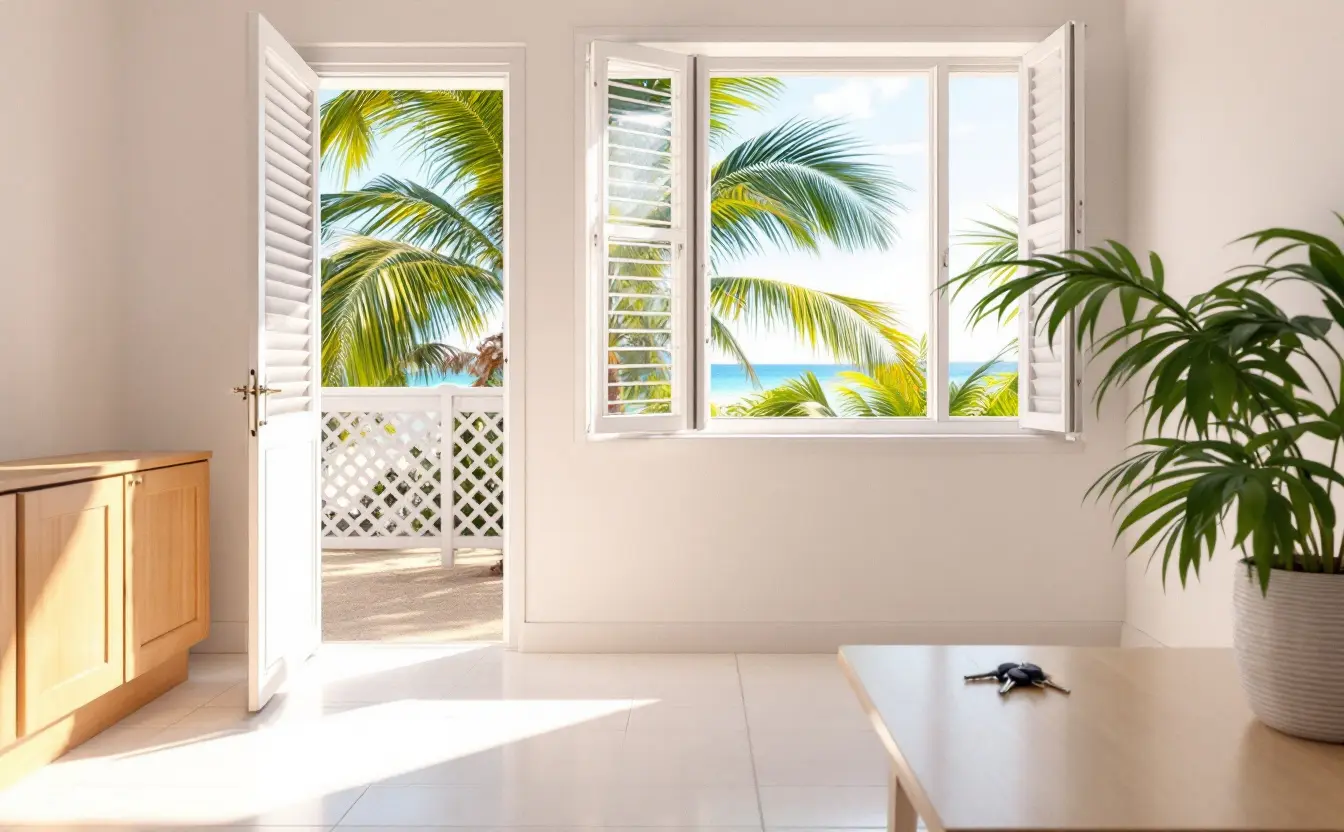
The best time to look at a rental house in Nassau is the morning after a downpour. Damp patches on a ceiling are fresh, puddles show you where the yard drains and where it does not, and you find out quickly whether the road outside turns into a pond. As the rainy season winds down at the end of October there are still a few of those mornings left, so use them.
I have helped a good many friends find homes since I moved down from Abaco, and the same lessons come up every time. Our guide to moving to the Bahamas explains why renting first is usually wise. This piece picks up where that one stops: how the rental process works on New Providence, what you pay before you get the keys, what a good lease says, and the checks worth making before you sign anything.
It is general information, not legal advice. A Bahamian attorney can read a lease for you, and on a commitment worth a year's rent that is money well spent.
Choose a route before you choose a house
On a map, New Providence looks too small for location to matter. Traffic says otherwise. The main roads into town are slow at rush hour, so the first question is where you will drive every weekday (office, school, the airport) and at what time.
In broad strokes:
- The western side of the island, along the coast towards the airport, has many newer developments, gated communities and beachfront condominiums. The drive into downtown can be long at peak times, though it is short if your work is in the west.
- The eastern side, closer to downtown and the bridges to Paradise Island, has older, established residential streets and some of the quickest runs into town.
- Paradise Island is mostly condominiums and townhouses, many with monthly association fees on top of the rent.
- The centre and south of the island are largely residential, often better value, and further from the north-shore beaches.
Within any of these, the street matters more than the district. Low-lying pockets that take water in heavy rain exist all over the island, and one road can stay dry while the next floods. Drive your commute at the hour you would actually make it, walk the street after rain, and talk to a neighbour. People here are generous with that kind of information if you ask politely.
How homes come to market
Most rentals reach tenants in one of three ways: through real estate agents, online listings or word of mouth. Anyone practising real estate in the Bahamas must be licensed and belong to the Bahamas Real Estate Association, so it is perfectly reasonable to ask an agent for their licence details. Private landlords advertise too, and some of the best-kept houses never reach a listing at all; they pass from tenant to tenant through offices and churches.
A few habits protect you from the occasional scam:
- Never pay a deposit for a property you have not seen inside.
- Confirm that the person you are dealing with owns the house or is authorised to let it.
- Pay by traceable means and get a receipt for every payment.
- Be wary of anyone pressing you to commit on the spot.
Ask early what "furnished" and "unfurnished" mean for that particular house. Unfurnished can still include a fridge, a stove, a washing machine and the air-conditioning units, or it can mean bare rooms. Get the answer in writing, with an inventory.
What you pay before you get the keys
When you sign, expect to pay the first month's rent and a security deposit, commonly around a month's rent. Some landlords ask for the last month in advance as well, or a larger deposit for a furnished home. Deposits here are mainly a matter of contract, so the lease is what governs how much you put down and how and when it comes back.
Then add the costs people forget:
- Utility deposits. Bahamas Power and Light takes a security deposit on a new account, based on expected or past consumption at the address. The Water & Sewerage Corporation has its own charges for a new account.
- Stamp duty. Leases attract stamp duty, charged on the annual rent. The lease should say who pays it.
- Agent's fees. Ask at the first viewing whether any fee falls to you as the tenant.
- Setting up. Curtains, fans, a water filter, a gas tank for the stove, and a few weeks of shopping for basics.
Long-term residential rents are exempt from VAT. Short holiday lets are not, which is one reason a furnished "monthly" rental priced like a vacation home costs what it does.
The pre-signing checklist
At the viewing
- Run every tap and flush every toilet. Check the pressure upstairs and down, and look under sinks for drips and swollen cabinet floors.
- Ask where the water comes from. City mains, a well, a cistern or a mix. If there is a pump, ask who maintains it and what happens when it fails.
- Switch on each air-conditioning unit. Listen for rattles, feel for cold air and look for stains on the wall below.
- Ask for recent electricity bills. A landlord with nothing to hide will share a few months. A summer bill tells you far more than a winter one.
- Look up. Ceiling stains, flaking paint and a musty smell in closets point to leaks or mould.
- Check the shutters. Count them, try one, and find out where the panels and fixings are kept.
- Look for termites. Small piles of droppings on window sills and soft spots in door frames are worth a question.
- Test your phone. Make a call from the back bedroom, and check which internet providers serve that exact address.
- Note the security. Locks on every outside door, window grilles, outside lighting, and who else holds keys.
On paper
- Confirm the landlord's identity and ownership, or the agent's written authority to let.
- Read the whole lease, not a summary. If it refers to house rules or an association's by-laws, ask for copies.
- Agree a written condition report, signed by both of you, with dated photographs attached.
- Put every promise into the lease. "We'll repaint before you move in" means nothing if it is only said.
Lease terms to look for
| Term | What to look for | Why it matters |
|---|---|---|
| Length and renewal | Start and end dates, how renewal works, notice needed | Avoids surprises when the year ends |
| Rent | Amount, due date, method of payment, any late fee | Traceable payments protect you in a dispute |
| Rent reviews | When, and by how much, the rent can rise | Increases should be set out, not sprung on you |
| Security deposit | Amount, deadline for return, what can be deducted | The condition report is your evidence at the end |
| Repairs | Who fixes what, how quickly, who to call out of hours | A dead pump or air conditioner in August cannot wait a fortnight |
| Hurricane duties | Who fits and removes shutters, who repairs storm damage, what happens if the home is unliveable | Over a long tenancy, a storm is likely |
| Generator | Whether there is one, who fuels and services it | Fuel and servicing add up |
| Utilities | Whose name the accounts are in, what the rent includes | The power company needs the landlord's authorisation for a tenant account |
| Early termination | Notice and any penalty if you must leave early | Jobs and permits do change |
| Pets | What is allowed and any extra deposit | Better agreed now than argued later |
| Yard, pool and pest control | Who pays for each, and how often | These are monthly costs, not occasional ones |
| Access | How much notice the landlord gives before visits | It is your home while you pay for it |
Setting up utilities
Opening your own electricity account is simple if you arrive prepared. Bahamas Power and Light asks renters for a landlord authorisation form, a copy of the lease, two forms of government-issued photo identification and a signed contract for supply. Non-Bahamians are also asked for a valid permit, such as a work permit or permanent residence. The Water & Sewerage Corporation accepts applications from the tenant named on the lease, with identification and the lease or a rent receipt.
If your permit is still being processed, some landlords will keep the accounts in their own name and pass the bills on. That works well enough if the lease says how it is done and you see the original bills each month.
Before the first storm of your tenancy, sit down with the lease and our hurricane season household calendar, and agree with your landlord which jobs on that list belong to whom.
Living there, and leaving well
Keep a simple file: the signed lease, the condition report and photographs, every rent receipt and any messages about repairs. Report problems in writing, even after a phone call, and give the landlord a fair chance to put them right.
When it is time to leave, give notice the way the lease says, in writing. Ask the landlord to walk through the house with you against the original condition report, and take a fresh set of photographs on the day you hand back the keys. Most deposit disputes come down to whose memory is better, and photographs settle that.
For more on the practical side of settling in, browse our island living section.
Frequently asked questions
How much is a security deposit in Nassau?
Commonly about a month's rent, paid with the first month's rent when you sign, though some landlords ask for more, particularly for furnished homes. The amount and the rules for returning it are set mainly by the lease, so read that clause closely and keep your condition report somewhere safe.
Do I pay VAT on rent?
Not on a long-term residential lease, because renting a home to live in is exempt. Short holiday rentals are treated differently and do carry VAT, so be clear about which kind of arrangement you are signing.
Can I rent before my work permit is approved?
Many landlords will rent to newcomers, though they may ask for evidence of your status or a letter from your employer. Opening utility accounts in your own name generally needs a permit, so agree in the lease how the bills will be handled until yours comes through.
How much notice do I give when I want to leave?
Whatever the lease says, which is why the notice clause deserves attention before you sign. Where rent is paid monthly and nothing is written down, at least a month's notice is the usual expectation. Give it in writing and keep a copy.
Keep reading

Hurricane kit list for a Bahamian home: water, food, light and power
A hurricane kit list for Bahamian homes: how much water to store, food that needs no fridge, light, radio, documents, first aid and power that is safe to run.

Moving to the Bahamas: residency options, housing and real costs
A practical decision guide to moving to the Bahamas: residence and work permits in general terms, renting versus buying, utilities, schools and grocery costs.

Hurricane season on a small island: a household calendar, May to November
A month-by-month hurricane season plan for Bahamian households, from May roof checks to November restocking, with checklists for watches and warnings.