Renting a car in the Bahamas: driving on the left, licences and golf carts
How car hire works in the Bahamas: driving on the left, using your home licence, island roads and fuel, insurance at the counter, and golf carts on the cays.

Devon Saunders · 9 min read
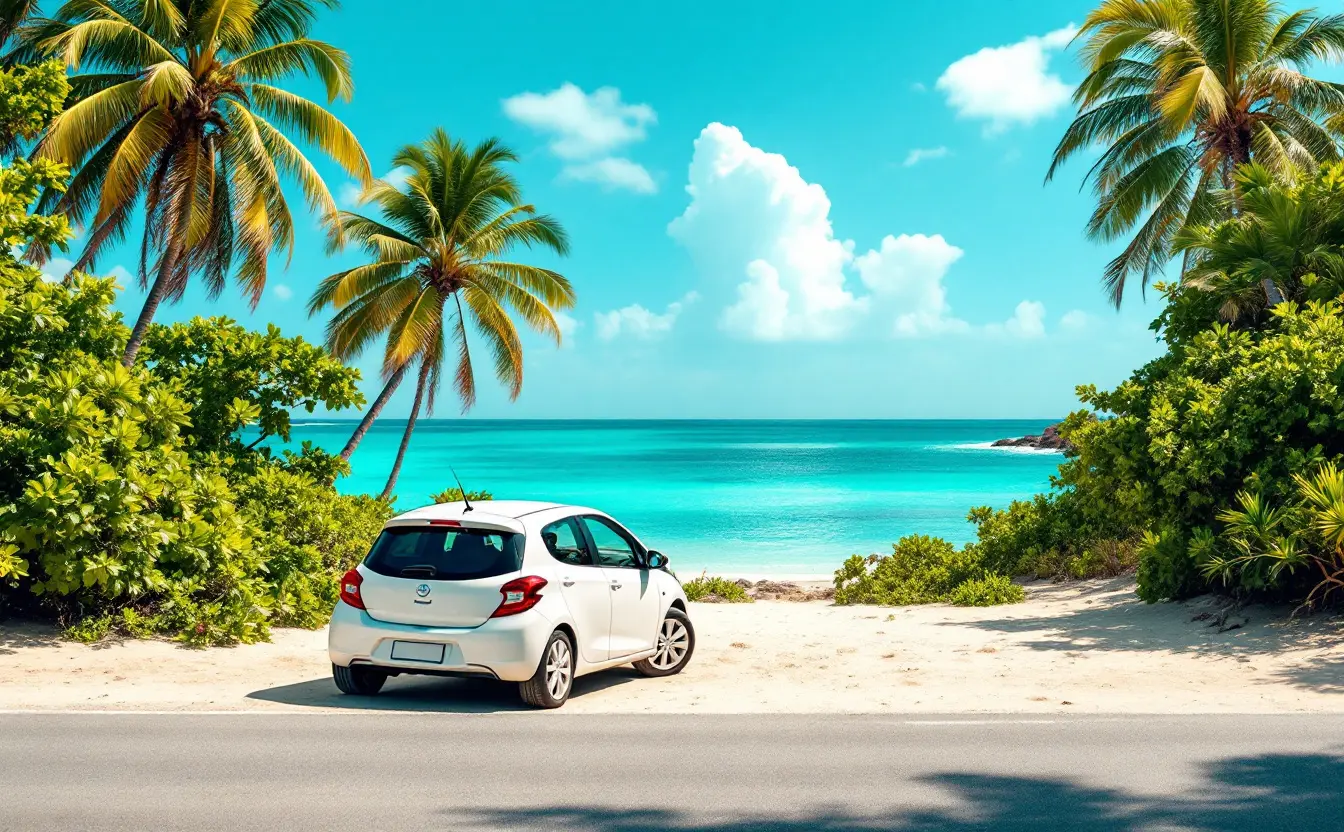
The rental car is often the second-biggest line in a Family Island budget, after the room, and the one visitors think about least. The daily rate is only the start. Add fuel, which costs more here than on the mainland of the United States, the insurance options offered at the counter, and the deposit held on your card, and the real figure can look quite different from the one on the booking screen.
This guide covers the practical side: whether you need a car at all, driving on the left, which licences visitors can use, what to ask about insurance, island roads and fuel, and the golf carts that replace cars on Harbour Island and many of the cays. It is general information. Rental terms vary by company, and the rental agreement, the Road Traffic Department and your insurer have the final word.
Do you need a car at all?
It depends far more on the island than on the length of your stay.
| Where you are staying | Car needed? | Why |
|---|---|---|
| Nassau, Cable Beach or Paradise Island | Often not | Taxis and jitneys cover the main areas; a car helps for exploring the west and south of New Providence |
| Grand Bahama | Useful | Freeport is spread out and the beaches and parks to the east are a drive away |
| Eleuthera, Long Island, Exuma, Andros, mainland Abaco | Usually yes | Long main roads, settlements miles apart and few taxis between them |
| Harbour Island, Spanish Wells, Bimini and the Abaco cays | No | A golf cart, a bicycle or your own feet will do |
In Nassau, jitneys, the local minibuses, run along the main routes, take exact change and are paid as you get off. Taxis fill the gaps. On the larger Family Islands, though, a taxi from the airport to your cottage can be a long and costly ride, and without a car you are tied to wherever you are staying. Our first-timer's guide to the Out Islands compares how each island is laid out.
Driving on the left
Traffic in the Bahamas keeps to the left, following British rules, and the tourism ministry's own advice to visitors is to take particular care at roundabouts.
The twist is the car itself. Many vehicles on Bahamian roads, hire cars included, are imported from the United States and have the steering wheel on the left, even though you drive on the left side of the road. Others are Japanese imports with the wheel on the right. You may get either, so it helps to understand what each means:
- A left-hand-drive car on a left-side road puts you next to the verge rather than the centre line. Overtaking is harder because you cannot see past the vehicle in front. Hang well back, or simply do not overtake on narrow roads.
- A right-hand-drive car puts you next to the centre line, as in Britain, which many visitors find easier.
A few habits help in the first hour:
- Roundabouts go clockwise. Give way to traffic already on the roundabout, which comes from your right.
- Right turns cross the traffic. This is the turn that catches North Americans out. Pause, look right, then left, then right again.
- Watch the wipers. On an unfamiliar car the indicator and wiper stalks may be on the opposite side from home. Everyone washes their windscreen at least once.
- Leave the airport slowly. Practise in the car park before joining the main road.
Licences: what visitors can use
Visitors can drive in the Bahamas on a valid licence from their home country for up to three months. The Ministry of Tourism's visitor FAQ gives that three-month period, and British and Canadian government travel advice says the same for their own licences. Canada's advice also recommends carrying an International Driving Permit, and the UK advice notes that holders of older paper licences may need one. For stays longer than three months, residents apply for a Bahamian licence through the Road Traffic Department.
Carry your licence and passport whenever you drive. Rental companies also set their own rules, and these matter as much as the law:
- Minimum age. Many firms rent from 21, and younger drivers may pay a surcharge, often up to the age of 25.
- A credit card in the driver's name. Most firms place a hold on the card for the deposit, and some do not accept debit cards.
- Additional drivers. Anyone else who will drive must usually be named on the agreement and show their own licence.
Insurance at the counter
This is where the price changes most. Ask exactly what the base rate includes before you sign, and read the agreement rather than the summary.
Collision damage waiver. At some firms this is optional. Without it, you can be liable for the full value of the car if it is damaged or stolen. With it, your liability usually falls to a set excess, the amount you pay before the waiver takes over. Ask what the excess is, and whether a second, more expensive option reduces it further.
What is excluded. Rental contracts commonly exclude damage to tyres, windscreens and the underside of the car, and many exclude driving on unpaved roads. On islands with sandy tracks down to the beach, that matters.
Cover you may already have. Some credit cards include rental car damage cover when you pay with the card, and some travel insurance policies include it or sell it as an option. Check whether that cover applies in the Bahamas, whether it pays first or only after other insurance, and what proof you will need. Our guide to travel insurance for a Bahamas trip covers what else to check in a policy.
Before you drive away, walk round the car with the agent and photograph every scratch, the tyres, the windscreen and the fuel gauge. Check that there is a spare tyre and a jack. On a Family Island, the nearest replacement car may be a day away.
Island roads
Road conditions vary a great deal. Canada's travel advice describes roads in and around the main towns as generally good, and those in rural areas as poorly maintained and dangerous.
In Nassau, expect heavy traffic at rush hours, especially on the routes into downtown, and plan extra time for the airport. Heavy rain can leave standing water on low-lying roads.
On the Family Islands, the main road is often a single highway running the length of the island. On Eleuthera, more than 100 miles long, the Queen's Highway links settlements that can be many miles apart. Expect potholes, narrow stretches, sharp bends and few signposts, and watch for dogs on the road near settlements.
At night, rural roads are dark and unlit. The UK Foreign Office warns that the drink-driving law is not always enforced, so evening driving and rural roads can be dangerous. Plan long drives for daylight where you can.
For directions, phone signal may be patchy between settlements. Download offline maps before you set off, ask locally, and do not be surprised if directions come by landmark rather than street name.
Fuel
Fuel is sold by the gallon, as in the United States, but it costs more, and it costs more again on the Family Islands than in Nassau because of the extra freight. Service stations are fewer outside the main towns, and on some islands many close on Sundays.
The simplest rule is to fill up whenever the tank drops to half and you pass an open station. Ask the rental firm about its fuel policy: some expect the car back full, and charge well for any shortfall. Carry some cash, since a station on a smaller island may not take cards.
Golf carts on Harbour Island and the cays
On Harbour Island, Spanish Wells, North Bimini and Abaco cays such as Green Turtle Cay, Elbow Cay and Great Guana Cay, golf carts are the local cars. On Harbour Island, rental stands work near the dock; elsewhere, hotels can usually help you arrange one. In Hope Town on Elbow Cay, the narrow lanes of the settlement itself are for walkers and bicycles.
A few points to remember:
- The same rules apply. Carts keep to the left and give way as cars do. Stay close to the left edge so faster traffic can pass.
- Renters usually need a licence. Operators set their own minimum age and ask for a valid driving licence.
- Children need watching. Carts have no doors and often no seat belts. Keep small children seated and in the middle.
- Check the lights. If you plan to drive back from dinner, make sure the headlights work before you rent.
For a day trip, a cart for the afternoon is often enough. Our Harbour Island day trip from Eleuthera suggests when a cart helps and when walking is better, and our guide to island-hopping the Exumas shows how cars, boats and planes fit together on a longer trip.
Booking and picking up
Several international and local firms have desks at Lynden Pindling International Airport in Nassau, and comparing them side by side shows quickly what each includes in its rate. A car hire search such as EconomyBookings lists several suppliers at the Nassau airport, which makes it easier to compare insurance terms and deposits as well as the daily rate.
On the Family Islands, rental firms are often small local businesses, and some meet you at the airport or the dock with the car rather than at a counter. Cars may be older, and fleets are small. Book well ahead for busy weeks such as Christmas, Easter and regatta time, when families coming home and visitors chase the same handful of cars.
A few small things make island driving easier: a mount so the phone's map sits at eye level, a charged power bank for long days away from the cottage, and cold water for the car.
Before you drive: a checklist
- Check that your licence is valid for the whole trip, and pack an International Driving Permit if your government's advice suggests one.
- Confirm the rental firm's age rules, deposit and card requirements.
- Ask what the base rate includes and what the excess is with and without the waiver.
- Check what your card or travel insurance already covers.
- Photograph the car, tyres and windscreen before leaving.
- Download offline maps and note where the fuel stations are.
- Drive the first stretch slowly, and keep left.
Frequently asked questions
Do you drive on the left in the Bahamas?
Yes. Traffic keeps to the left and roundabouts run clockwise. Many cars, hire cars included, are imported from the United States with the steering wheel on the left, so overtaking needs extra care.
Can I drive in the Bahamas with a US or UK licence?
Visitors can drive on a valid home licence for up to three months. Canada's travel advice recommends carrying an International Driving Permit, and UK holders of older paper licences may need one. Rental firms also set their own age and card rules, so check those when you book.
Do I need a car on Harbour Island?
No. Golf carts are the island's main vehicles, and the town and the beach are an easy walk from the dock. A cart is useful for the north end of the island or for carrying beach gear.
Should I buy the rental company's insurance?
It depends on what you already have. Without a collision damage waiver you may be liable for the full value of the car, but some credit cards and travel insurance policies include rental car cover. Check what applies in the Bahamas, and what the excess and exclusions are, before you decide.
Keep reading
Swimming with pigs from Nassau: how the Exuma day trips work
Swimming with pigs from Nassau: how the Exuma day trips work, boat or plane, the long day, what drives the cost, pig welfare and what to bring.
What to pack for a Bahamas cruise: a 3 to 5 night packing list
What to pack for a 3 to 5 night Bahamas cruise: documents, the boarding-day bag, cabin kit, cruise-line rules on power strips and irons, and a port-day bag.
Ferry from Florida to the Bahamas: Bimini and Grand Bahama by sea
How the ferry from Florida to the Bahamas works: Port Everglades to Bimini or Freeport, passports, Gulf Stream seas in winter, and day trip versus overnight.