Choosing your first Out Island: Eleuthera, Andros, Long Island or Abaco
Eleuthera, Andros, Long Island or Abaco? A side-by-side guide to getting there, getting around and which Out Island suits a first visit to the Bahamas.

Marisa Cartwright · 9 min read
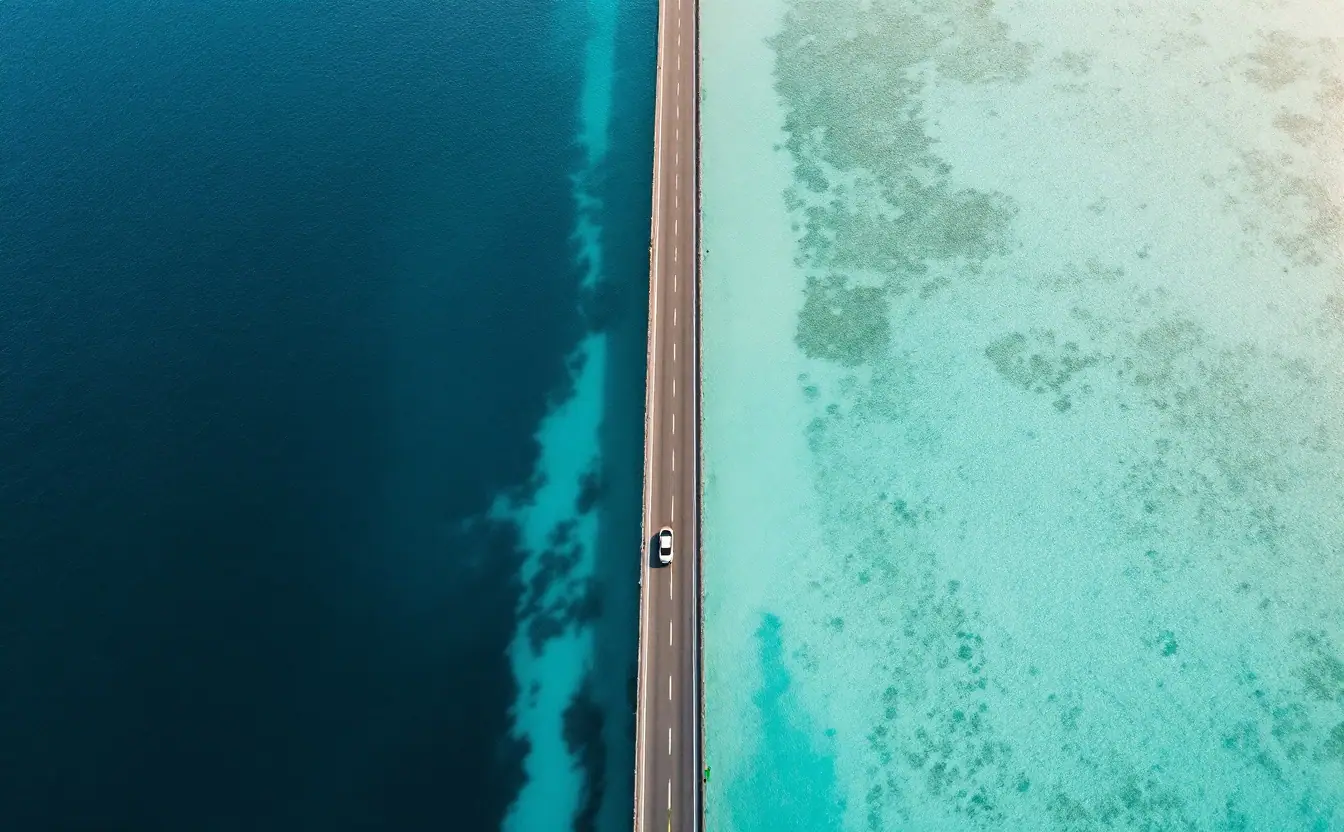
At the Glass Window Bridge on Eleuthera, the island is so thin that you can stand on the road and see two different seas at once: the ink-blue Atlantic on one side, the pale green of the Bight of Eleuthera on the other. It is a fair summary of the Out Islands in general. They are close to Nassau, often less than an hour by small plane, and they feel nothing like it.
"Out Islands" (the official name is the Family Islands) covers everywhere in the Bahamas beyond New Providence and Grand Bahama. There are dozens of inhabited islands to choose from, and that choice is where most first-timers get stuck. This guide compares four that work well for a first visit: Eleuthera, Andros, Long Island and the Abacos. All four can be reached without a private boat, and each offers a different version of island life.
The four at a glance
| At a glance | Eleuthera | Andros | Long Island | The Abacos |
|---|---|---|---|---|
| Shape and size | About 110 miles long, often under two miles wide | The largest Bahamian island, cut into pieces by tidal channels called bights | Roughly 80 miles long and a few miles wide | A mainland (Great and Little Abaco) plus a chain of cays along the Sea of Abaco |
| Airports | North Eleuthera, Governor's Harbour, Rock Sound | San Andros, Andros Town, Mangrove Cay, Congo Town | Stella Maris, Deadman's Cay | Marsh Harbour, Treasure Cay |
| Best known for | Pink sand on Harbour Island, Atlantic beaches, small harbour towns | Bonefishing flats, blue holes, a long barrier reef | Dean's Blue Hole, quiet beaches, farming settlements | Boating between Loyalist cays, the Hope Town lighthouse |
| Getting around | Hire car; golf cart on Harbour Island | Hire car, but plan for long gaps between settlements | Hire car on one long main road | Car on the mainland; ferries and rental boats to the cays |
| Pace | Relaxed, with the most choice of places to eat | Remote and outdoorsy | Very quiet, very friendly | Sociable and on the water |
Eleuthera, with Harbour Island and Spanish Wells
Eleuthera is the easiest Out Island to love on a first trip because it offers variety without much effort. The Queen's Highway runs the length of the island, so a hire car gets you from the pineapple country around Gregory Town to the pastel houses of Governor's Harbour and on to Rock Sound in the south, where the inland saltwater pool known as Ocean Hole sits a few minutes from the main road.
Getting there and around
Three airports serve the island, so fly into the one nearest your lodgings rather than driving 80 miles after landing. North Eleuthera is the gateway for Harbour Island and Spanish Wells: a short taxi ride takes you to the dock, then a water taxi does the rest in minutes. There is also a fast ferry from Nassau to Harbour Island and Spanish Wells on certain days of the week, a pleasant alternative to flying if you don't mind a few hours on the water. Sailing days change by season, so check first.
What fills the days
Beaches, mostly, and the joy of having one to yourself. The Atlantic side has the reef-sheltered coves and surf; the Bight side is calm and shallow, good for children and paddleboards. Harbour Island's beach gets its pink tint from the crushed shells of tiny marine organisms, and it is busier and pricier than mainland Eleuthera. In the north, Preacher's Cave marks where the Eleutheran Adventurers, some of the earliest English settlers, are said to have sheltered after their ship struck the reef in the 1640s. Near Governor's Harbour, the Leon Levy Native Plant Preserve, managed by the Bahamas National Trust, makes a good shaded morning out.
Who it suits
Couples, families and anyone who wants a choice of restaurants and beaches without needing a boat. If this is your first trip beyond Nassau and you can only pick one island, Eleuthera is the safest bet.
Andros
Andros is the largest island in the Bahamas by a wide margin, yet it is one of the least developed. It is not so much one island as a cluster, divided into North Andros, Mangrove Cay and South Andros by the North, Middle and South Bights. The west side is a vast, shallow wilderness of mangrove and flats; the east coast faces the Tongue of the Ocean, a deep trench that drops away just beyond the Andros Barrier Reef, which runs for well over a hundred miles along that shore.
Getting there and around
Flights from Nassau are short, but it matters which of the four airports you choose, because the bights mean you cannot simply drive from one end of Andros to the other. A passenger ferry runs between Nassau and Fresh Creek, and mail boats serve several settlements from Potter's Cay Dock. Once on the ground, a hire car is essential. Distances between settlements are long, fuel stations are few and night driving on unlit roads is best avoided.
What fills the days
Andros is famous among bonefishing anglers, and the flats are why many people come. Divers come for the wall dives off the reef and for the blue holes, both inland and offshore. Inland there are pine forests, freshwater creeks and the folklore of the chickcharney, the mischievous bird-like creature said to live in the woods.
Who it suits
Anglers, divers and travellers who are happy with simple lodgings in exchange for space. It is not the right choice for anyone who wants to stroll to a café each evening.
Long Island
Long Island sits further south-east, roughly 80 miles long and so narrow in places that the Atlantic and the calm western shore are both a few minutes away. The Tropic of Cancer crosses the island. The Atlantic-facing east coast is rocky, with headlands and cliffs; the sheltered western shore has long sweeps of white sand.
Getting there and around
Most visitors fly from Nassau into Stella Maris in the north or Deadman's Cay in the middle of the island. A single main road links the settlements, so a hire car covers it easily.
What fills the days
Dean's Blue Hole, just outside Clarence Town, is the headline: a near-circular sinkhole about 200 metres deep, bordered by a sandy beach and a shallow lagoon, so you can swim from turquoise into near-black water in a few strokes. Freedivers train there; at the surface it is a calm swim. Clarence Town also has two hilltop churches designed by the architect-priest John Hawes, better known as Father Jerome. Elsewhere, look out for the pothole farming that Long Islanders practise in pockets of soil between limestone, and for the beach at Cape Santa Maria in the north.
Who it suits
Travellers who want quiet, and returning visitors who already know the busier islands. Long Island has a strong sense of community, but limited nightlife and fewer places to eat.
The Abacos
The Abacos offer a different kind of trip: one built around boats. The mainland of Great and Little Abaco has the airports and the supermarkets, centred on Marsh Harbour. Offshore, a chain of cays shelters the Sea of Abaco, relatively sheltered water that suits small boats.
Getting there and around
Marsh Harbour and Treasure Cay both receive flights from Nassau and from Florida. From there, scheduled ferries link the mainland with Elbow Cay, Man-O-War Cay, Great Guana Cay and Green Turtle Cay. Many visitors rent a small boat for a few days; get a local briefing on the shallows and the weather first.
What fills the days
Hope Town on Elbow Cay is anchored by the red-and-white striped Elbow Reef Lighthouse, still lit by kerosene, with its lens wound by hand. New Plymouth on Green Turtle Cay and the boatbuilding tradition on Man-O-War Cay both carry the history of the Loyalists who settled here after the American Revolution. Pelican Cays Land and Sea Park, a protected reef between Marsh Harbour and Little Harbour, makes a lovely snorkelling stop on a calm day. On the mainland, Abaco National Park protects the pine forest where the Abaco parrot nests in holes in the limestone ground, something no other New World parrot is known to do.
Hurricane Dorian struck Abaco in 2019. Five years on, much has been rebuilt but some areas are still recovering, so ask about the current state of anywhere you plan to stay.
Who it suits
Families and groups who like being on the water, and anyone who has a little boating experience or is willing to hire a captain.
How to choose
If you are still undecided, these rough rules work for most people:
- First trip, mixed group, want options: Eleuthera.
- Fishing, diving or wild landscapes come first: Andros.
- Want the quietest beaches and a slower pace: Long Island.
- Want to spend most days on a boat: the Abacos.
- Only have a long weekend: pick whichever island has the most convenient flight, and don't try to combine two.
Combining islands is possible, but most routes go back through Nassau and can cost you most of a day. If you have a Nassau stopover, spend a morning on our Old Nassau walking route.
Timing your first trip
Winter and spring are the main visitor seasons: dry and comfortable, interrupted by the occasional cold front and a few days of brisk north wind. Late spring and early summer tend to bring the calmest seas. Hurricane season runs from June to the end of November, busiest from August into October. Travelling then is quieter and quite doable, but buy insurance that covers storm disruption and stay flexible. Our month-by-month weather guide has more detail, and the hurricane-season household calendar explains what islanders themselves do through those months.
Practical notes for any Out Island
- Carry cash. Cards work in larger settlements, but cash machines are few and far between.
- Drive on the left. Roads can be narrow and potholed.
- Shop early in the week. Supermarket shelves are usually freshest just after the mail boat or freight arrives.
- Pack insect repellent. No-see-ums and mosquitoes come out near mangroves at dusk, especially after rain.
- Confirm everything. Flight times, ferry days and opening hours change; check with operators or the official tourism site, bahamas.com, before you travel.
Frequently asked questions
What is the difference between the Out Islands and the Family Islands?
They are the same places. "Family Islands" is the name used officially in the Bahamas, while "Out Islands" is still common in travel writing and everyday speech. Both refer to the islands beyond New Providence and Grand Bahama.
Do I need to go through Nassau to reach the Out Islands?
Not always. Several Out Island airports, including North Eleuthera, Governor's Harbour, Marsh Harbour and Treasure Cay, have had direct flights from Florida and other points in the United States, though routes change from season to season. For Andros and Long Island, connecting through Nassau is the usual path.
Is a hire car necessary?
On Eleuthera, Andros, Long Island and mainland Abaco, yes: settlements are spread out and taxis can be expensive over long distances. On small cays such as Harbour Island, Elbow Cay or Green Turtle Cay, a golf cart or your own feet will do.
How many days do I need?
Five nights is a comfortable minimum for one island, allowing for a travel day at each end. A week lets you settle into the rhythm, which is really the point of going.
Keep reading
Island-hopping the Exumas by mail boat, ferry and small plane
A leg-by-leg Exumas route: overnight mail boat from Nassau to the cays, small boats around Staniel Cay, a light-plane hop to George Town and harbour ferries.
How tourism shapes the Bahamian economy: cruise, resorts and Out Islands
How visitor spending flows through the Bahamian economy: cruise versus stopover visitors, Nassau versus the Out Islands, and the risks of relying on tourism.
Is the Bahamas in the Caribbean? Geography, CARICOM and regional ties
The Bahamas sits in the Atlantic, not the Caribbean Sea, yet it belongs to CARICOM and shares the region's history. Here is how geography and politics fit.