Is the Bahamas in the Caribbean? Geography, CARICOM and regional ties
The Bahamas sits in the Atlantic, not the Caribbean Sea, yet it belongs to CARICOM and shares the region's history. Here is how geography and politics fit.
Julian Pinder · 8 min read
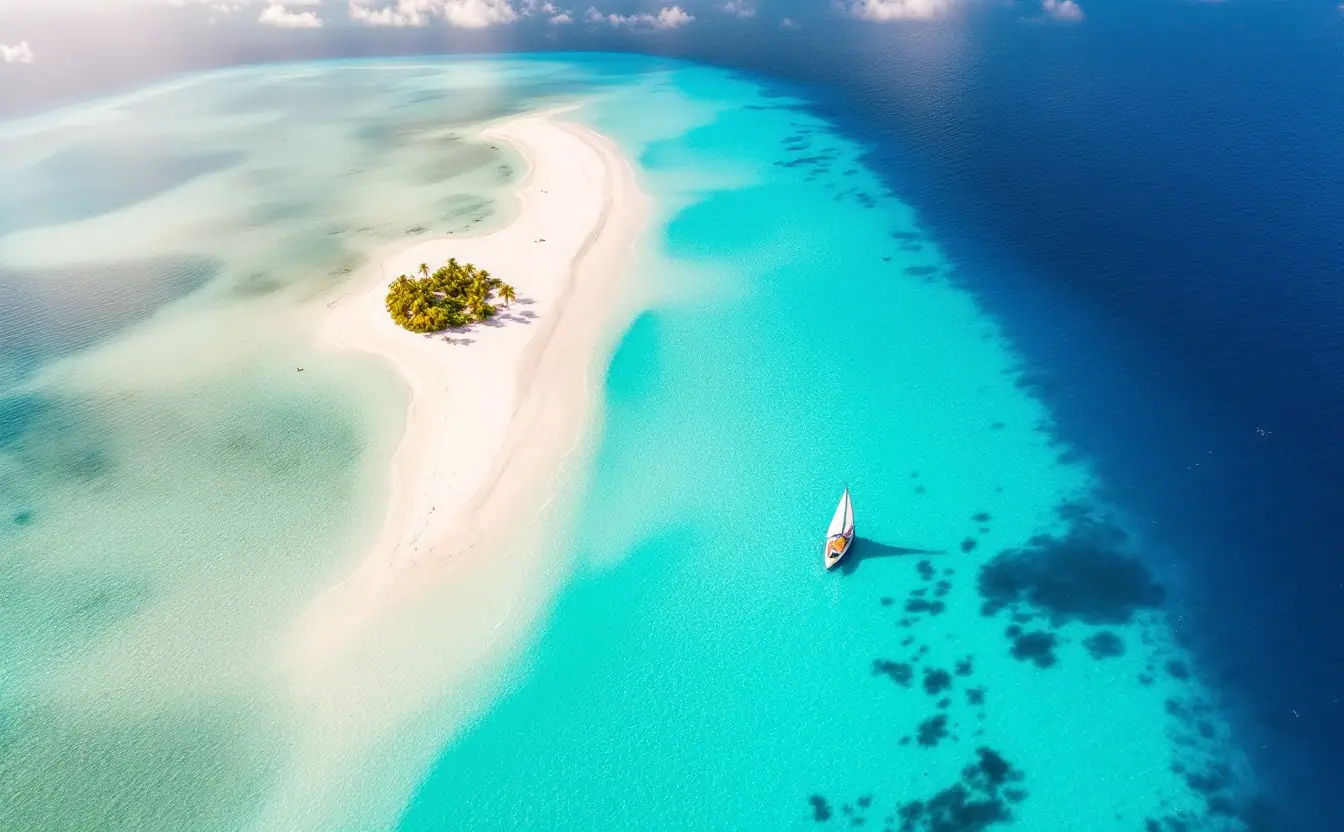
On a nautical chart the answer looks simple. The Bahamas sits on two shallow limestone platforms, the Little Bahama Bank and the Great Bahama Bank, in the western Atlantic Ocean. The Caribbean Sea starts on the far side of Cuba and Hispaniola. Sail south from Nassau and you have to pass the Greater Antilles before you reach Caribbean water at all.
Still, ask most Bahamians whether they are Caribbean people and you'll get a firm yes, sometimes with a qualification attached. The country belongs to the Caribbean Community, sends athletes to the CARIFTA Games, trains doctors with the University of the West Indies, and shares centuries of history with the islands to the south. My argument here is that "Caribbean" has never really been about which sea touches your beach. It is a matter of history, politics and culture, and on those tests the Bahamas is Caribbean, even if it is a member of the family that keeps its own front-door key.
What the map says
The Bahamas is an archipelago of about 700 islands and some 2,400 cays, of which only around 30 are inhabited. Its total land area is close to 14,000 square kilometres, scattered over a far larger stretch of sea. Bimini is roughly 50 miles from the Florida coast. At the other end of the chain, Inagua and Ragged Island lie much closer to Cuba and Haiti than to Nassau. The Tropic of Cancer crosses the Exumas, and the highest point in the whole country, Mount Alvernia on Cat Island, is only about 63 metres above sea level.
Geographers group the Bahamas with the Turks and Caicos Islands as the Lucayan Archipelago, after the Lucayan people who lived here when Europeans arrived. Strictly, the archipelago is an Atlantic one.
Applied consistently, though, the "Caribbean Sea" test produces odd results. Barbados also lies in the Atlantic, east of the Lesser Antilles chain, and nobody doubts that it is Caribbean. Guyana and Suriname are on the South American mainland, and Belize is in Central America. All four are founding or long-standing members of the Caribbean Community. If the sea were the test, the region's political heart would be outside the region.
What history says
The shared story starts early, and it starts badly. Columbus made his first landfall in the Americas in October 1492 on an island the Lucayans called Guanahani, now generally identified with San Salvador. Within a generation the Lucayans had been carried off to Hispaniola as forced labour, and the islands were left almost empty.
From then on the Bahamas followed a recognisably Caribbean path. English settlers from Bermuda, the Eleutheran Adventurers, arrived in the 1640s. Pirates used Nassau as a base until a royal governor arrived in 1718 to expel them. After the American Revolution, Loyalists brought enslaved Africans and a plantation economy. Emancipation came in 1834, as it did across the British colonies, and Africans freed from slave ships settled villages around Nassau. For half a century, from 1799 to 1848, the Turks and Caicos Islands were even governed from Nassau.
The Bahamas did, however, stay out of the West Indies Federation of 1958 to 1962, the short-lived attempt to unite Britain's Caribbean colonies into one country. Its leaders looked north to North America rather than south. That instinct, to belong to the region without being swallowed by it, still shapes Bahamian policy.
CARICOM: in the Community, not the market
The Caribbean Community was created by the Treaty of Chaguaramas, signed in Trinidad on 4 July 1973. Six days later, on 10 July, the Bahamas became independent. It joined CARICOM ten years on, signing on 4 July 1983 and becoming the thirteenth member, but it joined the Community without joining the Common Market. The original treaty made that possible by treating the two as separate legal instruments.
The same choice was made again when the Common Market evolved into the CARICOM Single Market and Economy. The Revised Treaty of Chaguaramas that set out the single market was signed in Nassau, on 5 July 2001. The Bahamas hosted the signing but has not taken part in the single market. It is not bound by its rules on the free movement of skilled workers or by the common external tariff on imports.
The reasons usually given are practical. In a country with a small population, governments have been wary of giving up control over immigration and the labour market. For many years the state also depended heavily on import duties for its revenue, which made a common external tariff hard to accept. Value added tax was only introduced in 2015.
What membership does mean is close cooperation on foreign policy, health, education, security and disaster response. When Hurricane Dorian struck Abaco and Grand Bahama in 2019, the regional disaster agency CDEMA coordinated assessment and support teams drawn from across the Community. The Bahamas is also a member of the Caribbean Development Bank, the Association of Caribbean States and the Caribbean Tourism Organization.
CARICOM has fifteen full members, from the Bahamas in the north to Suriname in the south. It also has associate members, mostly British Overseas Territories such as the Turks and Caicos Islands, the Cayman Islands and Bermuda, plus Curaçao, and the French territories of Martinique and French Guiana have been working towards the same status. Membership changes over time, so check the current list on CARICOM's official site.
How the Bahamas compares
Setting the Bahamas beside two founding members shows how mixed the picture is.
| Item | The Bahamas | Jamaica | Barbados |
|---|---|---|---|
| Body of water | Atlantic Ocean | Caribbean Sea | Atlantic Ocean, east of the Lesser Antilles |
| CARICOM membership | Since 1983 | Founding member, 1973 | Founding member, 1973 |
| CARICOM Single Market and Economy | Does not take part | Takes part | Takes part |
| West Indies Federation, 1958–62 | Stayed out | Joined, voted to leave in 1961 | Joined |
| Final court of appeal | Privy Council, London | Privy Council, London | Caribbean Court of Justice |
| International cricket | Own team, ICC associate member | West Indies | West Indies |
| Currency | Bahamian dollar, pegged 1:1 to the US dollar | Jamaican dollar, floating | Barbados dollar, pegged 2:1 to the US dollar |
On the formal measures the Bahamas sits at the edge of the group. Jamaica, though, shares its choice of final court, and Barbados shares its ocean. No single row decides the question.
The culture test
Culture is where the case is strongest. Junkanoo, the Bahamas' great street festival, is a close relative of Jonkonnu in Jamaica and John Canoe in Belize, all rooted in the Christmas holidays of enslaved Africans. Our guide to Junkanoo traces that history. Bahamian peas 'n' rice is a cousin of Jamaican rice and peas. Conch, johnnycake and souse would be familiar in many island kitchens further south. Rake-and-scrape music, played with a carpenter's saw, a goatskin drum and an accordion, is distinctly Bahamian, but it shares its homemade inventiveness with the region's other folk traditions.
Education and sport tie the knot tighter. The University of the West Indies runs clinical medical training in Nassau and an Open Campus in the country, and generations of Bahamian lawyers, doctors and teachers studied at UWI campuses in Jamaica, Barbados and Trinidad. In 2023 Nassau hosted the 50th CARIFTA Games, the regional junior athletics championships. Their name preserves the Caribbean Free Trade Association, CARICOM's predecessor. People move too: Haitian, Jamaican and Turks and Caicos communities are part of Bahamian life, and Bahamian families have branches across the region.
The pull from the north
None of that cancels out the northern pull. Most visitors to the Bahamas come from North America, the Bahamian dollar is tied to the US dollar, and Florida is a short flight away for shopping, medical care and family. The economy depends on tourism and financial services aimed largely at American customers, which is a recurring thread in our Business & Economy section. Bahamian policy reflects that, with close ties to Washington and Miami and some caution about regional commitments.
It also explains a marketing habit visitors notice. The Bahamas is often sold as "Caribbean" to people choosing a beach holiday, yet at other times it is presented as something separate. Both are true, depending on who is asking.
So, is it Caribbean?
Geographically, no. The Bahamas is an Atlantic archipelago, and a geographer is right to say so. Historically and culturally, yes, without much doubt: slavery and emancipation, Loyalist and pirate pasts, African traditions remade on island streets, and the food, music and family ties that come with them. Politically, it's Caribbean with reservations, a full member of the Community that has chosen not to join the single market or the regional court.
In the end, being Caribbean is a matter of belonging rather than coordinates. For more on the wider region, see our Caribbean & World section.
Frequently asked questions
Is the Bahamas in the Caribbean Sea?
No. The Bahamas lies in the western Atlantic Ocean, north of Cuba and Hispaniola, and none of its islands border the Caribbean Sea. It is still widely counted as part of the Caribbean region for historical, cultural and political reasons.
Is the Bahamas a member of CARICOM?
Yes. The Bahamas joined the Caribbean Community on 4 July 1983 as a full member. It is not part of the CARICOM Single Market and Economy, so the single market's rules on trade and the movement of skilled workers do not apply to it in the same way.
Can Bahamians live and work freely in other CARICOM countries?
Not under the single market's free-movement arrangements, because the Bahamas does not take part in them. Entry, residence and work permission depend on each country's own immigration rules. Anyone planning a move should check with the relevant government's immigration department.
Does the Bahamas share the Caribbean hurricane season?
Yes. The Bahamas and the Caribbean both fall within the Atlantic hurricane season, which officially runs from 1 June to 30 November. The northern Bahamas can be affected by storms that also threaten Florida and the US east coast.
Is the Bahamas part of the West Indies?
In the traditional sense, yes. The term West Indies has long covered the Bahamas along with the Greater and Lesser Antilles. In cricket, however, the Bahamas plays as its own nation and is not part of the West Indies team.
Keep reading
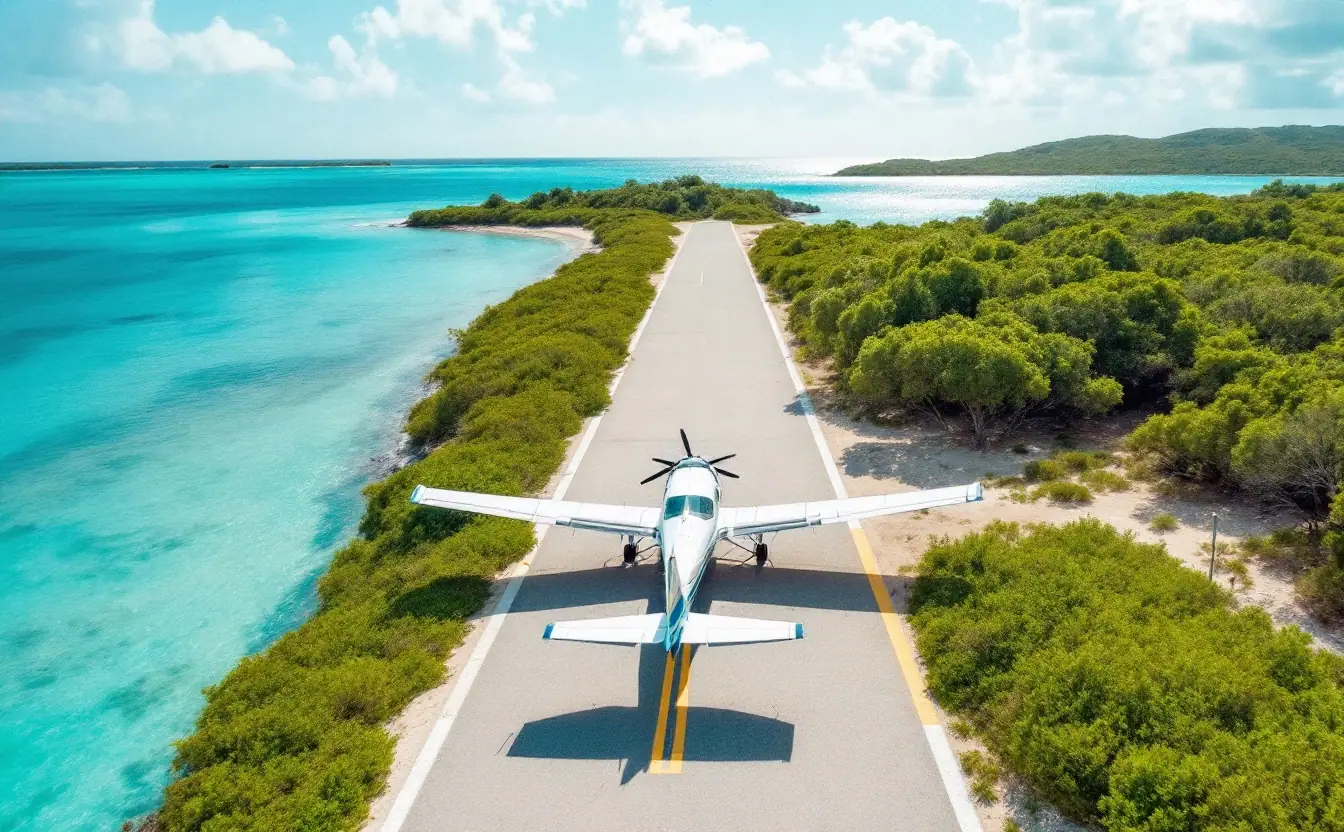
Island-hopping the Exumas by mail boat, ferry and small plane
A leg-by-leg Exumas route: overnight mail boat from Nassau to the cays, small boats around Staniel Cay, a light-plane hop to George Town and harbour ferries.
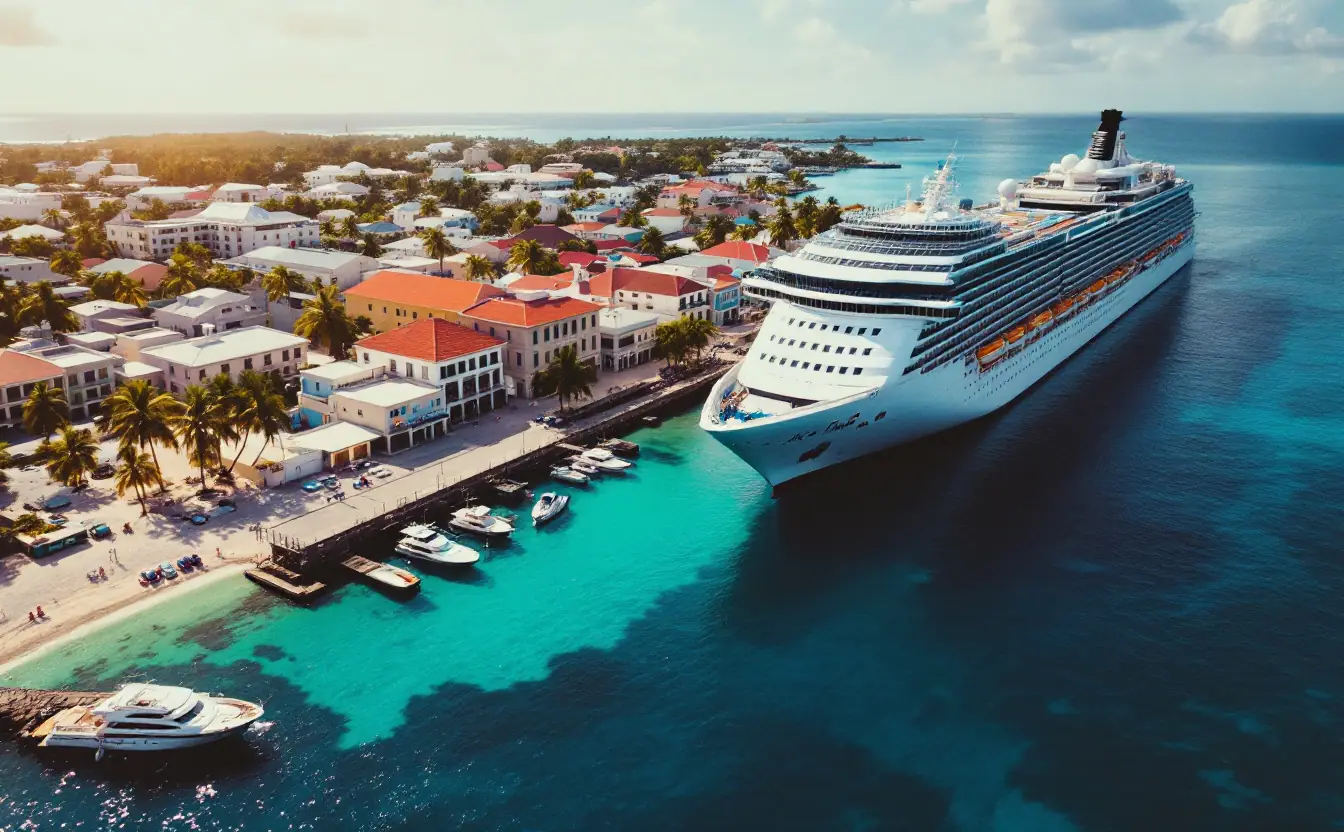
How tourism shapes the Bahamian economy: cruise, resorts and Out Islands
How visitor spending flows through the Bahamian economy: cruise versus stopover visitors, Nassau versus the Out Islands, and the risks of relying on tourism.
Arawak Cay after dark: how to eat your way through the Fish Fry
How to spend an evening at Nassau's Arawak Cay Fish Fry: getting there, when to arrive, how ordering works, what to eat and drink, and seafood seasons.