Ferry from Florida to the Bahamas: Bimini and Grand Bahama by sea
How the ferry from Florida to the Bahamas works: Port Everglades to Bimini or Freeport, passports, Gulf Stream seas in winter, and day trip versus overnight.

Marisa Cartwright · 8 min read
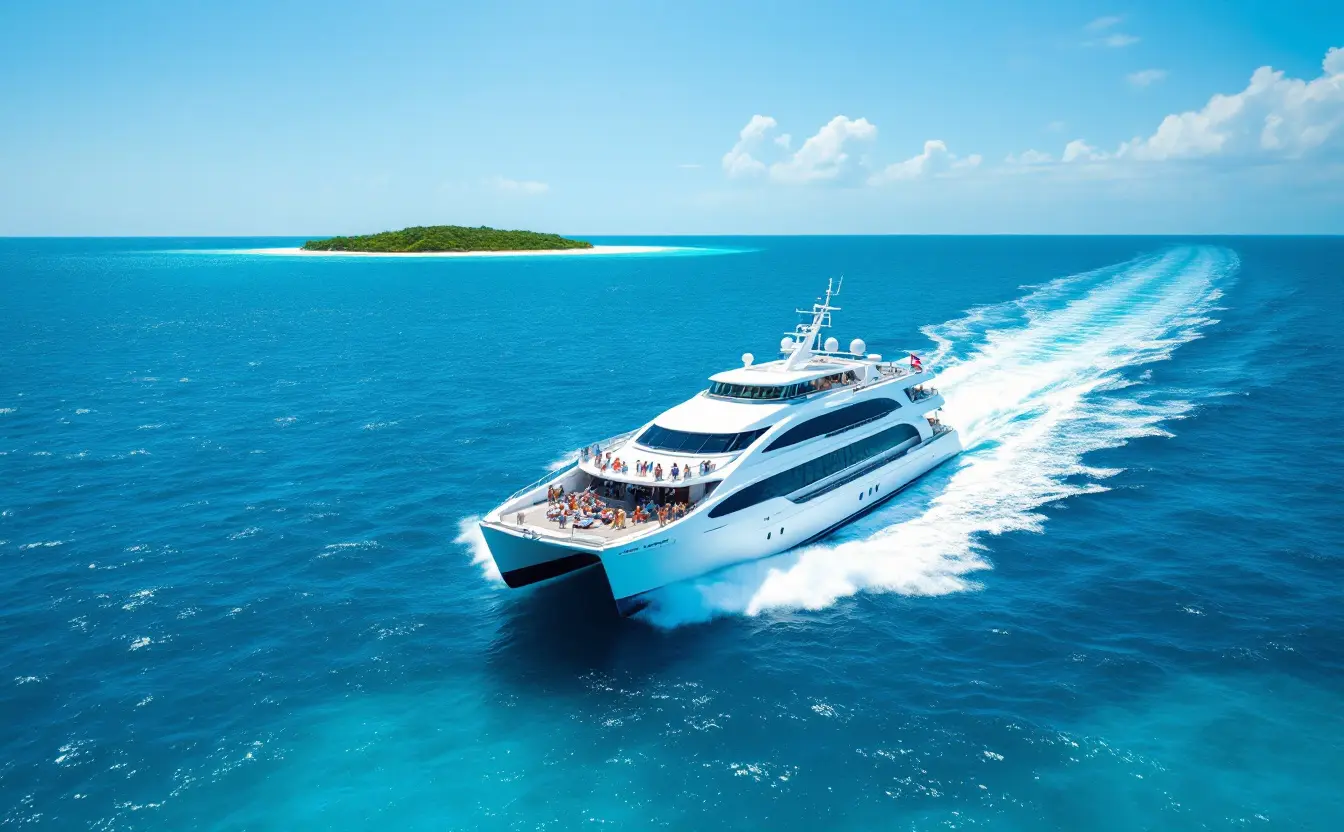
Half an hour out of Port Everglades the water changes. The green-grey of the Florida shelf gives way to a blue so deep it looks dyed, and the sea takes on a long, restless movement that has nothing to do with the wind. That is the Gulf Stream, a warm current running north between Florida and the western Bahamas, and every crossing to Bimini or Grand Bahama goes straight across it. Then, a little under two hours later on the Bimini run, the blue ends at a sharp line and the turquoise of the Great Bahama Bank begins.
I have crossed that stretch under sail more times than I can count, and I still think the ferry is one of the nicest ways to arrive in the Bahamas. You see the islands come up out of the sea, you step off with your bag, and nobody asks you to fold yourself into a small plane. This guide explains how the crossing works, what documents you need, what the sea does in winter, and whether to go for the day or stay.
The routes at a glance
At the time of writing, the scheduled passenger ferry from Florida runs from Port Everglades in Fort Lauderdale, operated by Baleària Caribbean, with sailings to North Bimini and to Freeport on Grand Bahama on certain days of the week. It carries foot passengers only, with no vehicles and no cabins.
| Route | Distance and time | Where you arrive | Best suited to |
|---|---|---|---|
| Port Everglades to North Bimini | About 50 nautical miles; around two hours | A pier at the north end of North Bimini, with shuttles onwards | A long day trip on suitable sailing days, or a few nights |
| Port Everglades to Freeport | Roughly twice as far; around three hours or a little more | Freeport Harbour, a taxi ride from Freeport and Lucaya | A stay of at least a night or two |
Sailing days, departure times and fares change with the season, so I give none here. Book directly with the operator, and check the fast ferry's current timetable before you plan anything else around it.
Short cruises from Palm Beach also call at Freeport. Those are cruises rather than ferries: you sail as a cruise passenger, stay with the ship's itinerary and return on it, so they suit a different kind of trip.
How the crossing works
The process feels like a small airport with a sea view. A typical outbound day runs like this.
- Arrive early. Check-in closes well before departure, and the operator publishes how early to come. Parking is available at the port.
- Check in. Staff check your passport and ticket, and bags go through security screening. You get a boarding pass or wristband.
- Board and settle. Seating is in open lounges, usually with a café and bar. Choose a seat low down and near the middle of the vessel if you are prone to seasickness; motion is gentlest there.
- Cross the Stream. The first part of the passage is often the bumpiest, out in the open current. Watch for the colour change as you come onto the bank.
- Clear in. On arrival you pass through Bahamas immigration and customs at the terminal. Fill in your arrival details honestly and keep any forms you are given.
- Head out. In Bimini, shuttles and taxis meet the ferry at the pier. In Freeport, taxis wait at the harbour.
Coming home, you clear US Customs and Border Protection at Port Everglades. Keep receipts for anything you bought, and declare it.
Documents
This is a sea crossing to another country, and you need proper travel documents both ways.
- US citizens. The operator asks US citizens, adults and children alike, for a valid passport; check whether it currently accepts the passport card before relying on one. Some closed-loop cruises accept a birth certificate and photo ID, but do not assume that applies here; a ferry is not a cruise. Check the operator's current rules before you book.
- Children. Every child, including babies, needs their own passport.
- Everyone else. Bring your own passport plus whatever you need to get back into the United States afterwards, such as a valid visa or travel authorisation, or a green card for US residents. Being allowed into the Bahamas does not guarantee your return to Florida, so check this carefully.
- Validity. Make sure your passport is valid for the whole trip and in good condition. A damaged passport can be refused.
Keep documents in a waterproof pouch in your day bag rather than in checked luggage. Official guidance changes, so read the US State Department's country page for the Bahamas, and the official Bahamas tourism site, before you travel.
Sea state: the Gulf Stream and winter fronts
The crossing is short, but the water it crosses is not ordinary. The Gulf Stream flows north at a steady clip, and when the wind blows from the north, against the current, it raises short, steep, uncomfortable seas. Small-boat sailors live by a simple rule: never cross with any north in the wind. A large fast ferry handles far more than a yacht, but it still feels those seas, and on rough days sailings can be delayed or cancelled. The decision belongs to the operator.
Winter, roughly November to April
This is cold-front season. Every week or so a front sweeps down from North America. Ahead of it, the wind swings into the south and west; behind it comes a day or two of strong north or north-east wind before things settle back into the east. Those post-frontal days are exactly when the Stream is at its worst.
So plan around them:
- Watch the forecast for the days either side of your crossing, not just the day itself.
- Build in a spare day, and never book a flight home from Florida on the same day as a return ferry.
- Buy travel insurance that covers delays and missed connections when you book, and read what it says about weather.
Spring and summer
Late spring and early summer usually bring the calmest crossings of the year. Summer adds afternoon thunderstorms, and the Atlantic hurricane season runs from 1 June to 30 November. When a storm threatens, sailings stop well before the weather arrives. Our month-by-month weather guide sets out the pattern.
If you get seasick
Eat lightly before you board, sit low and central, keep your eyes on the horizon and get fresh air if you can. If you know you suffer, speak to a pharmacist before the trip about remedies; some need to be taken well before you sail to be of any use.
Day trip or overnight?
Bimini for the day
On sailing days with a morning departure and an evening return, Bimini works as a day trip, and plenty of people do it. You get several hours ashore: time for a swim, a walk through Alice Town, lunch and perhaps a short snorkel trip. It is a long day, though, with an early start, check-in on both sides and two crossings, and it leaves no room if the sea turns.
Bimini for a few nights
Staying is better. You see the island after the day visitors leave, you can fish or dive in the morning calm, and a weather delay becomes an extra night rather than a crisis. Two or three nights is a good minimum.
Grand Bahama
The Freeport run is longer, so treat Grand Bahama as a stay rather than a day out. It is a bigger island, with Lucaya's beaches and harbour, the pine forest and mangrove trails of Lucayan National Park, and flights onwards to Nassau if you want to keep going. From either island, our first-timer's guide to the Out Islands can help you choose where to go next.
What to carry on the crossing
Pack light; you will be carrying your own bags on and off. A day bag should hold your documents, water, a hat, sunscreen for the open deck, a charged phone and a layer for the air-conditioned lounge. Our guide to what to pack for the Bahamas covers the full case.
The suggestions in the bag below come from product specifications and published reviews; we have not tested them ourselves. If you are prone to seasickness, ask a pharmacist what suits you before the day.
Shore bag
- Fire-resistant document bagPassports, deeds and insurance papers in one bag you can grabBrowse on Amazon
- Slim 10,000 mAh power bankA day of maps and photos away from a socketBrowse on Amazon
- Packable wide-brim sun hatShade for the face and neck that survives a suitcaseBrowse on Amazon
- Insulated stainless water bottleCold water through a hot afternoon on the beachBrowse on Amazon
Frequently asked questions
How long is the ferry from Florida to Bimini?
The fast ferry from Port Everglades to North Bimini takes around two hours. The run to Freeport on Grand Bahama is longer, at around three hours or a little more. Rough weather in the Gulf Stream can add time or stop sailings altogether.
Can I take a car on the ferry to the Bahamas?
No. The ferry carries foot passengers only. On Bimini you walk, cycle, take shuttles or hire a golf cart, and on Grand Bahama taxis and hire cars are available.
Do I need a passport for the ferry to the Bahamas?
Yes, plan on a valid passport. The operator asks US citizens for one, and non-US citizens also need the right documents to re-enter the United States. Check the operator's current requirements before you book.
Is there a ferry to the Bahamas from Miami?
Not from Miami itself at the time of writing. Sailings leave from Port Everglades in Fort Lauderdale, which is usually under an hour's drive north of downtown Miami.
Keep reading
Travel insurance for a Bahamas trip: hurricanes, medevac and fine print
What to check in travel insurance for the Bahamas: hurricane season, when a storm counts as foreseen, cancel for any reason, Family Island medevac and boats.
Harbour Island in a day: water taxi, Dunmore Town and the pink sand
A timed day on Harbour Island from North Eleuthera: the water taxi from Three Island Dock, a walk round Dunmore Town, the pink sand beach and sunset.
What to put in a Bahamas beach bag: shade, water and a cooler that copes
What to put in a Bahamas beach bag for a full day out: shade that copes with trade winds, a soft cooler, a sand-free mat, water, sun kit and boat-day bags.