Swimming with pigs from Nassau: how the Exuma day trips work
Swimming with pigs from Nassau: how the Exuma day trips work, boat or plane, the long day, what drives the cost, pig welfare and what to bring.

Julian Pinder · 9 min read
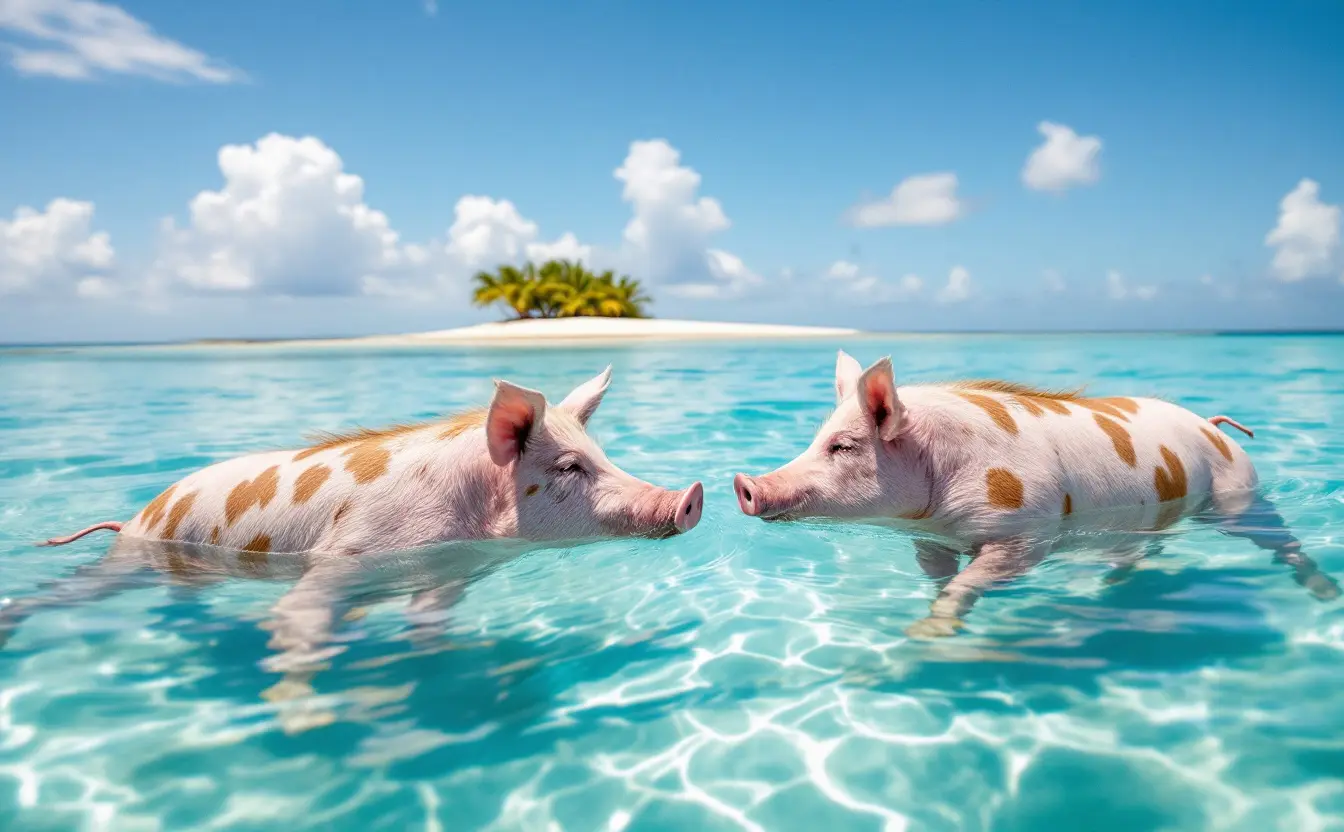
The pigs of Big Major Cay have no written history, which may be why they have so many. One story says sailors left them there as a larder and never came back. Another blames a shipwreck, a third an escape from a neighbouring islet, and a fourth credits people from nearby Staniel Cay, who are said to have kept pigs on the cay for food. None of the versions can be proved, and in the Exumas each one has its defenders.
What is certain is that a handful of feral pigs on an uninhabited cay became one of the most photographed sights in the country, and that a steady stream of visitors now sets out from Nassau to meet them. The trip is a good day out, but it is a long one, and it is often sold as if it were a short one. This guide explains how the tours work, what the day involves, what to ask before you pay and how to behave once the pigs swim out to meet you.
First, which pig beach are you booking?
The original Pig Beach is on Big Major Cay, beside Staniel Cay in the central Exumas. It lies a long way down the island chain from Nassau, far enough that the boat ride is measured in hours rather than minutes. The official Bahamas tourism page on the swimming pigs describes the cay as uninhabited, reached only by boat, and home to around 20 pigs and piglets.
Fame brought imitators. Pig beaches have since appeared on other cays, including some much closer to Nassau, such as Rose Island, a short boat ride east of New Providence. A tour sold as "swimming pigs from Nassau" may therefore mean a full day to the Exumas or a half day just off Nassau's eastern end. Both are honest products; they are simply different days. The first question to ask any operator is which cay the pigs are on.
Boat or plane and boat
Trips to the Exumas come in two forms, and the choice shapes the whole day.
| Item | Fast boat from Nassau | Small plane to the Exumas, then a boat |
|---|---|---|
| Getting there | Hours each way across open water, longer in a chop | A short flight of under an hour, then shorter boat legs around the cays |
| Comfort | Spray and bumps are normal; seats are often open to the sun | Smoother, though small planes are cramped and noisy |
| Weather | Rough seas can cancel the trip at short notice | Flights also depend on weather, and the boat legs still need settled water |
| Luggage | A day bag; the boat has some room | Strict weight limits, sometimes for passengers as well as bags |
| Cost | Usually the less costly option | Usually costs noticeably more |
| Suits | Good sailors and people who enjoy a long run on the water | Anyone prone to seasickness or short of time |
Some visitors build the pigs into a stay in the Exumas instead, which turns a long day into a short one. Our guide to island-hopping the Exumas by mail boat, ferry and plane explains how to reach Staniel Cay and the central cays independently.
The shape of the day
A typical full-day Exuma tour starts early, with a pick-up from your hotel or a meeting time at a Nassau dock. The run south crosses the shallow banks and follows the chain past the Exuma Cays Land and Sea Park, which was set aside in the late 1950s as the first park of its kind and is still managed by the Bahamas National Trust.
The pigs are rarely the only stop. The official tourism site lists the kind of itinerary operators run: nurse sharks at Compass Cay, rock iguanas on one of the cays, a beach stop, lunch on Staniel Cay, the pigs at Big Major Cay and a snorkel at Thunderball Grotto, the hollow cay that gave its name to the 1965 James Bond film shot there. The grotto is best entered when the tide is slack and the current eases, so captains plan the day around it.
The time with the pigs themselves is usually short, often well under an hour. The rest of the day is boat, sun and wind. You will come back to Nassau in the late afternoon or early evening, salty, tired and, unless you were careful, sunburnt.
Sea conditions
The water between Nassau and the Exumas looks benign on a postcard. On a windy day it is not. From roughly November to April, cold fronts sweep through every week or so and bring a day or two of strong north or north-east wind, enough to make a long fast-boat run wet and punishing. Summer usually brings calmer mornings, afternoon thunderstorms and the Atlantic hurricane season, which runs from 1 June to 30 November.
A good operator cancels when the sea is wrong, even if the sky is blue in Nassau. Treat a weather cancellation as a sign of care, not a disappointment. The US State Department's travel information for the Bahamas notes that commercial water tours are not consistently regulated and that boats are not always well maintained, and it advises against water activities in rough seas. Read it before you book.
If you suffer from seasickness, talk to a pharmacist before the trip. Some remedies need to be taken well before you board, and none of them help once you are already ill in a fast boat.
What is usually included
Inclusions vary from one operator to the next, so read the listing line by line. Things that are often part of the price, and worth confirming:
- Transfers between your hotel and the dock or airport.
- The boat, or the flight and the boat, with a captain and a guide.
- Snorkel masks and fins for the snorkel stops.
- Lunch and soft drinks, or only a lunch stop where you buy your own.
- Food for the animals, chosen and handed out by the guides.
- Any landing or park fees.
Gratuities are often extra. Ask, so you can bring cash.
Questions to ask before you pay
- Which cay are the pigs on, and how long will we spend there?
- How long is the run each way, and how big is the boat? Is there shade and a toilet aboard?
- How many passengers do you take?
- Are the captain and the vessel licensed and insured, and what safety equipment is aboard, including life jackets in children's sizes?
- What happens if the weather turns: a full refund, a new date, or nothing?
- What do you feed the animals, and what rules do you give guests?
- Are there limits on age, weight or health?
- What is included, and what will I pay for on the day?
An operator who answers all of these readily, in writing, is usually one worth booking.
With the pigs
This is the part of the day that matters most to the animals, and the rules are simple.
Follow the guide and the signs. The official tourism site says signs on the cay explain how to behave and which foods are allowed, and that a trough is provided so the pigs do not swallow sand or salt water along with their food. Listen to the briefing before anyone steps off the boat.
Feed only what the guides allow, and only how they allow it. Never throw food onto the sand, never offer anything that has been dropped in it, and never give the pigs alcohol, sweets or scraps from your own lunch. In 2017 several of the Big Major Cay pigs were found dead; sand swallowed with food thrown on the beach and alcohol given by visitors were both suspected, and the government said it would restrict feeding.
Remember they can bite. These are large animals with sharp hooves, and when food is about they push and snatch. Visitors have been bitten. Keep food out of sight until the guide says otherwise, keep your hands low and open, and step back if a pig gets pushy.
Keep small children close. A full-grown pig can knock a child over in the shallows. Hold young children or keep them in the boat while the pigs are swimming out.
Let them come to you. Do not chase, ride or corner the pigs, and do not pick up piglets for a photograph. The same restraint applies to the other animals on the route: at the iguana and shark stops, keep your hands to yourself and follow the briefing. Our guide to snorkelling Bahamian reefs safely covers the habits that protect the reef at the snorkel stops.
Booking
You can book directly with a Nassau operator, through your hotel's tour desk, or through a booking platform such as GetYourGuide, which lists Nassau day tours alongside their cancellation terms. Whichever route you take, read the weather policy before paying, and check that the operator, not just the platform, is named on the listing.
Book for early in your stay. If the first date is cancelled for weather, you then have spare days to try again. Cruise passengers should be realistic: a full Exuma day rarely fits a port call, and a trip that brings you back after the ship's all-aboard time leaves you to make your own way to the next port.
A boat day far from a hospital is also a good reason to check your travel insurance. Make sure the policy covers boat trips and snorkelling, or consider travel insurance that covers active days on the water.
What to bring
Pack for a long day in strong sun and spray, with wet landings:
- Passport or photo ID if you are flying, and cash in small notes for tips.
- Mineral sunscreen, a wide-brimmed hat that ties on, and a long-sleeved swim shirt. Our sunscreen planner shows how much a full day on the water takes.
- Water shoes for wet landings and rocky entries.
- A towel and a light layer for the wind on the run home.
- A roll-top dry bag for the phone, cash and a dry shirt, and a waterproof phone pouch for photos from the boat.
- Your own water bottle, refilled from the boat's supply if there is one.
- Any seasickness remedy your pharmacist has recommended.
Frequently asked questions
How long is the swimming pigs trip from Nassau?
A full-day boat tour to Big Major Cay in the Exumas usually takes most of the day, with several hours of travel in each direction. Tours that fly to the Exumas cut the travel time but cost more. Shorter trips to pig beaches near Nassau, such as Rose Island, take a few hours.
Can I see the swimming pigs on a cruise stop in Nassau?
A full Exuma day rarely fits a port call. Shorter trips to pig beaches close to Nassau are more realistic, but check the return time against your ship's all-aboard time and leave a generous margin.
Is it safe to swim with the pigs?
It is generally safe if you follow the guide. The pigs are large, push hard when food is about and have bitten visitors, so keep food hidden, keep your hands low and keep small children close or in the boat.
Can I feed the swimming pigs?
Only what your guide hands you or approves, and only the way the guide shows you. Never feed on the sand, never give alcohol, sweets or your own lunch, and never offer food that has been dropped on the beach.
Keep reading
What to pack for a Bahamas cruise: a 3 to 5 night packing list
What to pack for a 3 to 5 night Bahamas cruise: documents, the boarding-day bag, cabin kit, cruise-line rules on power strips and irons, and a port-day bag.
Ferry from Florida to the Bahamas: Bimini and Grand Bahama by sea
How the ferry from Florida to the Bahamas works: Port Everglades to Bimini or Freeport, passports, Gulf Stream seas in winter, and day trip versus overnight.
Travel insurance for a Bahamas trip: hurricanes, medevac and fine print
What to check in travel insurance for the Bahamas: hurricane season, when a storm counts as foreseen, cancel for any reason, Family Island medevac and boats.