Snorkelling Bahamian reefs safely: currents, boats and reef manners
How to snorkel Bahamian reefs safely: reading tides and cuts, staying visible to boats, avoiding stings and scrapes, and habits that keep the coral healthy.

Marisa Cartwright · 9 min read
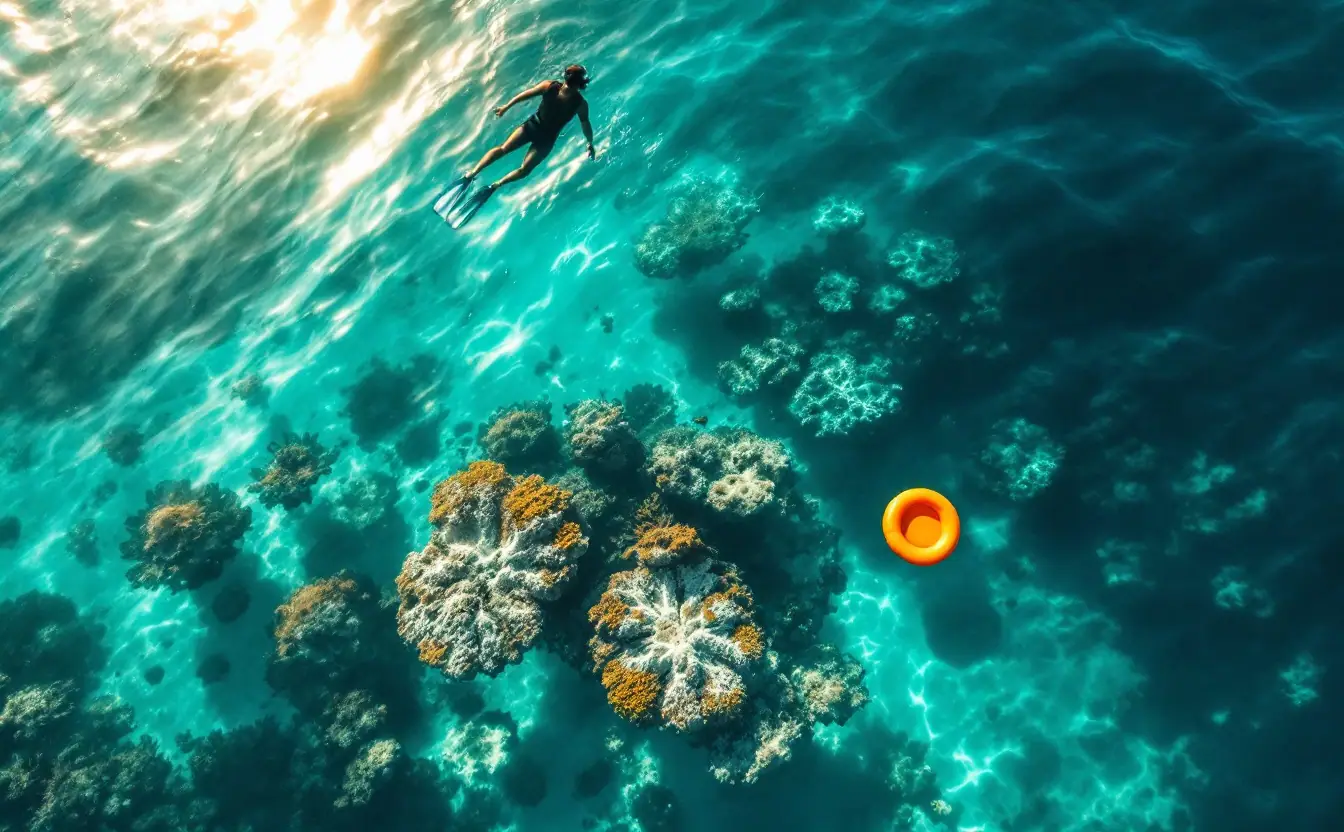
On a falling tide, the water running out through a cut in the Exumas moves like a river. You can watch it from the dinghy: sea fans bent flat, a ribbon of sand blowing along the bottom, a turtle working hard just to hold its place. Drop into it with a mask and fins and the reef will slide past beautifully, until you try to swim back.
That is the first lesson of Bahamian snorkelling. The water is warm, startlingly clear and usually forgiving, but it moves, it is shared with boats, and the reefs are more fragile than they look. None of that should put you off. A few habits, most of them learned the easy way from people who live on the water, make the difference between a great morning and a frightening one.
Read the water before you read the reef
Tides and cuts
Bahamian tides are modest, often around a metre between high and low, and they turn roughly every six hours. On an open beach you will barely notice. In the cuts between cays, though, a whole bank of shallow water drains and fills through a narrow gap, and the current can easily run faster than a strong swimmer can swim.
The calm moment when the tide turns is called slack water. It is short, sometimes only a few minutes in a busy cut, and it can lag behind the time printed in the tide tables. Thunderball Grotto near Staniel Cay is the classic example: at slack low water it is a gentle swim into a sunlit cave, while at other times the current pulls hard through the openings. Local boat captains know these rhythms. When one tells you to wait twenty minutes, wait.
Wind and the cold-front pattern
From roughly November to April, cold fronts sweep down from the north at regular intervals. Ahead of a front the wind swings round to the south and west; behind it comes a few days of strong northerly breeze. Reefs on the exposed side of an island become choppy and murky, while the sheltered side can stay glassy. Late spring and summer usually bring lighter winds and the best visibility of the year, with afternoon thunderstorms as the main thing to watch for. Our month-by-month weather guide sets out the pattern in more detail.
Beach currents
Atlantic-facing beaches can have rip currents, especially after a blow. If you feel yourself pulled out, don't fight straight back to shore. Swim parallel to the beach until the pull eases, then come in at an angle, or float and signal for help.
Boats are the bigger danger
Most snorkellers worry about sharks. The real hazard is the propeller. From a moving boat, a snorkeller's head and snorkel tube are almost invisible in a light chop, and many small-boat drivers are not looking for swimmers.
- Stay out of channels and harbour approaches. Reefs beside marked channels can be lovely, but they are no place to float face-down.
- Make yourself visible. A brightly coloured surface float with a dive flag (red with a white diagonal stripe) tells passing boats that someone is in the water. Don't assume every driver knows what it means.
- Look up every minute or so. Lift your head, turn a full circle, and listen. An outboard is easier to hear underwater than above it, but harder to place.
- Board and leave the water with the engine off. On any trip, the propeller should be stopped while people are climbing in or out.
- Choose operators who count heads. A good crew gives a briefing, counts people out and counts them back.
Before you get in: a checklist
- Check the tide and the wind for the spot you are visiting, not just for the island.
- Ask someone local about currents, especially near cuts and points.
- Never snorkel alone. Agree on a buddy and stay within talking distance.
- Test your mask and snorkel in shallow water before heading to deeper reef.
- Wear fins that fit. Blisters can end a trip early, and loose fins slip off and sink.
- Cover up. A long-sleeved rash vest protects you from sunburn better than any lotion and reduces stings and scrapes.
- Bring a float or flotation vest if you are a hesitant swimmer; there is no shame in it.
- Plan your exit before you enter. Know where you will climb out, whether it is the boat ladder or a sandy gap in the rocks.
- Drink water and eat first. Tired, dehydrated snorkellers make poor decisions.
- Tell someone ashore where you are going and when you expect to be back.
What can sting, scrape or bite
Bahamian reefs are not crowded with dangerous animals, but a few are worth knowing.
| Creature | What happens | What to do |
|---|---|---|
| Fire coral | A burning rash where skin touches the mustard-coloured, smooth-looking growths | Rinse with seawater (not fresh water) and apply vinegar if you have it; avoid rubbing |
| Lionfish | A very painful sting from the spines; this invasive species is now common on reefs | Soak the wound in hot water, as hot as is comfortable without scalding, and seek medical advice |
| Long-spined sea urchin | Brittle black spines that break off in the skin | Remove the visible spines carefully; see a doctor if they are deep or near a joint |
| Jellyfish and Portuguese man o' war | Stinging tentacles, often after onshore winds | Rinse with seawater, lift off tentacles with a gloved hand or card, and get help if breathing is affected |
| Sea lice (thimble jellyfish larvae) | An itchy rash under swimsuits, mostly in spring and early summer | Take off your swimsuit before showering in fresh water, and wash the suit |
| Barracuda | Curious, follows swimmers, rarely aggressive | Remove shiny jewellery and leave it alone |
| Sharks | Nurse sharks and reef sharks are common; incidents are rare | Avoid snorkelling where fish are being cleaned or speared, and never carry a speared fish |
| Stingrays | A painful barb if stepped on in sandy shallows | Shuffle your feet when wading |
The thimble jellyfish larvae deserve a special note in May. They drift near the surface like specks of ground pepper, and cases of the rash tend to peak around this time of year. Some older Bahamians will tell you not to swim between Mother's Day and Father's Day for this reason. That is an overstatement, but a full rash vest and a quick change afterwards help.
Reef-friendly habits
Bahamian reefs are under pressure from warming water, coral disease and heavy use. Snorkellers can do real harm without meaning to, and a little care goes a long way.
- Never stand on coral. If you need to rest, float on your back or find bare sand.
- Keep your fins up. Careless fin kicks are a common cause of reef damage. Stay horizontal and keep a body length above the coral.
- Touch nothing. Not the coral, not the turtles, not the starfish. Many reef animals are harmed by handling, and some will hurt you back.
- Don't feed the fish. It changes behaviour, makes some species aggressive and fouls the water.
- Choose sunscreen with care. Some chemical filters, such as oxybenzone, have been linked to coral harm in laboratory studies. Mineral sunscreen and a rash vest are the safer choice, and let it soak in before you swim.
- Take nothing living. Shells with animals inside, sand dollars and coral stay where they are.
- Use moorings. If you are on a boat, tie to a mooring buoy where one exists and never drop an anchor on coral.
There are rules too. Sea turtles have had full legal protection in the Bahamas since 2009. Visiting boats need a permit to fish, spearguns are banned, and spearfishing is allowed only with a Hawaiian sling or pole spear, never with scuba gear, and not close to shore. Within the national parks managed by the Bahamas National Trust, stricter rules apply: the Exuma Cays Land and Sea Park, founded in 1958, has been a no-take zone since the 1980s, which is exactly why its reefs are so full of grouper and lobster. Mooring fees support the park; details for each protected area are on the Bahamas National Trust website.
Where to start
If you are new to snorkelling, begin somewhere shallow and sheltered: a beach reef on the calm side of an island, or a guided trip with a crew that gives a proper briefing. Many of the best reefs are a short boat ride from the Out Islands. The Andros Barrier Reef runs for well over a hundred miles off the east coast of Andros, Pelican Cays Land and Sea Park in Abaco protects shallow coral within reach of small boats, and the Exuma cays are a world of sandbars and coral heads. Our first-timer's guide to the Out Islands compares where to base yourself, and you will find more ideas for life on and in the water in Lifestyle.
Water temperature is rarely a problem. It sits somewhere in the low to mid twenties Celsius in late winter and climbs towards 30°C by late summer. A thin wetsuit top is welcome in February; by June most people need only a rash vest.
Frequently asked questions
Do I need to be a strong swimmer to snorkel in the Bahamas?
You need to be comfortable in water out of your depth, but you don't need to be fast. A flotation vest or a float to hold makes snorkelling accessible to cautious swimmers. What matters more is choosing calm, sheltered spots and staying out of strong currents.
Is it safe to snorkel from the beach without a guide?
Often, yes, on sheltered reefs close to shore in settled weather, as long as you go with a buddy and ask locally about currents first. Avoid cuts, points and channels without local knowledge, and always tell someone ashore where you have gone.
Are full-face snorkel masks a good idea?
Many experienced snorkellers and instructors prefer a traditional mask and separate snorkel. Full-face masks can be hard to clear quickly, some fit poorly, and there are concerns about breathing in stale air in badly designed models. If you use one, buy a reputable model and practise in shallow water first.
What is the best time of day to snorkel?
Mid-morning to early afternoon gives the best light for seeing colour on the reef. Wind tends to build through the afternoon in many places, and thunderstorms are more common later in the day in summer. Around Thunderball Grotto and the cuts, the tide matters more than the clock.
Can I snorkel in the Exuma Cays Land and Sea Park?
Yes, and it is one of the finest places in the country to do it. Fishing and collecting of any kind are forbidden, boats should use moorings rather than anchor on coral, and mooring fees help fund the park. Services inside the park are very limited, so bring what you need and take your rubbish away.
Keep reading

Island-hopping the Exumas by mail boat, ferry and small plane
A leg-by-leg Exumas route: overnight mail boat from Nassau to the cays, small boats around Staniel Cay, a light-plane hop to George Town and harbour ferries.
How tourism shapes the Bahamian economy: cruise, resorts and Out Islands
How visitor spending flows through the Bahamian economy: cruise versus stopover visitors, Nassau versus the Out Islands, and the risks of relying on tourism.
Is the Bahamas in the Caribbean? Geography, CARICOM and regional ties
The Bahamas sits in the Atlantic, not the Caribbean Sea, yet it belongs to CARICOM and shares the region's history. Here is how geography and politics fit.