What to wear in the Bahamas: beach, town, evenings, church and boats
What to wear in the Bahamas: cover-ups off the beach, evenings out, church on Sunday, boat days, fabrics that cope with the heat and shoes for rocky shores.

Simone Bethel · 8 min read
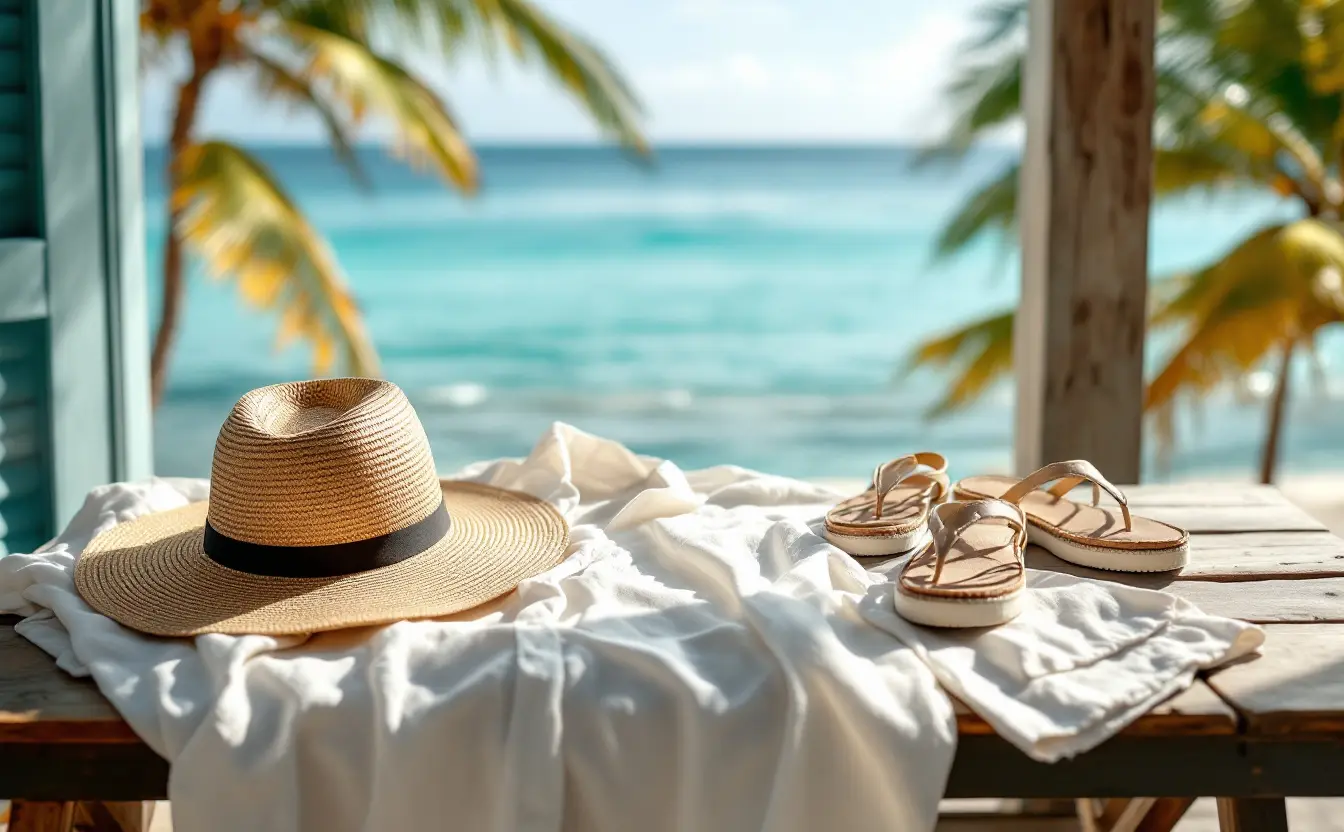
By late November the first cold fronts of winter have usually swept through, the evenings have a little edge to them, and the islands start filling with visitors who have packed for a beach and nothing else. Most of them get it nearly right. The few mistakes are always the same: a bikini top in the bank queue, a scorched neck after a "quick" boat ride, flip-flops on sharp rock, a shivering dinner on a breezy deck in January.
None of it is a disaster, and Bahamians are patient hosts. But dressing for the islands is easy once you know the handful of rules that matter. For the suitcase itself, season by season, our Bahamas packing list does the counting. This piece is about what to put on, and when.
The rule that matters most: swimwear stays at the beach
On the sand and around the pool, wear whatever you are comfortable in. The moment you leave, cover up. That means in town, in shops and supermarkets, at the bank, in restaurants and cafés, at the straw market and in taxis and jitneys. A cover-up dress, a kaftan, a sarong tied as a skirt, or simply shorts and a T-shirt over your swimsuit all do the job.
The same goes for men and shirts. Walking bare-chested down Bay Street reads exactly as it would on the high street at home. Keep a shirt in your beach bag and put it on before you cross the road.
On the Family Islands the beach may be two minutes from the settlement, but the rule still holds: the grocery, the post office and the dock are public places where people are at work. Resorts usually set their own rules for lobbies and dining rooms, and most ask for swimwear to be covered there too.
Fabrics that cope with heat and humidity
The Bahamian climate is warm and humid for much of the year, and in summer the air feels thick from morning to night. Loose cuts let air move around you; tight ones trap sweat. Beyond that, fabric does most of the work.
| Fabric | Why it works | Watch for |
|---|---|---|
| Linen | Open weave lets air through and it dries quickly | Creases easily; thin white linen can be sheer |
| Light cotton (voile, poplin, seersucker) | Soft and breathable, easy to wash in a sink | Holds sweat and dries slowly in humid air |
| Rayon or viscose | Drapes well and feels cool, good for dresses | Weak when wet; some pieces shrink |
| Lightweight synthetic travel or sun wear | Wicks sweat, dries fast, often carries a UPF rating | Can hold odour; looks sporty in town |
| Denim | Fine for a cool January evening | Heavy and slow to dry, miserable in August |
One trade-off is worth knowing. Pale colours feel cooler in direct sun, but a dense weave in a darker colour blocks more ultraviolet light, which is why many sun shirts are tightly woven and mid-toned. Pack for humidity as well as heat: in summer, clothes washed at night may still be damp in the morning, so quick-drying pieces earn their space.
Sun: cover it rather than coat it
The sun here is strong all year, and white sand and shallow water bounce it back at you, so you burn faster on a beach or a boat than in town. Clothing is the simplest protection because it doesn't wash off or need reapplying.
- Look for a UPF label. Ultraviolet protection factor measures how much UV a fabric lets through. UPF 50 lets through roughly one-fiftieth. An ordinary thin T-shirt offers much less, and less again when wet.
- Wear a long-sleeved rash guard in the water. It covers the shoulders and back, the places that burn while you float face-down over a reef.
- Choose a hat with a real brim. A cap leaves your ears and neck bare. A brim wide enough to shade both makes a long afternoon far more comfortable.
- Protect your eyes. Sunglasses that block UV are the minimum; polarised lenses cut glare on the water and help you see into it.
- Cover what is left with sunscreen, and reapply after swimming. Our sunscreen planner works out how much a trip needs.
If you take a medicine that makes your skin more sensitive to sunlight, ask a pharmacist or doctor before you travel.
Advertisement
On the water: boat days, snorkel trips and the flats
A boat is where visitors get caught out most often. On a fast run across open water the breeze feels cool, so the sun goes unnoticed, and by the time you reach the sandbar the damage is done.
Wear a rash guard over your swimsuit, since you will be in and out of the water all day. Bring a light long-sleeved shirt or windproof layer for the ride: spray and wind chill can make even a summer crossing feel cool, and after a winter front it can be properly cold. A hat with a chin strap stays on at speed, and sunglasses on a cord don't end up on the seabed.
Footwear on boats is often bare feet or soft, non-marking soles, so ask your skipper. If the day includes wet landings on a cay, wear shoes you can walk through the shallows in. For snorkelling, our guide to snorkelling Bahamian reefs safely covers currents and boats; for a day stalking fish across the shallows, the beginner's guide to bonefishing explains why guides dress in long sleeves, light trousers and wading boots. If you plan many days on the water, a vented sun shirt of the kind made for fishing is a sensible buy: light, long-sleeved and cut to let air through.
Footwear: sand, rock and town
Most visitors need three pairs of shoes at most.
- Something for hot sand. Flip-flops or slides. At midday, dry sand above the tide line can be too hot to cross barefoot.
- Something for rock and reef. Between many Bahamian beaches lies ironshore, limestone worn by the sea into sharp, pitted edges that slice soft feet. Rocky shallows also hide sea urchins. Water shoes with a firm sole let you climb in and out safely and wade a flat without worrying about what is underfoot. Never stand on coral, shoes or no shoes.
- Something for town and evenings. Comfortable sandals or light trainers for walking, as old town pavements are uneven and many Family Island roads have none. If you plan a smarter dinner, add closed shoes or dressy sandals.
Hiking boots are rarely needed unless you are heading into the backcountry of the larger islands. Heels and sandy lanes do not mix.
Advertisement
Evenings and restaurants
Most local restaurants, fish fries and dockside bars are casual: clean shorts or a light dress are fine, as long as the swimwear has gone. Resort restaurants and casinos are another matter. Many publish an evening dress code, often called "resort casual" or "resort elegant". The smarter version usually means long trousers and a collared shirt for men, and no swimwear, vests or flip-flops for anyone. Check when you book.
From November to April, pack one warm layer for evenings. A breezy January night by the water can drop to around 18°C (65°F), and after a strong front it gets cooler still. Indoors, air conditioning is often set fiercely cold, which is another reason for a cardigan or light jacket.
Light long sleeves and long trousers also help at dusk, when sandflies and mosquitoes come out near the water and mangroves.
Church on Sunday
The Bahamas is a churchgoing country, and Sunday clothes are taken seriously: suits and ties, smart dresses, polished shoes, and a good number of hats. Visitors are generally welcome at services, and dressing with care is part of the courtesy.
- For women: a dress or skirt that covers the knees, or smart trousers, with shoulders covered. A light wrap solves the sleeveless problem.
- For men: long trousers and a collared shirt. A tie or jacket is not expected of visitors, but neither will look out of place.
- For children: clean, tidy clothes rather than beachwear.
Ask before photographing anyone, and check service times locally. On many islands Sunday is quiet, with fewer shops and restaurants open, so plan meals ahead.
A few things to leave at home
- Camouflage prints. Several Caribbean countries bar civilians from wearing military-style camouflage, and cruise lines have warned passengers calling at Nassau to leave it on board. It isn't worth the trouble.
- Heavy clothes for summer. Thick denim and dark sweatshirts stay damp for days.
- Valuable jewellery for the beach. Salt water and sand are hard on it, and it is one more thing to watch.
The kit that makes the biggest difference
If you only buy a few things for the trip, make them the pieces that handle sun and rock. Cover the shoulders, the face and the feet, and check the size charts before you order, particularly for water shoes, which need to fit snugly to stay on in the surf.
Frequently asked questions
Can I wear shorts in Nassau?
Yes. Shorts are everyday wear in town for visitors and locals alike. The exceptions are church, some resort restaurants and casinos in the evening, and government offices, where long trousers or a skirt are the better choice.
Is it rude to wear a bikini in town?
Away from the beach or pool, swimwear is considered inappropriate, and you will notice the looks. Throw on a cover-up, a sarong or shorts and a T-shirt before you head into shops, restaurants or the settlement.
What should I wear to church in the Bahamas?
Dress as you would for a smart occasion at home. Women usually wear dresses or skirts with shoulders covered, and men long trousers with a collared shirt. Bahamian congregations dress up, so it is hard to overdo it.
Do I need water shoes in the Bahamas?
Not for soft sandy beaches, but they are worth packing if you plan to snorkel from shore, explore rocky coves or wade the flats. Ironshore and sea urchins are the main hazards, and a firm sole protects against both.
What should I wear in the Bahamas in winter?
Daytime is still summery, so the same light clothes work. Add long trousers, a sweater or light jacket for evenings and boat rides, especially in the day or two after a cold front, when the wind swings north and temperatures drop.
Advertisement
Keep reading
Bonefishing for beginners: flats, guides and catch-and-release
A beginner's guide to Bahamian bonefishing: how flats and tides work, wading or a guided skiff, the flats licence, a gear checklist and releasing fish well.
Snorkelling from shore in the Bahamas: entries, conditions and spots
Shore snorkelling in the Bahamas: choosing a safe entry, reading wind and swell from the beach, what lives near shore, and reefs worth a swim on each island.
Water shoes for the Bahamas: when you need them and what to look for
Water shoes for the Bahamas: when they help on ironshore, urchins, hot sand and boat days, when to go barefoot, the main types, fit and drying them out.