Conch every way: salad, fritters, cracked, stewed – and sourcing it well
A dish-by-dish guide to Bahamian conch – salad, fritters, cracked, stewed – with a home conch salad recipe and what to know about the rules protecting it.

Simone Bethel · 9 min read
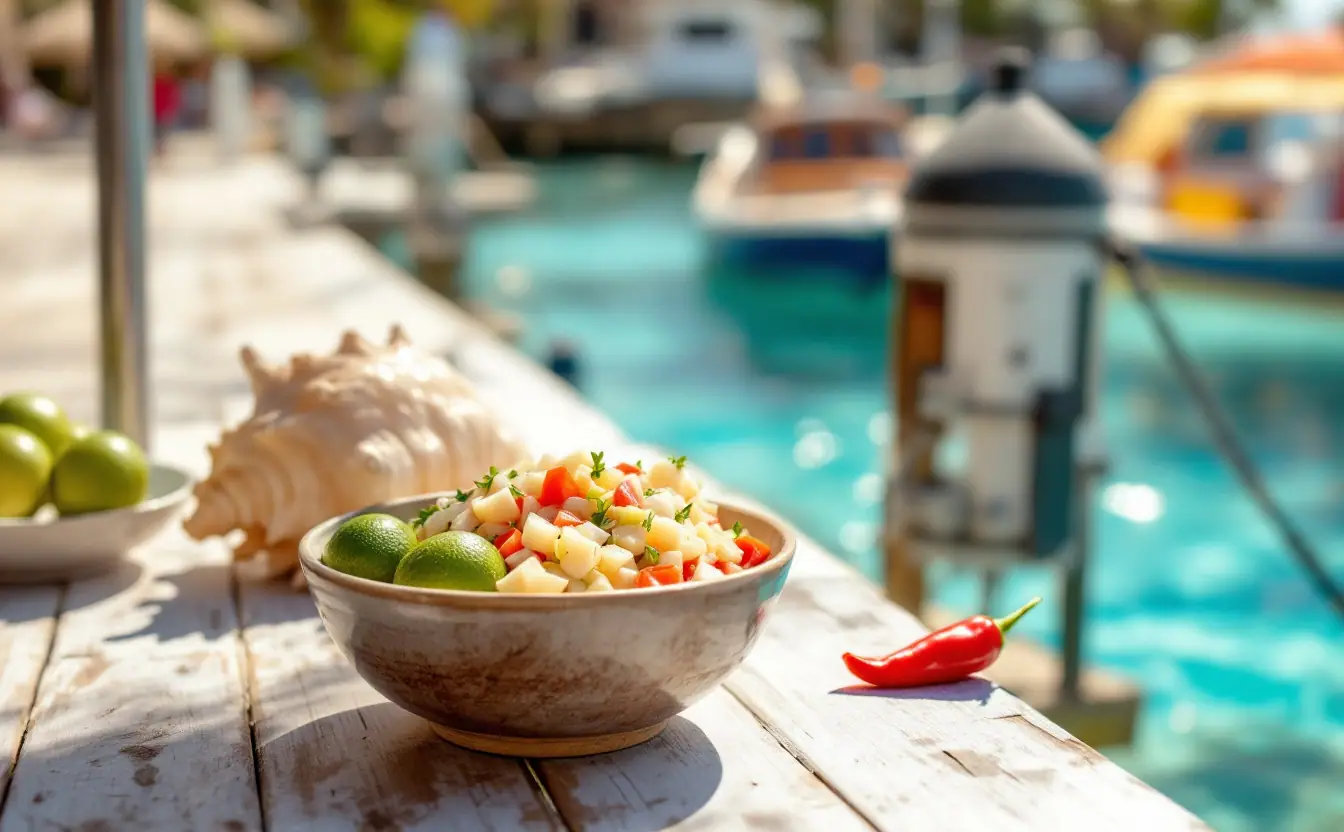
The sound comes first. At a conch stand on the waterfront, before anyone has reached for a knife, there is a short, hard tap of hammer on shell – the noise of a conch being "knocked". The vendor makes a small slit near the top of the spiral, slides a blade in to cut the muscle free of its anchor inside, and draws the whole animal out by its dark, claw-like foot. Ten minutes later it is a bowl of salad. If you want to understand how Bahamians eat conch, that short journey from shell to bowl is the place to start.
Conch – say "konk" – is the queen conch, a large sea snail that grazes the seagrass beds and sandy flats of the shallow Bahamian banks. Its meat is firm, pale and faintly sweet, closer to clam or squid than to fish, and it turns up at breakfast, lunch and dinner across the islands. Here it is dish by dish, with a home recipe for the one that matters most and a look at the rules that protect it.
Before the cooking: cleaning and tenderising
Out of its shell, a conch is wrapped in a mottled skin and still attached to the hard operculum – the "claw" – it uses to haul itself across the sand. Vendors trim the claw, slice away the skin and cut out the darker digestive parts, leaving a slab of white-to-peach muscle. You may also spot a clear, jelly-like rod about the length of a finger: the crystalline style, known locally as the pistol, which plenty of people eat raw on the spot with a well-worn joke about its supposed powers.
Conch is tough. For salad, the cure is dicing it small; for frying, a meat mallet until the slab is thin and the fibres give; for stews, a long simmer or a pressure cooker. Get this step wrong and no batter or gravy will save the dish.
Conch salad
The national dish in everything but official title. Raw conch is diced fine and tossed with onion, sweet pepper and tomato, seasoned with salt and fiery goat pepper, then drenched in lime and, in many kitchens, the juice of a sour orange. The citrus firms the outside of each cube and turns the edges opaque, but the conch is still raw, which is why freshness is everything.
The "tropical" version adds diced mango or pineapple, softening the heat with sweetness. Purists tolerate it. Watching a vendor build a bowl to order is half the pleasure, and you will be asked how hot you want it.
A home recipe: Bahamian conch salad
Serves four as a starter, or two as a light lunch.
Ingredients
- 3–4 conch, cleaned and skinned (roughly 450 g / 1 lb of meat)
- 1 medium white onion
- 1 green sweet pepper (or half green, half red for colour)
- 2 firm, ripe tomatoes, seeds scooped out
- 1 goat pepper – or a Scotch bonnet or habanero – seeds removed for less heat
- Juice of 4–6 limes
- Juice of 1 sour orange (or half a sweet orange plus one extra lime)
- Salt to taste
- Optional, for a tropical version: half a ripe mango and a thick slice of pineapple, diced
Method
- Keep the conch cold until the moment you cut it. Trim away any remaining skin, the claw and any dark or grey patches.
- Dice the conch into cubes about 1 cm across. Go smaller if your conch is on the tough side.
- Dice the onion, sweet pepper and tomato to roughly the same size. Mince the hot pepper very finely – start with half of it and taste.
- Combine everything in a glass or ceramic bowl, salt generously and toss.
- Squeeze the lime and sour orange over the top, toss again and leave for five to ten minutes so the citrus can sharpen the flavour and firm the conch.
- Taste for salt and heat, then serve straight away, cold, on its own or with crackers. Conch salad is at its best within the hour and does not keep well overnight.
A food-safety note: because the conch is never cooked, use only very fresh conch from a source you trust and keep it chilled throughout. Anyone who is pregnant, elderly or has a weakened immune system is better off with one of the cooked dishes below.
Scorched conch
The fastest version of all. A whole piece of cleaned conch is scored in a criss-cross pattern – "scorched" here means cut, not burnt – then doused with lime, salt and hot pepper and eaten at once. It is conch salad without the vegetables, and it tells you immediately how fresh the conch is.
Conch fritters
If conch salad is the dish Bahamians argue about, fritters are the ones everyone orders. Finely chopped conch is folded into a thick, well-seasoned batter of flour, baking powder, egg and milk or water, with onion, sweet pepper, celery and thyme. Spoonfuls go into hot oil and come out as craggy golden balls, crisp outside and soft within. They arrive with a dipping sauce, usually some blend of ketchup and mayonnaise sharpened with lime and hot sauce.
The test of a good fritter is simple: you should be able to find the conch.
Cracked conch
The Bahamian answer to fried chicken. A slab of conch is pounded thin, marinated briefly in lime and seasoning, dredged in seasoned flour or an egg-and-crumb coating, and fried until crisp. It usually comes with peas 'n' rice, coleslaw or chips, and tartar sauce or hot sauce on the side. Well made, it is tender enough to cut with the side of a fork. Under-pounded, it is a workout for the jaw.
Stew conch, chowder and steamed conch
Stew conch is home cooking, often a weekend breakfast or Sunday lunch. It starts with a dark roux: flour cooked slowly in oil until it reaches the colour of milk chocolate, which gives the gravy its depth. Onion, celery, sweet pepper, thyme and a little tomato paste go in next, then tenderised conch and diced potato, and the pot simmers until the conch is soft. Serve it with johnnycake – the dense, faintly sweet Bahamian bread – or a bowl of grits.
Conch chowder is the soup cousin: tomato-based, with potato, carrot, thyme and plenty of black pepper. Steamed conch, despite the name, is simmered gently in a light tomato, onion and sweet pepper sauce. All three make good use of conch too tough for salad.
Where to eat it
On New Providence, Potter's Cay Dock, beneath the bridges to Paradise Island, has long been the place for conch salad made to order beside the boats that bring produce and seafood in from the Family Islands. The stalls of Arawak Cay, west of downtown along West Bay Street, are the other classic. If you are spending a day on foot in the old town, our walk through Old Nassau's forts, the Queen's Staircase and Bay Street leaves you within easy reach of both. Beyond Nassau, ask locally – most settlements have someone selling conch.
Why sourcing matters
Queen conch has been fished hard across the Caribbean for generations. Florida closed its conch fishery in the 1980s and it has never reopened, and several Caribbean countries now rely on seasonal closures. Since 1992 it has been listed on Appendix II of CITES, the international convention that controls trade in endangered species.
In the Bahamas, long-running surveys by the research group Community Conch, working with scientists from Chicago's Shedd Aquarium, found falling densities on many fishing grounds and too few mature adults in places. Conch need to gather in reasonable numbers to breed, so once a population thins past a certain point it struggles to recover. One published assessment warned that the fishery could collapse within a decade or so without stronger management.
The rules in general terms
Bahamian law protects conch mainly through maturity. A conch may only be taken once its shell has a well-formed flared lip, the broad wing of shell that develops as the animal reaches adulthood. Since January 2022, the export of commercial quantities of conch has been banned to ease pressure on the stock. Visiting boaters may keep no more than six conch per vessel under the sport-fishing rules, visitors may not sell any catch, and fishing with scuba gear is not allowed.
Crawfish and Nassau grouper both have closed seasons in the Bahamas; conch has not had one. The Department of Marine Resources has said it is weighing further measures, including a minimum lip thickness, a requirement to land conch in the shell so maturity can be checked, and a closed season. Conservation groups favour a lip-thickness rule because a thin, freshly flared lip can belong to an animal that has not yet bred. Rules change, so if you plan to take conch yourself, check the current regulations with the Department of Marine Resources before you head out.
What you can do as a diner
- Look at the shells. A pile of thick-lipped, weathered, often algae-coated shells beside a stand is a good sign. Stacks of thin, bright, barely flared shells suggest juveniles.
- Ask where and when. Vendors who knock to order are usually happy to say where the conch came from and when it was landed.
- If you collect your own, take only flared-lip adults, stay within the per-vessel limit, and leave the rest to breed through the warm months.
- Before packing a shell to take home, check your own country's customs rules. Queen conch is CITES-listed, and limits apply to shells as well as meat.
None of this means giving up conch – just eating it fresh, from mature animals, with an eye on next season. For more Bahamian cooking, browse the food and drink section.
Frequently asked questions
How do you pronounce conch?
In the Bahamas it is "konk", rhyming with honk. The "ch" is said like a "k", and you will hear the same pronunciation across the English-speaking Caribbean.
Is raw conch salad safe to eat?
Conch salad is eaten raw, and the lime juice does not cook it in a food-safety sense. Very fresh conch, kept cold and prepared cleanly, is eaten by many people every day, but pregnant women, young children, older people and anyone with a weakened immune system should choose a cooked dish such as cracked conch or chowder instead.
What does conch taste like?
Clean, mildly sweet and briny, with a firm texture somewhere between squid and clam. In salad it is crisp and bright with citrus; fried or stewed, it takes on the character of its batter or gravy.
Can visitors take conch themselves?
Visitors may take a small number of conch for their own use, provided each one is a mature animal with a well-formed flared lip and no scuba gear is involved. Limits are set per vessel and can change, and selling any catch is not allowed, so confirm the current rules with the Department of Marine Resources first.
Is there a closed season for conch in the Bahamas?
The Bahamas has not had a closed season for conch, though one is among the measures the Department of Marine Resources has said it is considering. Crawfish and Nassau grouper do have closed seasons, so check the current rules for any seafood you plan to catch.
Keep reading
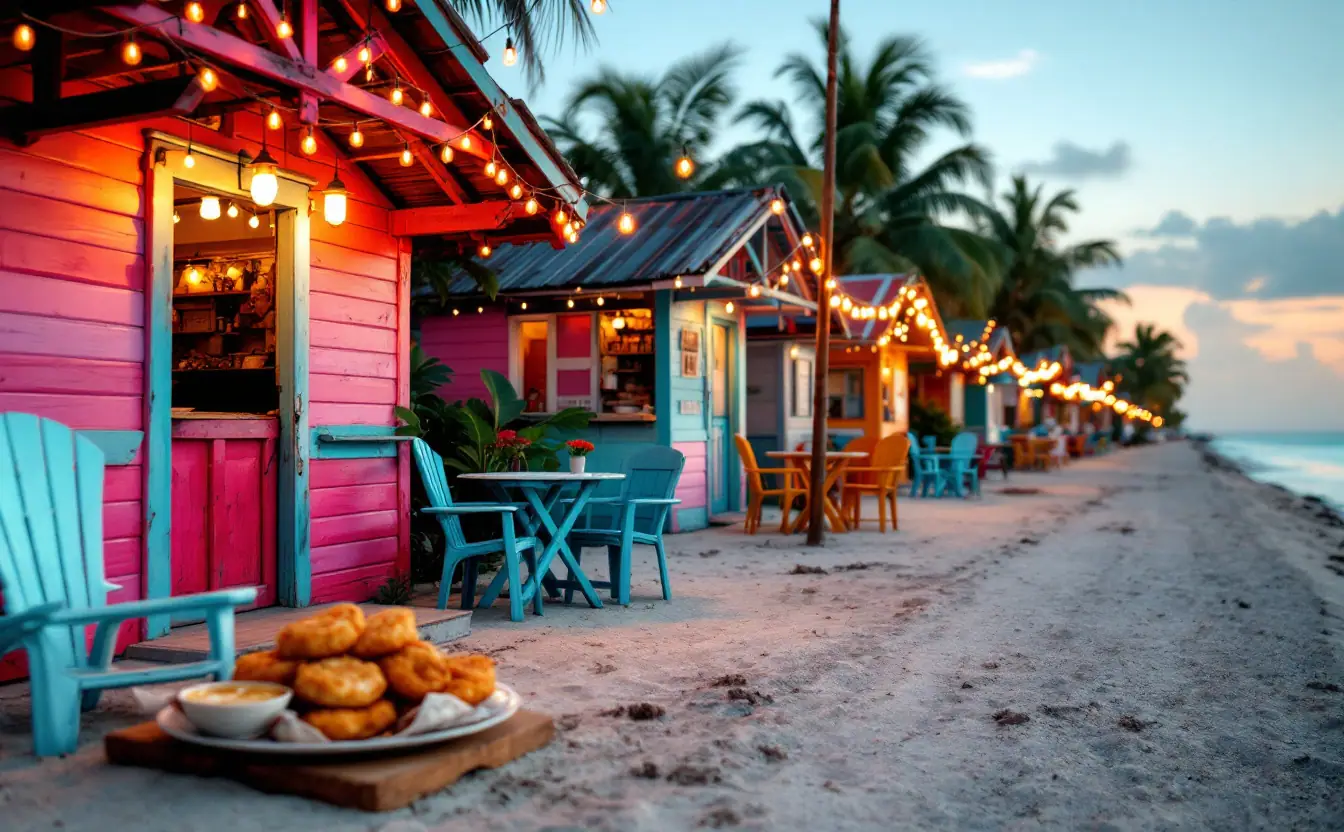
Arawak Cay after dark: how to eat your way through the Fish Fry
How to spend an evening at Nassau's Arawak Cay Fish Fry: getting there, when to arrive, how ordering works, what to eat and drink, and seafood seasons.

Island-hopping the Exumas by mail boat, ferry and small plane
A leg-by-leg Exumas route: overnight mail boat from Nassau to the cays, small boats around Staniel Cay, a light-plane hop to George Town and harbour ferries.

How tourism shapes the Bahamian economy: cruise, resorts and Out Islands
How visitor spending flows through the Bahamian economy: cruise versus stopover visitors, Nassau versus the Out Islands, and the risks of relying on tourism.