Bonefishing for beginners: flats, guides and catch-and-release
A beginner's guide to Bahamian bonefishing: how flats and tides work, wading or a guided skiff, the flats licence, a gear checklist and releasing fish well.

Marisa Cartwright · 9 min read
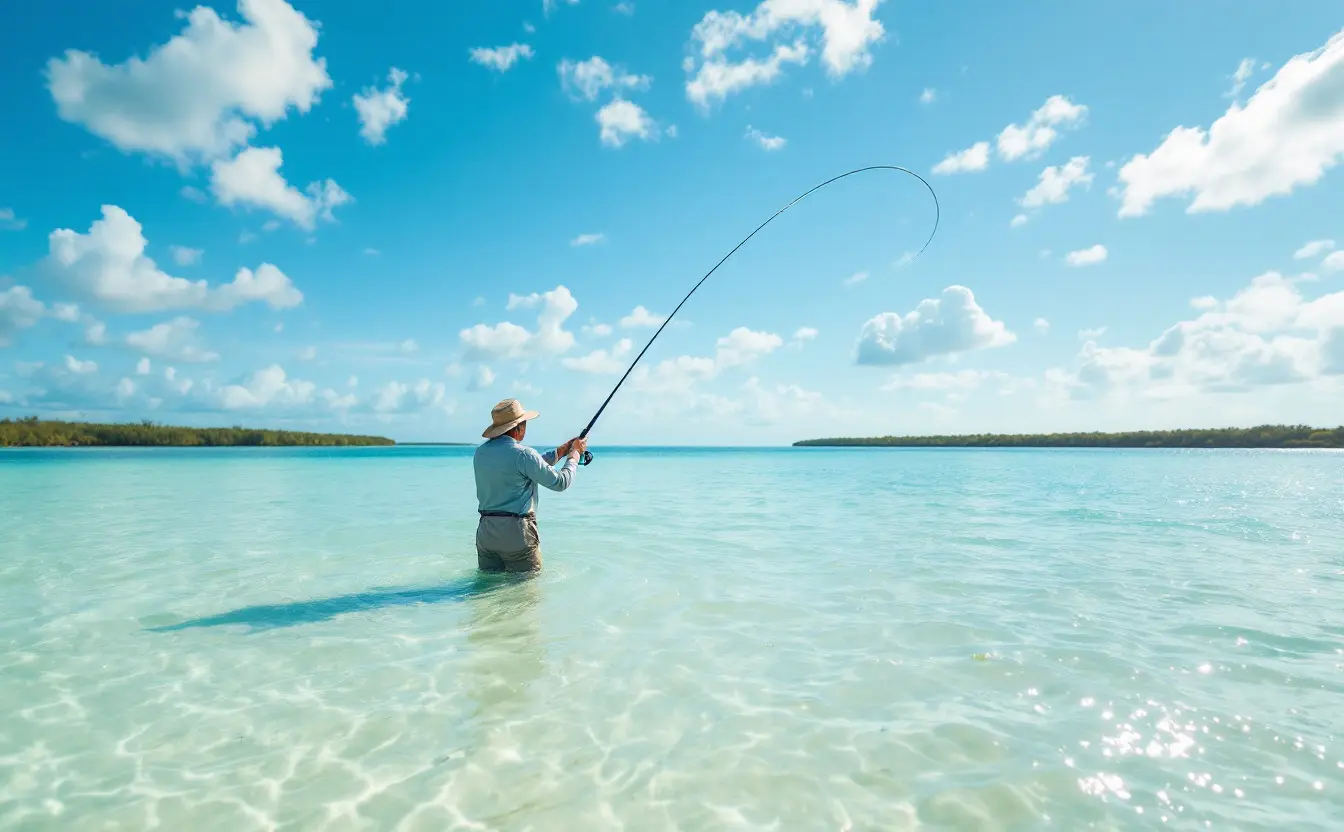
The guide called the fish quietly from the poling platform behind me, a clock position and a distance, and I stared at the water where he was pointing and saw absolutely nothing. Pale sand, a few shadows, the glare. Then one of the shadows moved, and moved again, and I understood that the grey smudge I had taken for a patch of weed was a fish the length of my forearm, cruising along the flat as calmly as a shopper in an aisle. My first cast landed on its head. The smudge vanished.
That is bonefishing for most beginners, and it is why people get hooked. It is less like fishing than like hunting: you look for the fish first, then cast to one particular fish, and the cast has to be right. When it does go right, a bonefish takes off across the flat so fast that the reel shrieks and the line disappears into the distance.
The Bahamas is one of the best places in the world to learn. The country has enormous areas of shallow flats, a long tradition of skilled guiding and fish that can be caught all year. Mid-November, with hurricane season nearly over and the first cool fronts of winter coming through, is a good moment to start planning.
What you are hunting
The bonefish is a slim, silvery fish built for speed, with a mouth set low for rooting in the sand. It feeds on shrimp, small crabs, clams and worms on shallow flats, sometimes in water barely deep enough to cover its back. Its scales act like mirrors, which is why it looks like a ghost: you rarely see the fish itself, only its shadow on the sand, a flicker of movement or a change in the surface.
Learn to look for these signs:
- Tailing. In very shallow water a feeding bonefish tips head-down and its tail breaks the surface, waving and glinting in the sun.
- Mudding. Groups of fish rooting on a soft bottom leave puffs and trails of cloudy water.
- Nervous water. A school moving just below the surface makes a patch of ripples that does not match the wind.
- Shadows. On bright days over white sand, the fish's shadow is often easier to see than the fish.
How the flats work
Tides
Flats are shallow areas of sand, grass and marl that flood and drain with the tide, usually twice a day. As the water rises, bonefish push up from deeper channels, creeks and mangrove edges to feed; as it falls, they drop back. Many guides like the early part of the rising tide and the last of the falling tide, when fish move along predictable routes, but every flat has its own pattern, and that local knowledge is a large part of what you pay a guide for.
Light and wind
You need sun to see fish. A cloud passing over a flat can turn clear water into a grey sheet in seconds, and many experienced anglers simply wait for it to pass. Some wind helps, because a ruffled surface hides your approach, but casting a fly into a stiff breeze is hard work for beginners.
Temperature and the seasons
Bonefish can be caught in every month, but they dislike sudden changes in water temperature. After a strong winter cold front, the shallowest flats cool quickly and fish often move to deeper water for a day or two before coming back. In high summer, very shallow water warms up fast and the best fishing tends to be early and late in the day. Spring and autumn are popular for good reason. Our month-by-month weather guide explains how the fronts work.
Wading or a guided skiff
Wading on your own
Many settlements have flats within walking distance, and wading is the cheapest and most satisfying way to learn to see fish. Move slowly, stop often and keep the sun behind you. Shuffle your feet to warn off stingrays, watch for soft mud that can swallow a leg to the knee, and remember that a rising tide can cut off the way you came. Tell someone where you are going. Our guide to snorkelling Bahamian reefs safely covers the stings and scrapes you might also meet on a flat.
A day with a guide
A guided day is a different experience. You stand on the casting deck at the bow of a flats skiff; the guide stands on a raised platform at the stern and pushes the boat silently across the flat with a long pole. From up there, with years of practice, a guide sees fish long before you do and calls them out using the clock: the bow is twelve o'clock, so "two o'clock, forty feet" means ahead and to the right, about four rod lengths away.
For a first trip, I suggest wading on your own for a day or two to learn what you are looking for, then booking at least one full day with a guide. You will learn more in that one day than in a week of guessing.
Advertisement
The rules
Bahamian law takes the flats seriously. The broad picture:
- You need a licence. Anyone over the age of 12 fishing the flats must hold a flats fishing licence. Licences are issued by the Department of Marine Resources in Nassau and through Family Island Administrators, with daily, weekly, monthly and annual options. The official Bahamas fishing FAQ has the current process and fees.
- Guides are required in some cases. If two or more anglers are fishing the flats from a boat, a certified Bahamian guide must be used, and only Bahamian-registered vessels may fish the flats.
- Bonefish are protected from commercial use. Netting bonefish is prohibited, and so is buying or selling them.
- Release is the norm. Catch-and-release is strongly encouraged for bonefish, and among sport anglers and guides it is simply how the fishery works.
- Parks are different. No-take national parks, such as the Exuma Cays Land and Sea Park, forbid fishing of any kind.
Regulations change from time to time, so check before you travel rather than relying on what a friend was told a few seasons ago.
Gear checklist
You can hire or borrow most tackle from a guide, but if you are bringing your own, this is what works.
Fly tackle
- A 9-foot, 8-weight rod: the standard all-rounder. A 7-weight is pleasant on calm days; a 9-weight helps in wind.
- A saltwater reel with a smooth drag and plenty of backing, at least 150 yards. Bonefish run a long way.
- A floating, weight-forward line designed for tropical heat. Cold-water lines go limp and tangle.
- Leaders of 9 to 12 feet, tapering to a tippet of around 10 to 12 pounds.
- Small shrimp and crab flies in tan, pink, white and olive, sizes 4 to 8, some weighted and some light. Classic patterns such as the Crazy Charlie and the Gotcha have caught bonefish for generations.
Spinning tackle
- A light 7-foot spinning rod and a reel loaded with thin braid or monofilament of around 8 to 10 pounds.
- Small bucktail jigs in tan or pink. Spinning is perfectly respectable, much easier to learn and a fine way to catch your first fish.
For you
- Polarised sunglasses with amber or copper lenses. They matter more than the rod.
- A long-peaked hat and a neck gaiter or buff.
- A long-sleeved sun shirt, lightweight trousers and sun gloves.
- Flats boots or dive booties; never wade barefoot.
- Forceps or pliers for removing hooks, with barbs pinched flat.
- Mineral sunscreen, plus a way to rinse it off your hands before you touch a fish.
- Water, snacks, a small dry bag, your licence and cash.
Advertisement
Your first shot at a fish
Practise casting before you travel. On a flat you need to put a fly 40 to 50 feet away accurately with two or three false casts at most, often into a breeze. Land the fly a few feet ahead of the fish and in its path, never on its head. Let it sink, then strip it in short, slow pulls as the fish approaches.
When the fish eats, do not lift the rod as you would for trout. Keep the rod tip low and pull the line sharply with your other hand: the "strip strike". Then let the fish run, keeping the loose line clear of your feet and the rod high to lift the line over coral and mangrove roots.
Releasing a bonefish properly
How you handle a fish decides whether it survives. Research by conservation scientists working in the Bahamas, including the Bonefish & Tarpon Trust, has shown that bonefish are very sensitive to time out of the water, and that exhausted fish are easy prey for sharks and barracuda.
- Keep the fight short and the fish in the water.
- Wet your hands first; dry or sunscreen-covered hands strip the protective slime.
- Support the fish gently under the belly. Do not squeeze it or touch the gills.
- Remove the hook quickly with forceps.
- Keep any photograph brief, with the fish lifted only for a moment. The recommended maximum is around 15 seconds out of the water.
- Hold it upright, facing into the current, until it swims off strongly. If a shark or barracuda is hanging around, move to quieter water before letting go.
Where to start
Andros, with its vast western flats and tidal bights, has the deepest reputation, and our guide to choosing your first Out Island explains how the island fits together. The Marls, a maze of flats and mangrove on the west side of Abaco, are another classic. Grand Bahama, Exuma, Long Island and the remote flats of Acklins and Crooked Island all have experienced guides. For a beginner, the best base is less about fame than about having wadeable flats close to where you sleep.
Frequently asked questions
Do I have to fly fish to catch bonefish?
No. A light spinning rod and a small jig catch plenty of bonefish, and many guides are happy to take spin anglers. Fly fishing is harder to learn but is the traditional way the sport is practised here.
Can I keep a bonefish to eat?
Sport anglers release them, and the authorities strongly encourage catch-and-release. Buying and selling bonefish is prohibited by law. They are also very bony, which is how they got their name.
Do I need a licence if I am only wading from the beach?
The licence applies to anyone over 12 fishing the flats, whether from a boat or on foot. Check the current rules with the Department of Marine Resources or the official Bahamas fishing pages before you cast.
How many guided days should a beginner book?
One or two is plenty for a first trip, ideally after a day or two of wading on your own. If you are travelling with a partner, sharing a skiff halves the cost and doubles the fun, as long as you take turns on the bow.
Advertisement
Keep reading
Snorkelling from shore in the Bahamas: entries, conditions and spots
Shore snorkelling in the Bahamas: choosing a safe entry, reading wind and swell from the beach, what lives near shore, and reefs worth a swim on each island.
Water shoes for the Bahamas: when you need them and what to look for
Water shoes for the Bahamas: when they help on ironshore, urchins, hot sand and boat days, when to go barefoot, the main types, fit and drying them out.
Sunset times in the Bahamas: sunrise, daylight and golden hour by month
Sunrise and sunset times in the Bahamas month by month, Eastern Time and daylight saving, golden hour in the tropics, and where to watch the sun go down.