Snorkelling from shore in the Bahamas: entries, conditions and spots
Shore snorkelling in the Bahamas: choosing a safe entry, reading wind and swell from the beach, what lives near shore, and reefs worth a swim on each island.

Marisa Cartwright · 8 min read
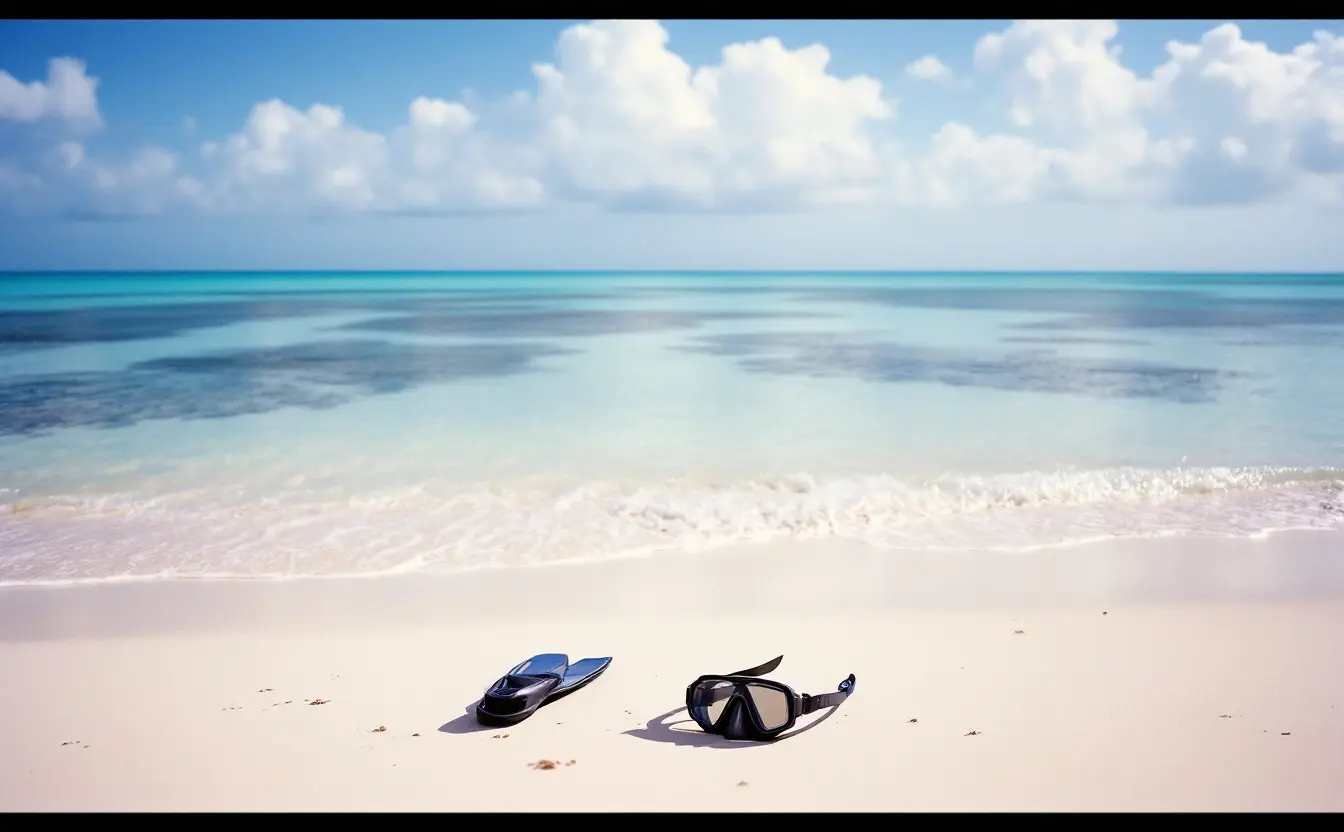
Some of my favourite snorkels in the Bahamas have started with nothing more than a walk across the sand. No boat, no booking, no crew counting heads: just a mask, fins, a friend and a dark smudge of reef fifty metres out over pale water. You float out along a sandy channel, the bottom drops a little, and suddenly there are parrotfish crunching on coral beneath you and a barracuda hanging in the blue, looking unimpressed.
Shore snorkelling is the easiest way to see Bahamian reefs on your own terms, and it is free. It also makes you your own captain. Nobody checks the wind for you, picks the entry or decides when to turn back. This guide covers how to choose a way in, how to read the water from the beach, what you will meet in the shallows, and where to start on several islands. For the safety basics, from tides and currents to boats and stings, read our guide to snorkelling Bahamian reefs safely first.
Choosing an entry
A beautiful reef is no use if getting to it means scrambling over sharp rock in a swell. Before you look at the reef, look at the edge of the water.
- Sand beats rock. A gently sloping sandy beach is the easiest entry. Much of the Bahamian shore is ironshore, the jagged, honeycombed limestone that cuts feet and hands, and it is slippery where waves wash over it. If you must use a rocky entry, wear quick-dry water shoes or open-heel fins with boots.
- Look for a sandy channel. Many beach reefs have gaps of clean sand running through them. Follow one out so you never have to stand on coral or kick it in shallow water.
- Put fins on in the water. Wade in to waist depth carrying your fins, then float and pull them on. Shuffle your feet as you wade so any stingray resting in the sand has time to move off.
- Plan the exit before you go in. Pick a landmark ashore, a casuarina tree, a house or a rock, that marks your way out, and make sure you could get out somewhere else if the first spot becomes awkward.
- Swim into the current or wind first. Then the return leg is the easy one, when you are tired.
- Stay away from channels, harbour mouths, boat ramps and busy docks. Shore snorkellers are hard for boat drivers to see.
Reading the water from the beach
Spend five minutes looking before you get wet. These are the signs I look for, and what each one tells me.
| What you see from shore | What it tells you | What to do |
|---|---|---|
| Waves breaking on the reef or whitecaps beyond it | Swell is reaching the reef; expect surge in the shallows | Choose a beach on the sheltered side of the island |
| Wind blowing in your face | Choppy surface and cloudier water near shore | Expect poor visibility; try the other coast |
| Wind blowing from behind you, out to sea | A calm surface, but you will drift away from shore | Stay close in and swim upwind first |
| Weed or foam drifting along the beach | A current running parallel to shore | Enter up-current of the reef and drift back towards your exit |
| A streak of foam or a gap in the waves running out to sea | A possible rip current | Do not swim there |
| Milky or green-grey water | Sediment stirred up by a recent blow | Wait a day or two for it to clear |
| Brown or dark patches very close to the surface | Coral heads or seagrass in shallow water | Check the tide; at low water you may not clear them without touching |
The wind decides more than anything else. Through most of the year the trade wind blows from the east, which leaves west-facing shores calmer. In winter, cold fronts bring a day or two of strong north or north-west wind, which churns up north-facing beaches while the south side of the same island can be glassy. Our month-by-month weather guide explains how the fronts move through.
Tide matters too. A shallow patch reef that is easy to float over at mid or high tide can leave you scraping your knees at low water. Mornings are often calmer than afternoons, and the light is good from mid-morning onwards.
What you will see near shore
Shore snorkelling is a journey through zones, each with its own residents. On a typical swim from the beach to a patch reef you might cross four or five of them.
Sand
Bare sand looks empty but rarely is. Southern stingrays rest half-buried, peacock flounders change colour to match the bottom, and small fish dart in and out of burrows. Keep your feet off the bottom.
Seagrass
Turtle grass beds are nurseries. Look for green turtles grazing, red cushion sea stars, young conch moving slowly across the blades, and juvenile fish sheltering among the grass. In very calm lagoons near mangroves you may find upside-down jellyfish lying on the bottom; they can give a mild sting, so look and move on.
Rocky edges
Where ironshore meets the water, the rock is pocked with holes and crevices. Sergeant majors guard their patches, urchins wedge themselves into holes and small crabs scuttle along the edge. Mind the surge here; it can push you onto the rock.
Patch reefs
This is the main event. Brain corals and swaying sea fans and sea rods, parrotfish grazing on algae, blue tangs moving in schools, grunts and snappers hanging in loose groups. Squirrelfish hide under ledges by day, spiny lobsters, the crawfish of Bahamian kitchens, peer out of holes with only their antennae showing, and you may find a moray eel or a nurse shark resting in a crevice. Barracuda often follow snorkellers out of curiosity. Look, don't touch, and take nothing living.
Mangrove edges
Where mangroves meet the sea, the roots shelter clouds of juvenile fish. Visibility is often poor and the bottom is soft silt that clouds at the slightest kick, so float rather than stand.
Where to start, island by island
Conditions change by season and by day, so treat these as starting points and ask locally before you go. Many of the best-known stretches of sand front hotels and private homes; use marked public access points rather than crossing hotel grounds or gardens, and ask in the settlement if you are not sure where the public way to the beach is.
- New Providence. Jaws Beach at Clifton Heritage National Park, in the south-west of the island, is a public beach with natural and man-made reef structures close in, and it is often calm when north winds stir up the other side. Love Beach on the north-west coast has rocks and small patches near shore, reached by a public path; the larger reef lies much further out and is a boat trip. It is choppy in any north wind.
- Eleuthera. Gaulding Cay, a few miles north of Gregory Town, is a small rocky cay a short swim off a public beach, with fish, rays and soft corals around its base in shallow water.
- Exuma. Stocking Island, a short water-taxi ride across Elizabeth Harbour from George Town, has coral heads in sheltered water along the harbour side.
- Abaco. Mermaid Reef, close to Marsh Harbour, is a shallow reef a short swim from a small beach and a long-time favourite for beginners. Abaco took a direct hit from Hurricane Dorian in 2019, so ask about the reef's current state before you go. On Elbow Cay, the Atlantic beaches near Hope Town have reef within reach on calm days.
- Long Island. At Dean's Blue Hole near Clarence Town, you can snorkel the rocky walls and sandy rim of a sheltered cove before the hole drops away to great depth. Stay at the surface unless you are trained; freedivers use it for deep training.
- San Salvador. Reef lies close to shore along much of the sheltered west coast around Cockburn Town. Ask locally about the nearest public access.
Some famous spots are not shore snorkels at all. Peterson Cay National Park, off the south shore of Grand Bahama, is reached by boat or guided kayak, and most of the Andros Barrier Reef needs a boat. Peterson Cay, like the country's other national parks, is managed by the Bahamas National Trust, which publishes the rules for each park.
Kit for a shore snorkel
Shore snorkelling needs less gear than a boat trip, but the pieces you bring matter more because there is no crew with spares. A mask that fits is the first priority, and our guide to snorkel gear for a Bahamas trip explains how to test one. Water shoes or fin boots handle ironshore entries, and a snorkel vest gives nervous swimmers somewhere to rest at the surface. Add a long-sleeved rash guard and a mineral sunscreen; our guide to reef-safe sunscreen explains what to look for on the label.
Frequently asked questions
Is it safe to snorkel from the beach without a guide?
On a sheltered beach reef in settled weather, it usually is, as long as you go with a buddy, tell someone ashore where you are going and avoid channels, cuts and points. Ask locally about currents before your first swim at any new spot. If the water looks rough or murky, come back another day.
What is the best time of day for shore snorkelling?
Mid-morning is often ideal: the sun is high enough to light the reef and the wind has not yet built. Check the tide as well, because shallow patch reefs are easier to float over at mid or high water. Avoid the last hour before dark, when visibility drops and you will want to be out of the water.
Do I need fins to snorkel from shore?
Fins make it far easier to swim out to a reef and back, and to hold your place against a light current. Short travel fins are enough for most beach reefs. Carry them in and put them on in waist-deep water so you are not walking on coral or rock in fins.
Can I snorkel at hotel beaches?
Hotel guests can. If you are not staying there, use a public access path rather than walking through the grounds, and be courteous to people using the beach. If in doubt, ask at the front desk or in the settlement.
Keep reading
Water shoes for the Bahamas: when you need them and what to look for
Water shoes for the Bahamas: when they help on ironshore, urchins, hot sand and boat days, when to go barefoot, the main types, fit and drying them out.
Sunset times in the Bahamas: sunrise, daylight and golden hour by month
Sunrise and sunset times in the Bahamas month by month, Eastern Time and daylight saving, golden hour in the tropics, and where to watch the sun go down.
Snorkel gear for kids in the Bahamas: masks, vests, fins and safety
Snorkel gear for kids in the Bahamas: fitting a mask to a small face, dry-top snorkels, fins, vests, rash guards and the supervision that matters most.