What to pack for a Bahamas cruise: a 3 to 5 night packing list
What to pack for a 3 to 5 night Bahamas cruise: documents, the boarding-day bag, cabin kit, cruise-line rules on power strips and irons, and a port-day bag.

Hannah Lowe · 9 min read
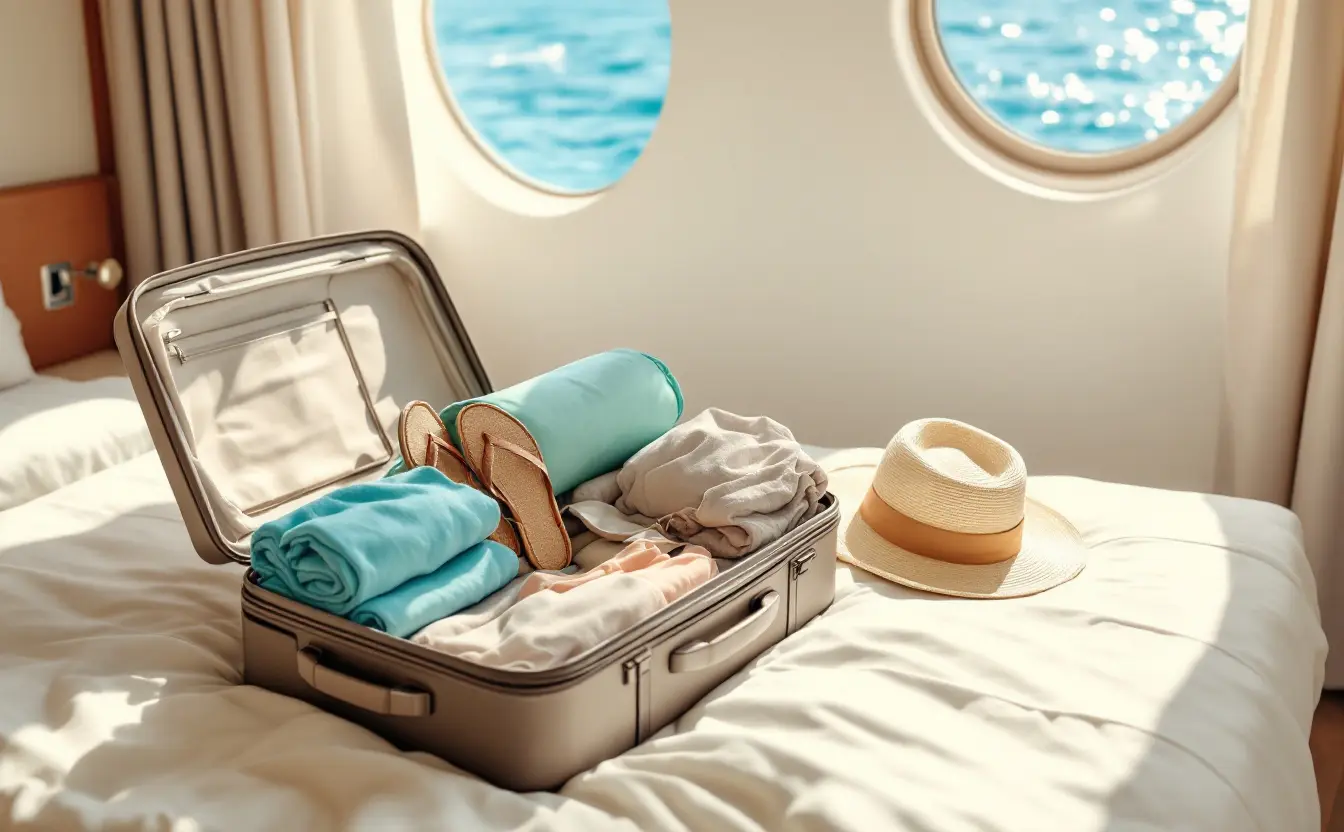
Most mornings in Nassau, the cruise ships are already tied up at Prince George Wharf by the time the city wakes. Many of them are on short sailings from Florida: three, four or five nights, with a call in Nassau, perhaps Freeport or Bimini, and a beach day at one of the private islands that the cruise lines run in the Bahamas. Friends who come over on these trips tend to make the same two mistakes. They pack for a fortnight, and they leave the things that matter in the suitcase that vanishes at the terminal.
This list is built for a short Bahamas sailing. It covers documents, the bag to keep with you on boarding day, clothes, the cabin kit (including the rules on power strips and irons, which catch people out), and what to carry ashore.
How a short Bahamas cruise shapes the bag
Three to five nights usually means two or three days in port or on an island, and perhaps one day at sea. Cabins are compact and storage is limited, so one medium suitcase per person and a day bag is plenty.
The ports shape what goes in the day bag:
- Nassau. Ships tie up beside downtown, so you walk off the gangway and into the old city. Forts, the Queen's Staircase, Bay Street and plenty of food are within walking distance; our guide to walking Old Nassau maps the route.
- Freeport. The cruise port sits in the working harbour outside town, so beaches and Port Lucaya mean a taxi or a tour.
- Cruise-line private islands. These are beach days with loungers, food and drink stations, and water sports for an extra charge. Some are reached by tender, a small boat from the ship, so a rough sea can cancel or shorten the call.
The weather is warm all year, but from December to March a breezy evening on deck can feel cool, and every ship's restaurants and theatres are air-conditioned. Our month-by-month weather guide shows what to expect for your dates.
Documents first
Get these right and everything else can be bought on board or ashore.
- Passport book. The US State Department's advice for cruise passengers strongly recommends that every passenger travel with a passport book, even when the cruise line does not require one, because you will need it if you have to fly home from a foreign port.
- Closed-loop alternative for US citizens. On a cruise that starts and ends at the same US port, US citizens may instead show government-issued photo ID plus proof of citizenship, such as an original or certified copy of a birth certificate. It meets the minimum, but it will not get you on a plane home if something goes wrong mid-trip. Rules for children differ, so check your line's requirements.
- Everyone else. Non-US passengers need a passport and any visas required for the United States and the Bahamas. Check before you book, not at the terminal.
- The rest of the paperwork. Boarding documents and luggage tags from the cruise line, the card you will link to your onboard account, and your insurance details. If you are still choosing cover, compare trip insurance and check what each policy says about medical care at sea and getting home if you miss the ship.
Keep all of it in your hand luggage, never in the suitcase.
Shore bag
- Luggage storage in MiamiLeave bags near the port on the last day of a cruise when the flight home is lateContinue to Radical Storage
- Travel Guard trip insuranceCompare cover for trip cancellation, delays and medical careContinue to Travel Guard
The boarding-day bag
At the terminal, your checked bags are taken from you and delivered to your cabin later in the day, sometimes not until the evening. Cabins may not be ready until early afternoon. Anything you need before then has to travel with you:
- Passports or ID, boarding documents and any medicine you take.
- Swimwear, sunscreen, a hat and sunglasses, so you can head for the pool.
- Phone, charger and a charged power bank.
- A change of clothes for dinner, in case the suitcase arrives late.
- Glasses, contact lenses and anything valuable.
Clothes for three to five nights
Packing light is easier when you count. This works for most people on a Bahamas sailing:
| Item | 3 nights | 5 nights | Notes |
|---|---|---|---|
| Swimwear | 2 | 2 or 3 | One can dry while you wear the other |
| Cover-up or loose shirt | 1 | 1 | For walking through the ship and into town |
| Shorts or skirts | 2 | 3 | Quick-drying fabric |
| Daytime tops | 3 | 5 | Linen or cotton |
| Evening outfits | 2 | 3 | One a little dressier |
| Light layer | 1 | 1 | Air-conditioning and breezy decks |
| Sandals | 1 pair | 1 pair | For deck and beach |
| Water shoes | 1 pair | 1 pair | Rocky entries and hot sand |
| Walking shoes | 1 pair | 1 pair | For town and tours |
| Sun hat | 1 | 1 | Packable |
Most lines hold one dressier evening even on a short sailing, and main dining rooms usually expect more than beachwear at dinner, so check your line's dress code. In town, cover up: swimwear belongs on the beach and looks out of place on Bay Street or in a shop.
Cabin kit, and the rules on power and irons
Cabins have few sockets and little shelf space, so a few small things make them easier to live in.
Hooks. Cabin walls on most ships are metal, so strong magnetic hooks hold hats, lanyards and day bags without leaving marks.
Power. This is where the rules matter, and they vary from line to line. Surge protectors are off limits across the major lines as a fire risk, and some lines go further and ban every kind of power strip:
- Royal Caribbean's list prohibits extension cords, power strips and multi-plug outlets outright, with an exception for device and USB chargers that carry a recognised US or European conformity mark.
- Disney Cruise Line prohibits extension cords, power strips, multi-plugs and surge protectors.
- Carnival allows power strips, multi-plug adapters and extension cords without surge protection, as long as they are used with care, and removes any it judges a hazard.
Lines update these lists, so read your own line's prohibited-items page shortly before you pack; banned items are taken away at the terminal or held until the end of the cruise. The safest plan on any ship is a multi-port USB charger that plugs straight into the wall, plus a power bank for the day.
Irons and steamers. Clothes irons and garment steamers are prohibited on the major lines as a fire risk. Some ships have self-service laundries with irons, and most offer a pressing service for a fee. Pack fabrics that shrug off creases, roll rather than fold, and hang anything wrinkled in the bathroom while you shower.
Seasickness. Big ships are steady and the Bahamas run is often calm, but the Gulf Stream between Florida and the islands can turn choppy when a north wind blows against it, especially in winter. If you are prone to motion sickness, speak to a pharmacist or doctor before you travel about what suits you, and book a cabin low and near the middle of the ship if you can.
Small comforts. A lanyard for your ship card, which you will need for everything from cabin doors to drinks; a small first aid pouch; a refillable water bottle; and a mesh bag for wet swimwear.
The port-day bag
On island days, keep the bag small and waterproof:
- Ship card and photo ID. Most lines ask for both when you come back on board.
- Cash in small US notes. US dollars are accepted everywhere at the same value as Bahamian dollars, though your change may come back in Bahamian currency.
- Phone in a waterproof pouch, with the ship's phone number saved in it.
- Sunscreen, sunglasses and a hat. The sun is strong all year, and white sand and shallow water reflect it back at you.
- Water. It is easy to underestimate how much you will drink on a beach day.
- Water shoes for rocky entries and hot sand, and a mask if you own one that fits. Our guide to snorkelling Bahamian reefs safely covers currents and boats.
- A towel, if your ship does not lend beach towels for the day; ask on board.
Watch the clock. The all-aboard time is printed in the ship's daily programme, and the ship will not wait for anyone on an independent outing. Florida and the Bahamas share Eastern Time, so your phone and the ship should agree.
What to leave at home
- Surge protectors, and on some lines any power strip or extension cord.
- Clothes irons and steamers.
- Candles, incense and anything else with an open flame.
- A second pair of dressy shoes, a hair tool you never use at home and anything you would hate to lose.
For a version of this list built around your own dates and activities, try our packing list builder.
Frequently asked questions
Do I need a passport for a Bahamas cruise?
US citizens on a closed-loop cruise, starting and ending at the same US port, can travel with government-issued photo ID and proof of citizenship such as a birth certificate. The State Department still strongly recommends a passport book, because you will need one to fly home from a foreign port in an emergency. Other nationalities need a passport and any required visas.
Can I bring a power strip on a cruise?
It depends on the line. Surge protectors are off limits across the major lines, and some, including Royal Caribbean and Disney, ban every power strip and multi-plug adapter, while Carnival allows ones without surge protection. Check your own line's prohibited-items list shortly before you pack, and bring a wall-plug USB charger if in doubt.
Can I bring a clothes iron or steamer?
No. The major lines prohibit irons and garment steamers as a fire risk. Use crease-resistant fabrics, the ship's pressing service or, on some ships, a self-service laundry with irons.
What should I bring ashore in Nassau?
Your ship card, photo ID, small US notes, water, sunscreen, a hat and comfortable walking shoes. Downtown is a short walk from the ships, so you can see the forts and Bay Street on foot. Wear a cover-up away from the beach.
How many outfits do I need for a 4-night cruise?
Plan on two swimsuits, four daytime tops, two or three bottoms, three evening outfits with one a little dressier, and a light layer. Add sandals, water shoes and walking shoes, and you will rarely run short.
Keep reading
Ferry from Florida to the Bahamas: Bimini and Grand Bahama by sea
How the ferry from Florida to the Bahamas works: Port Everglades to Bimini or Freeport, passports, Gulf Stream seas in winter, and day trip versus overnight.
Travel insurance for a Bahamas trip: hurricanes, medevac and fine print
What to check in travel insurance for the Bahamas: hurricane season, when a storm counts as foreseen, cancel for any reason, Family Island medevac and boats.
Harbour Island in a day: water taxi, Dunmore Town and the pink sand
A timed day on Harbour Island from North Eleuthera: the water taxi from Three Island Dock, a walk round Dunmore Town, the pink sand beach and sunset.