Water shoes for the Bahamas: when you need them and what to look for
Water shoes for the Bahamas: when they help on ironshore, urchins, hot sand and boat days, when to go barefoot, the main types, fit and drying them out.

Hannah Lowe · 9 min read
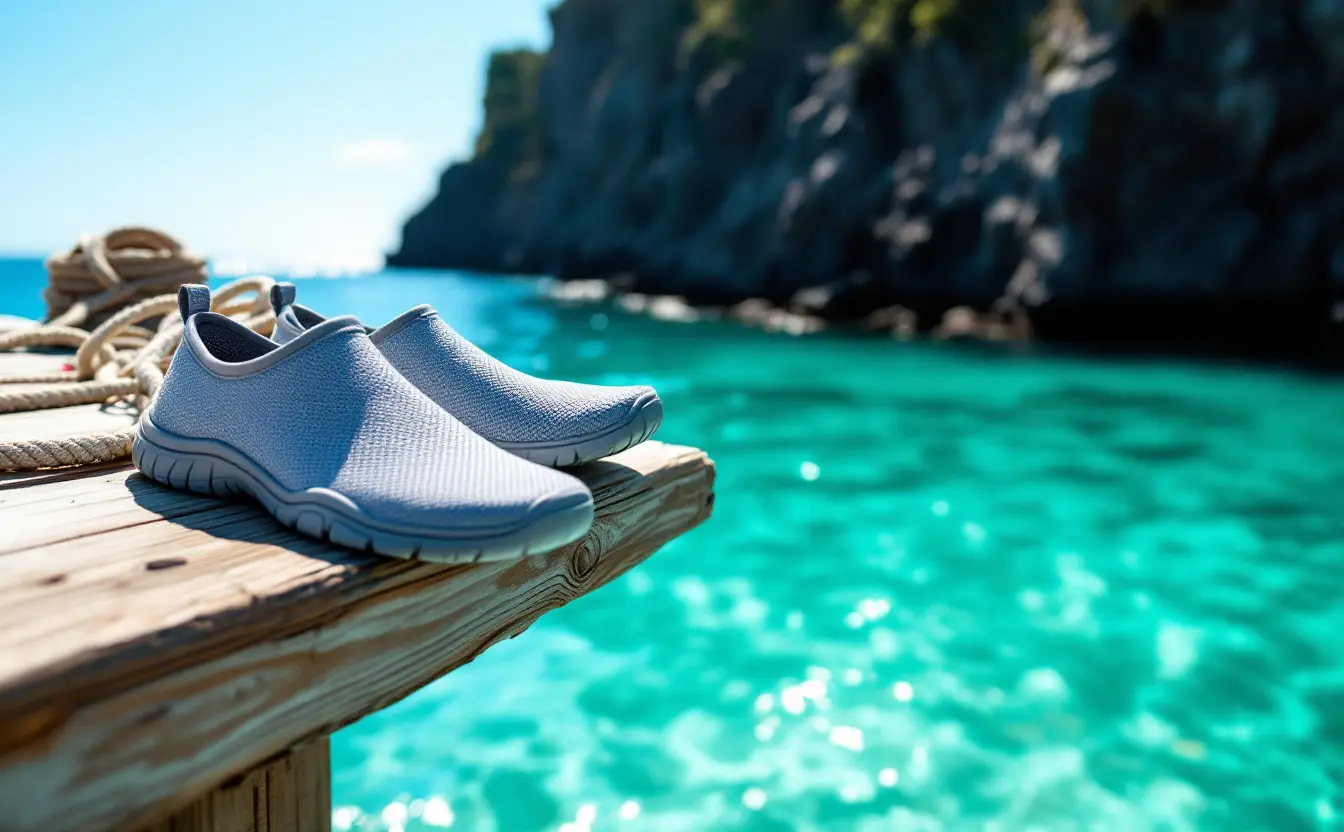
Growing up on Abaco, I learned about ironshore the way most island children do: barefoot, and only once. Ironshore is the dark, honeycombed limestone that lines so much of the Bahamian coast, sharp as a grater where it is dry and slick with weed where the waves wash over it. A good part of the shoreline here is not soft sand at all, and on a rocky edge or a boat day, a decent pair of water shoes is the difference between a relaxed swim and an afternoon picking grit out of a cut.
They are not always needed, though, and on some beaches they get in the way. This guide covers when water shoes help in the Bahamas, when you are better off barefoot, the main types, how they should fit and how to stop them smelling by the end of the week.
When water shoes earn their place
- Ironshore entries. Many of the best snorkelling spots start from rock rather than sand. Climbing in and out over wet limestone is where most foot cuts happen, and a firm, grippy sole helps on the slippery parts too.
- Rocky shallows with sea urchins. Black, long-spined urchins wedge themselves into holes in rock and old coral rubble, often in water only knee-deep. You may not see one until you are standing beside it.
- Hot sand. By midday on a clear day, the dry sand above the tide line can be hot enough to send you hopping to the water's edge. Dock boards and boat decks heat up in the same way.
- Coral rubble and shell beaches. Some beaches, especially on the Atlantic side and after a storm, are strewn with broken coral and shell that is uncomfortable at best.
- Boat days and wet landings. On a trip out to the cays you often step off the bow into knee-deep water and wade ashore over a bottom you cannot see. Water shoes stay on, drain quickly and give you grip on wet ladders and docks.
- Sandbars and flats at low tide. Walking out across the flats is one of the joys of the Family Islands, but the bottom can hide empty shells, soft patches and the odd resting stingray.
When they don't help
On a soft, sandy beach with a gentle slope, go barefoot. Sand gets inside water shoes and rubs, and you lose the simple pleasure of warm sand underfoot. For swimming any distance, shoes add drag and do none of the work; fins are what move you along.
Water shoes also protect less than people assume.
- They do nothing for stings. Jellyfish, the tiny larvae that cause sea lice, and fire coral all catch hands, legs and bodies. A long-sleeved rash guard does far more for those than anything on your feet.
- Urchin spines can still get through. The Divers Alert Network notes that urchin spines can penetrate boots and wetsuits and may break off in the skin. A thicker sole lowers the odds; it does not make it safe to step on one. DAN advises having any spine wound checked by a doctor, especially near a joint.
- They don't stop a stingray's barb. Shuffle your feet when wading so a ray resting in the sand has time to move off, shoes or not.
- They are no licence to stand on coral. More on that below.
The main types
Water shoes cover a surprisingly wide range, from little more than a sock to something close to a trainer. These are the four you will meet, and what each one is good for.
| Type | What it is | Best for | Weak spots |
|---|---|---|---|
| Thin aqua socks | A stretchy fabric upper on a thin, flexible rubber sole | Hot sand, pool decks, sandy shallows, short wades | Little protection on sharp rock or rubble; soles wear quickly on ironshore |
| Thicker-soled water shoes | A mesh upper with drainage holes, a firmer tread and often a toe bumper | Ironshore entries, rubble, wet landings, boat days, walking between beaches | Bulkier to pack; will not fit inside full-foot fins |
| Strapped sport sandals | Adjustable straps over a grippy sole, open at the sides and toes | Docks, boat decks, the walk to the beach and into the settlement | Sand and stones slip under the foot; toes are exposed on rock |
| Neoprene fin booties | A pull-on or zipped neoprene boot with a light sole | Wearing under open-heel fins on rocky entries | Warm and slow to dry; only useful with open-heel fins |
Flip-flops have their place on a sandy path, but they float off in the first wave and give no grip on wet rock. For most visitors who plan to snorkel or go out on a boat, the thicker-soled water shoe is the most useful single pair.
What to look for
Because shoes are made in so many styles, it helps to judge them by a few plain features rather than by the picture on the box.
- A sole with real tread. You want enough thickness to blunt sharp rock and enough grip for wet limestone and a wet deck, but still enough flex to walk naturally. If you will spend time on boats, ask whether the crew prefers soles that do not leave marks.
- Drainage. Holes in the sole or a fully mesh upper let water run straight out, so you are not sloshing up the beach.
- A heel that stays put. A pull loop at the back, a toggle lace or a strap across the instep stops the shoe coming off when you wade through soft sand or step off a boat.
- Some toe protection. A rubber bumper over the toes saves you from stubbed toes on rubble and dock edges.
- Quick-drying materials. Synthetic mesh and rubber dry overnight. Anything with a cotton lining or a thick foam insole will still be damp the next morning.
Getting the fit right
Water shoes should be snug, with no heel lift when you walk, but not tight across the toes. Feet swell a little in the heat, so if you are trying shoes on at home, do it later in the day. Walk up and down a few stairs. If your heel rises out of the shoe on dry land, it will come off in soft wet sand.
Wear them wet before the trip if you can. Some uppers stretch when wet and some seams rub only once they are soaked. A thin neoprene sock under the shoe can stop rubbing on long days.
Think about fins at the same time. Full-foot fins are designed for bare feet or thin fin socks and will not fit over a water shoe. Open-heel fins with an adjustable strap are made to be worn over booties, which then double as your rocky-entry footwear. Our guide to snorkel gear for a Bahamas trip explains the two styles, and for children, whose feet grow between trips, our guide to snorkel gear for kids covers fins and booties for small feet.
Drying them out and packing them
Salt water, sand and a sealed bag will make any shoe smell by midweek. A little routine at the end of each day keeps them fresh.
- Rinse them in fresh water, inside and out, and knock the sand from the toes.
- Pull out any removable insole and stand the shoes toes up in the shade, somewhere with a breeze.
- Keep them off a hot car dashboard or a sunny deck, where heat can soften the glue.
- Carry wet shoes in a mesh bag or an open pocket of your beach bag, not zipped in with your towel.
They weigh very little and pack flat, so there is no reason to leave them behind. Our packing list planner builds a list around where you are staying and what you plan to do, and water shoes belong on it for anyone heading to the Family Islands or out on a boat.
Shoes on, feet still off the coral
Here is the habit I would most like visitors to take home. Water shoes make people bolder, and bold feet end up on coral. Standing on a reef crushes living animals that took years to grow, and coral breaks far more easily than it looks. Once you are in water deep enough to float, float. If you need a rest, roll onto your back, find a patch of bare sand, or use a vest. Our guide to snorkelling Bahamian reefs safely sets out the rest of the reef manners that keep these shallows healthy.
One pair for everything
Look for a quick-drying pair made for rocky entries, urchin-prone shallows and hot sand. Use the points in this guide to check any pair against your own feet, and send back a pair that rubs. If it suits you, a pair of quick-dry water shoes covers rocky entries, boat days and hot sand in one.
For boat days, a roll-top dry bag keeps your phone, keys and a dry shirt away from the wet shoes and wet towels.
Frequently asked questions
Are water shoes good for the beach?
On a soft sandy beach you are usually better off barefoot, since sand gets inside the shoes and rubs. They come into their own on rocky shores, rubble beaches, hot midday sand and boat days. Many visitors carry a pair in the beach bag and put them on only where the ground changes.
Do I need water shoes in the Bahamas?
If you plan to snorkel from shore, take boat trips or explore the Family Islands, a pair is well worth packing. Much of the coast is sharp limestone, and wet landings on the cays are common. If you will spend your whole trip on a sandy resort beach, you can probably manage without.
Can you wear water shoes with fins?
Not with full-foot fins, which are made for bare feet or thin socks. Open-heel fins with an adjustable strap are designed to go over booties, and some low-profile water shoes fit too. Check the fin maker's guidance on what it takes.
Do water shoes protect against sea urchins?
They help, but not completely. Urchin spines can pierce thin soles and even neoprene boots, so watch where you put your feet in rocky shallows and never stand on an urchin on purpose. If a spine does go in, have it checked by a doctor rather than digging at it yourself.
Can I swim in water shoes?
Yes, though they add drag and tire your legs on a longer swim. For short wades and rocky entries they are fine. For snorkelling any distance, switch to fins once you are in water deep enough to float.
Keep reading

Sunset times in the Bahamas: sunrise, daylight and golden hour by month
Sunrise and sunset times in the Bahamas month by month, Eastern Time and daylight saving, golden hour in the tropics, and where to watch the sun go down.
Snorkel gear for kids in the Bahamas: masks, vests, fins and safety
Snorkel gear for kids in the Bahamas: fitting a mask to a small face, dry-top snorkels, fins, vests, rash guards and the supervision that matters most.
Snorkel gear for a Bahamas trip: masks, snorkels and fins that travel
Snorkel gear for a Bahamas trip: how to fit a mask, dry-top or classic snorkels, short travel fins, kids' sets, vests and keeping the glass from fogging.