Reef-safe sunscreen for the Bahamas: labels, ingredients and how much
Reef-safe sunscreen for a Bahamas trip: what the label does and does not promise, which filters people avoid, how much to pack and when to reapply.

Marisa Cartwright · 9 min read
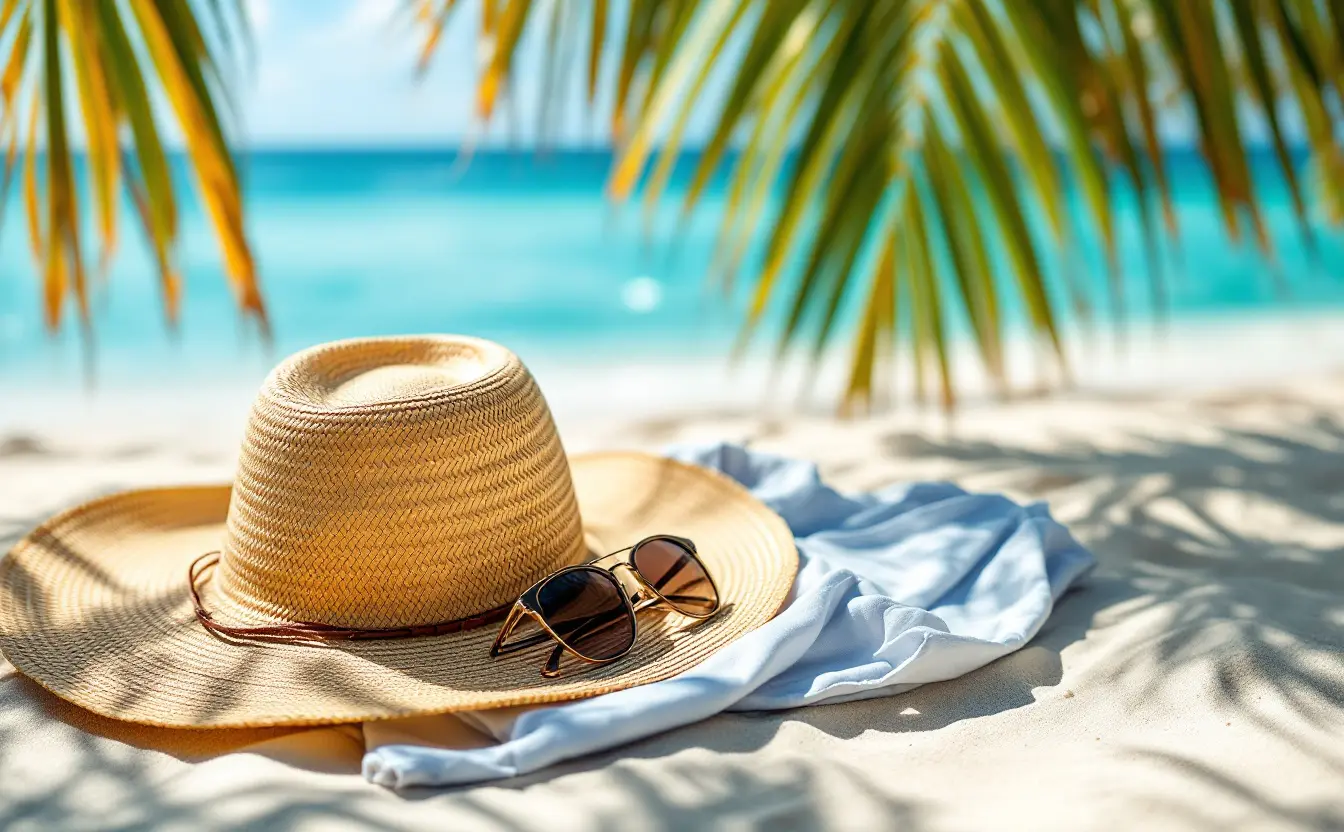
Late in the morning at a popular reef in the Exumas, after two or three boatloads of swimmers have been and gone, you can sometimes see it from the stern: a faint, oily shimmer on the surface where sunscreen has washed off skin. Nobody meant any harm. Most of those swimmers would have been in far greater trouble without it, because the Bahamian sun is strong in every month and doubly so on the water.
Island-ready picks
- Browse on Amazon
Mineral zinc oxide sunscreen lotion, SPF 30 or higher
Zinc-based, water resistant, for body coverage
Price at Amazon, 20 Oct 2026, 12:31 pm: $12.91
- Browse on Amazon
Mineral sunscreen stick for face
Easy to reapply on nose and cheeks between swims
Price at Amazon, 20 Oct 2026, 12:30 pm: $8.97
- Browse on Amazon
Packable wide-brim sun hat
Shade for the face and neck that survives a suitcase
Price at Amazon, 20 Oct 2026, 12:30 pm: $13.99


Product prices and availability are accurate as of the date/time indicated and are subject to change.
That is the tension behind the words "reef safe" on a bottle. You need sun protection, the reef would rather you used less of some ingredients, and the label in your hand may not tell you much about either. This guide explains what the claim means, which filters people choose to avoid, how much to pack for a trip, and how to keep it working through a day of swimming.
What "reef safe" on a label actually means
In short, less than it sounds. In the United States, "reef safe", "reef friendly" and "ocean friendly" are not defined or regulated terms. The American Academy of Dermatology points out that the US Food and Drug Administration has not defined them, and that the evidence on how sunscreen affects reefs is still limited. A maker can print the phrase on any formula it likes.
The science behind the worry is real but unfinished. Laboratory studies have linked some chemical filters, oxybenzone in particular, to harm in corals and other marine life. In 2022 a report from the US National Academies of Sciences, Engineering, and Medicine found that UV filters turn up in water, sediment and animal tissue, and asked the Environmental Protection Agency to carry out a full ecological risk assessment, with shallow reefs near busy shores a priority. Sunscreen is also one pressure among many: warm water, coral disease, runoff and physical damage from anchors and fins all weigh on Bahamian reefs.
So the honest approach is threefold: choose filters with fewer question marks, use less in the water by covering up, and keep protecting your skin. Skipping sunscreen to spare the coral is not on the list.
Reading the label
Turn the bottle over. On products sold in the US, the "Drug Facts" panel lists the active ingredients, and that list matters far more than anything on the front.
| Label wording | What it means | What to look for |
|---|---|---|
| Broad spectrum | Passed the FDA test for UVA as well as UVB protection | Always; it is the baseline |
| SPF 30 or higher | Filters about 97 percent of UVB at SPF 30; no product blocks all of it | Dermatologists' usual recommendation for outdoor days |
| Water resistant (40 minutes) or (80 minutes) | Stayed effective that long in water during testing | 80 minutes for snorkelling and boat days |
| Reef safe, reef friendly | No legal definition | Check the active ingredients instead |
| Mineral or physical | Uses zinc oxide or titanium dioxide | Those two as the only active ingredients |
| Non-nano | The mineral particles are not nanoparticle size | Worth having if you want to be thorough |
US sunscreens are not allowed to call themselves "waterproof" or "sweatproof". The FDA ruled those words out because no sunscreen stays on indefinitely in water.
Ingredients people avoid, and the ones they choose
The filters with question marks
Oxybenzone (also listed as benzophenone-3) and octinoxate (octyl methoxycinnamate) are the two names most travellers learn first. Hawaii stopped the sale of sunscreens containing either one from 1 January 2021, and the US Virgin Islands went further, adding octocrylene to its list. NOAA's guidance on skincare chemicals and coral reefs names those three and several others, including 4-methylbenzylidene camphor and some benzophenones, as ingredients that can harm marine life. Rules differ from place to place, so if a boat crew or tour operator asks you to use a mineral product, that is the rule for you that day.
The mineral filters
Zinc oxide and titanium dioxide are the mineral filters, and zinc oxide on its own covers both UVA and UVB. In its long-running review of sunscreen ingredients, the FDA has proposed that these two are generally recognised as safe and effective, while asking for more data on most of the older chemical filters. Dermatologists also tend to suggest mineral products for sensitive skin.
There is one wrinkle. NOAA's list also includes the nanoparticle forms of zinc oxide and titanium dioxide, which is why some brands print "non-nano" on the front. And in June 2026 the FDA added a new chemical filter, bemotrizinol, to the list of permitted sunscreen ingredients in the US, the first addition in decades. It is not a mineral, so a strictly mineral-only product will not contain it.
Mineral sunscreens can leave a white film. Tinted versions help, as does rubbing a thinner layer in well and then adding a second. A small mineral sunscreen stick for the face is easier to reapply on a rocking boat than any lotion, and it slips into a pocket.
How much to apply, and how much to pack
The American Academy of Dermatology's rule of thumb is about one ounce, roughly 30 ml or a full shot glass, to cover an adult's exposed skin. Apply it around 15 minutes before you go out, and reapply at least every two hours, and again after swimming, sweating or towelling off. SPF numbers are measured with a generous layer, and most of us apply less than that, so the protection we get falls short of the number on the bottle.
A worked example
Take one adult on a seven-night trip, outside for six hours a day and swimming twice a day. That makes a first coat in the morning, two more coats as the hours pass and one after each swim: five coats a day. At about 30 ml a coat, that comes to around 150 ml a day and roughly a litre for the week.
Most people are startled by that figure, and most people pack a single small bottle. Our sunscreen planner runs the same sum for a whole group, counting children at about half an adult's amount, and tells you how many travel bottles it adds up to.
Two things bring the number down sharply. A long-sleeved rash guard and swim leggings cover most of the skin you would otherwise be coating, leaving the face, neck, hands and feet. And shade in the middle of the day, which the FDA and NOAA both recommend from about 10am to 2pm, cuts the hours of direct sun.
Babies and children
The FDA does not recommend sunscreen for babies under six months; keep them in the shade and in light clothing, and ask a doctor or pharmacist if you are unsure. Older children need the same broad-spectrum, water-resistant protection as adults, and covering them up is easier than chasing them with a bottle.
Getting it there
Pack most of it in checked luggage, since rules on liquids in hand luggage vary by airport. Bring what you need rather than counting on island shops. Nassau and Freeport stock a reasonable range, but a small Family Island store may have one product or none, and mineral options are the first to run out. Our guide to what to pack for the Bahamas covers the rest of the bag.
Water resistance on a boat day
"Water resistant (80 minutes)" means the product kept its SPF through 80 minutes in water during testing. It does not mean 80 minutes of protection followed by a top-up whenever you remember. Reapply when you come out, after towelling, and on a schedule even if you stay dry.
A routine that works on a day out in the cays:
- Apply at breakfast, ahead of the sun, so it has time to settle before the first swim.
- Do the easily missed places first: ears, the back of the neck, the parting in your hair and the tops of your feet.
- Use a lip balm with SPF; lips burn quickly on the water.
- After each swim, pat dry and reapply before you sit in the sun again.
- Use a stick for the face between swims and keep the bottle in the shade, out of a hot car or the bottom of a sunny cockpit.
Sprays are tempting on a boat but the wind carries much of the spray away and coats the deck, making it slippery. If you use one, spray it into your hands and rub it in.
Covering up is the most reef-friendly sunscreen
Fabric does not wash off. A long-sleeved rash guard rated UPF 50, a wide-brimmed hat and polarised sunglasses do more for you than any lotion on a long snorkel, and they put nothing into the water. NOAA recommends exactly this kind of UV-protective clothing. For anglers and boat days, a vented sun shirt does the same job out of the water. Our guide to snorkelling Bahamian reefs safely explains why a rash guard also helps with stings and scrapes.
The kit below is our suggested starting point. We chose it by reading ingredient lists, specification sheets and published reviews, not by trying the products on our own skin, so check the active ingredients on whatever you buy.
Shore bag
- Mineral zinc oxide sunscreen lotion, SPF 30 or higherZinc-based, water resistant, for body coverageBrowse on Amazon
- Mineral sunscreen stick for faceEasy to reapply on nose and cheeks between swimsBrowse on Amazon
- Lip balm with SPFLips burn quickly on the waterBrowse on Amazon
- Women's long-sleeve rash guard, UPF 50Covers shoulders and back during long snorkelsBrowse on Amazon
- Packable wide-brim sun hatShade for the face and neck that survives a suitcaseBrowse on Amazon
- Aloe after-sun gelSoothing for the evening after a long day outBrowse on Amazon
After-sun gel feels good on a warm evening, but it does not undo a burn. If you or a child burns badly, blisters, or feels unwell after a day in the sun, see a pharmacist or doctor.
Frequently asked questions
Is any sunscreen truly reef safe?
No product can promise that, because the term has no legal definition and the research is still developing. What you can do is choose a broad-spectrum mineral formula without the filters most often linked to reef harm, wear clothing so you need less of it, and avoid applying it just before you jump in.
Do I have to use reef-safe sunscreen in the Bahamas?
Requirements vary by place and operator, so ask your boat crew or tour company before the trip. Some snorkel and dive crews ask for mineral products, and choosing one is an easy courtesy wherever you swim.
Is SPF 50 much better than SPF 30?
Only a little. SPF 30 filters about 97 percent of UVB rays and higher numbers add a small amount on top; no sunscreen blocks everything. How much you apply and how often you reapply make a bigger difference than the number. The FDA's sunscreen guidance explains the labels in more detail.
Does sunscreen expire?
US sunscreens must stay stable for three years, or carry an expiry date. Throw out anything past its date, and anything that has changed colour, smell or texture, especially after a summer in a hot car. NOAA's page on sunscreen chemicals and coral reefs has its full list of ingredients of concern.
Keep reading
Snorkelling Bahamian reefs safely: currents, boats and reef manners
How to snorkel Bahamian reefs safely: reading tides and cuts, staying visible to boats, avoiding stings and scrapes, and habits that keep the coral healthy.
Bahamas plug type and voltage: adapters, chargers and power on the cays
Bahamian sockets take US plugs at 120 volts and 60 Hz. What US, Canadian, UK and EU visitors need, plus charging on boats, small cays and cruise ships.

Hurricane kit list for a Bahamian home: water, food, light and power
A hurricane kit list for Bahamian homes: how much water to store, food that needs no fridge, light, radio, documents, first aid and power that is safe to run.